Barringtonia acutangula (L.) Gaertn.
Summary
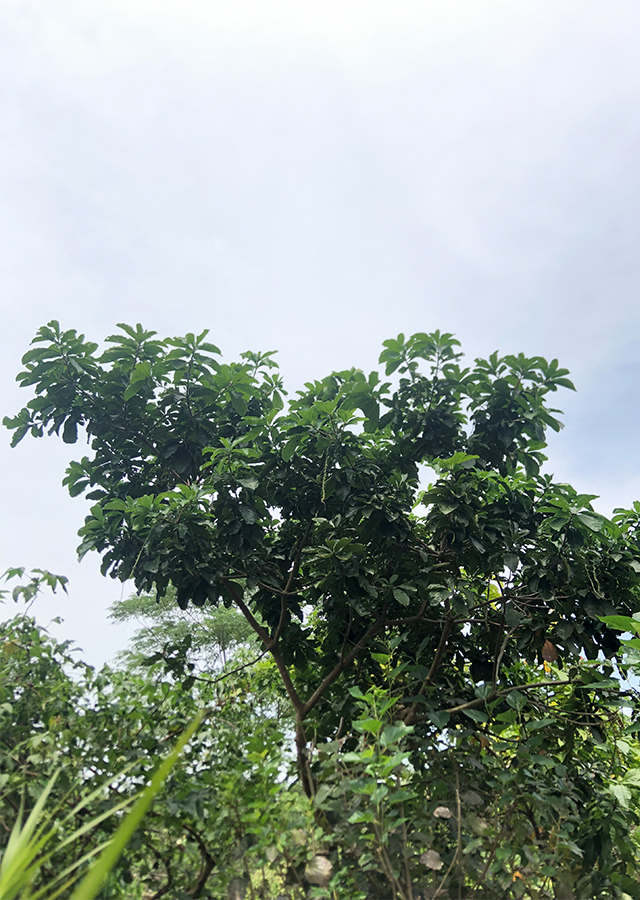
Barringtonia acutangula or Indian putat is widely distributed from Afghanistan and India through Southeast Asia to Papua New Guinea and northern Australia. This plant occupies an important position in Indian Ayurvedic formulations, with nearly all its parts used in traditional medicine since ancient times to address fever, diarrhea, worm infestation, and even lung inflammation. Besides its medicinal function, its young leaves are eaten as a vegetable, its bark used as a fish poison, and its wood used to build ships and furniture.
Agroecology
The habitat of B. acutangula is found scattered along riverbanks, lake edges in evergreen and deciduous forests, as well as in seasonally flooded floodplains and freshwater wetlands, swamp sites, rocky or sandy coasts at elevations from sea level up to 400 m asl. Grows well in various soil types, including heavy clay soil, and prefers permanently moist but well-drained soil, in a position of full sun or slight shade. B. acutangula is tolerant of both drought and waterlogging. But is not resistant to long dry seasons and temperatures approaching 0°C.
Morphology
- Roots a taproot and fibrous roots.
- Trunk much-branched, with vertically fissured, wrinkled, brownish-gray bark. The heartwood pink to reddish gray.
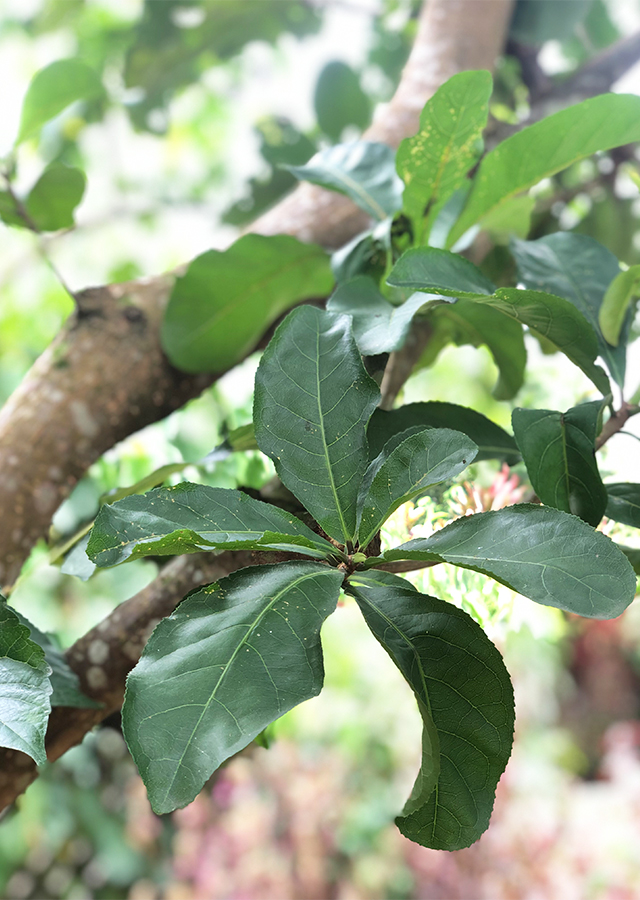
- Leaves unifoliate, alternately or scattered arranged, elliptic to oblong shaped, leaf surface rough and mostly smooth, dark green, veins pinnate. Tip pointed, base tapering. Margin wavy, finely toothed, and petiole short (0.4-1.5 cm long). Scale leaves (cataphylls) triangular to linear shaped. Leaves can shed partially during long dry seasons.
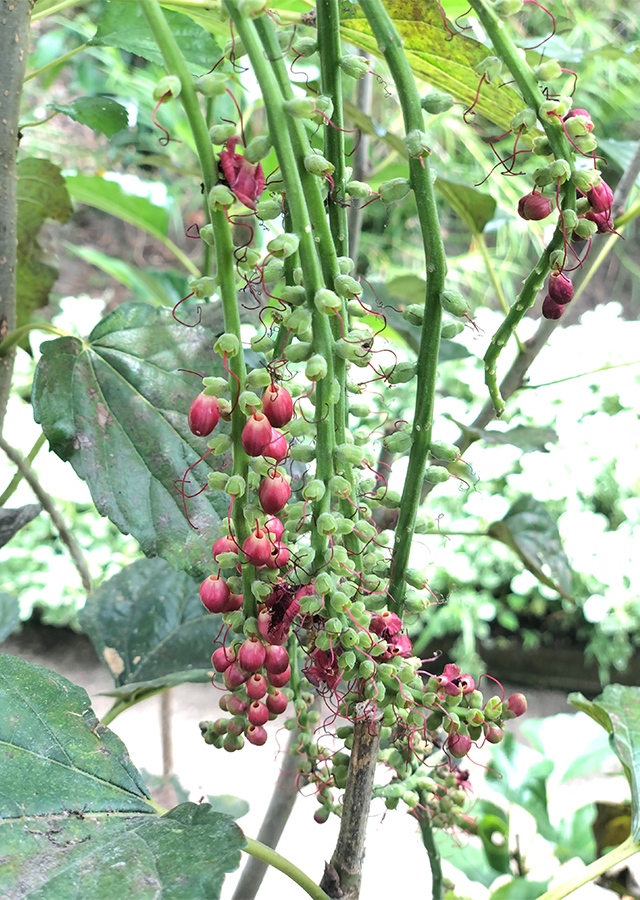
- Flowers have a drooping flower stalk as long as an arm. Each stalk contains up to 75 flowers that bloom at night. The flowers are small but striking, dark red, fragrant. Each flower has 4-5 (usually 4) petals and many thread-like stamens ranging from dark pink to red, with 4 semicircular green sepals.
- Fruit dry, a capsule, 4-angled or oblong-ovate shaped, pointed at the tip, fibrous, and corky with a spongy interior that allows it to float and be dispersed by water. Each fruit is 2-6 cm long and 1-3 cm wide, and contains 1 seed inside. Ripe fruit brown.
- Seeds black, ovate shaped.
Cultivation
- Plant propagation with seed and stem cuttings.
- Best sown as soon as ripe in a full light position. About 90% of fresh seed germinates.
Chemical Content
Triterpene saponins, acutangulosides A-F, acutanguloside D-F methyl esters, a single triterpene aglycone, tanginol, barrinic acid, barringenic acid, barringtogenic acid, tangulic acid and acutangulic acid, terpenes, flavonoids, tannins, steroids, glycosides, barringtogenol B, C and D, 9-octadecenoic acid, betulin-3-caffeate, amyrin, 3,3'-dimethoxy ellagic acid, dihydromyricetin, gallic acid, bartogenic acid, stigmasterol.
Benefits
Relieves fever, treats diarrhea and digestive disorders (colic, bloating, etc.), worm infestation, epilepsy, malaria, relieves cough, colds, asthma, lung inflammation, bronchitis, headache, jaundice, liver disorders, spleen disorders, treats boils, wounds and skin infections, leprosy, arthralgia (joint pain), dysmenorrhea (menstrual pain), lower back pain, gonorrhea, eye inflammation (ophthalmia). A health tonic to address bodily weakness, improves blood circulation and regulates the menstrual cycle, a mouthwash for gum problems. Seeds are rubbed on the chest or eaten with ginger to induce vomiting and expel respiratory mucus. Has antimicrobial, antipyretic, antimalarial, anti-inflammatory, antioxidant, antirheumatic, analgesic, antidiarrheal activity.
Simplisia
- Take Indian putat seed, wash until clean, then drain.
- Dry under the sun or with an oven at 40°C until the moisture content reaches 10%.
- Grind until it becomes powder.
- Store in a clean, airtight container.
Local Names
Alakang.
Traditional Recipes
The following recipes reflect traditional knowledge passed down through generations, not a substitute for professional medical diagnosis or advice. Consult a healthcare provider before use.
1. Skin eruptions
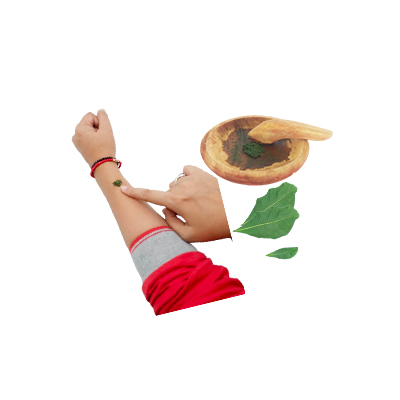
- Take an adequate amount of Indian putat leaves and wash until clean.
- Pound the leaves and add an adequate amount of oil.
- Apply to the affected skin.
Reference Sources
- Barringtonia acutangula (L.) Gaertn. | Plants of the World Online | Kew Science
- NParks | Barringtonia acutangula
- Himbabalod, Barringtonia acutangula: Philippine HERBAL Medicine / Medicinal Herbs / StuartXchange
- Barringtonia acutangula - Useful Tropical Plants (theferns.info)
- Barringtonia acutangula - Monaco Nature Encyclopedia
- Kaur, M., Singh, G. and Mohan, C., 2013. Barringtonia acutangula: A traditional medicinal plant. Int. J. Pharm. Sci. Rev. Res, 23(1), pp.168-171.