Basella alba L.
Summary
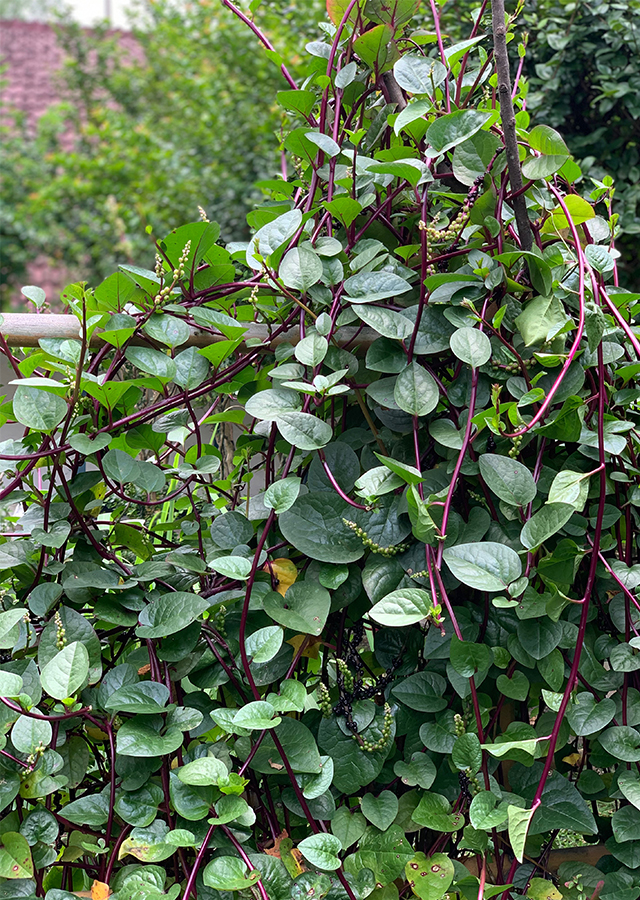
Malabar spinach (Basella alba) is a climbing plant up to 10 meters long of the Basellaceae family, believed to be native to the tropical Malabar region of India, Sri Lanka, and Papua New Guinea, coming in green and red varieties. Its mucilaginous leaves are commonly cooked as a vegetable, while in Nepal its sap is used as a dye for glue and candy. This plant is also believed to help address anemia and lower cholesterol.
Agroecology
Grows optimally in sandy loam soil, containing organic matter, pH 5.5-8, favoring a hot and humid climate. Low temperatures slow growth and produce smaller leaves. Shade causes leaves to grow wider compared to plants grown in full sun. Daylight of <13 hours stimulates flowering.
Morphology
- Roots taproot, dirty white.
- Stem thick, soft, and succulent. Basella alba has a greenish stem, while Basella rubra is purplish-red.
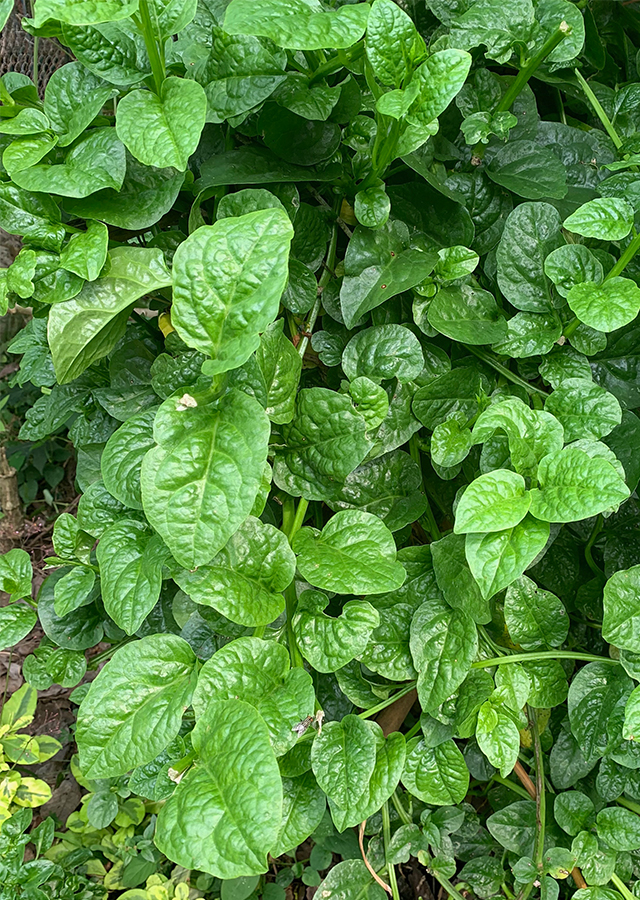
- Leaves heart-shaped, thick, wrinkled, watery, soft, green or purple, short-stalked.
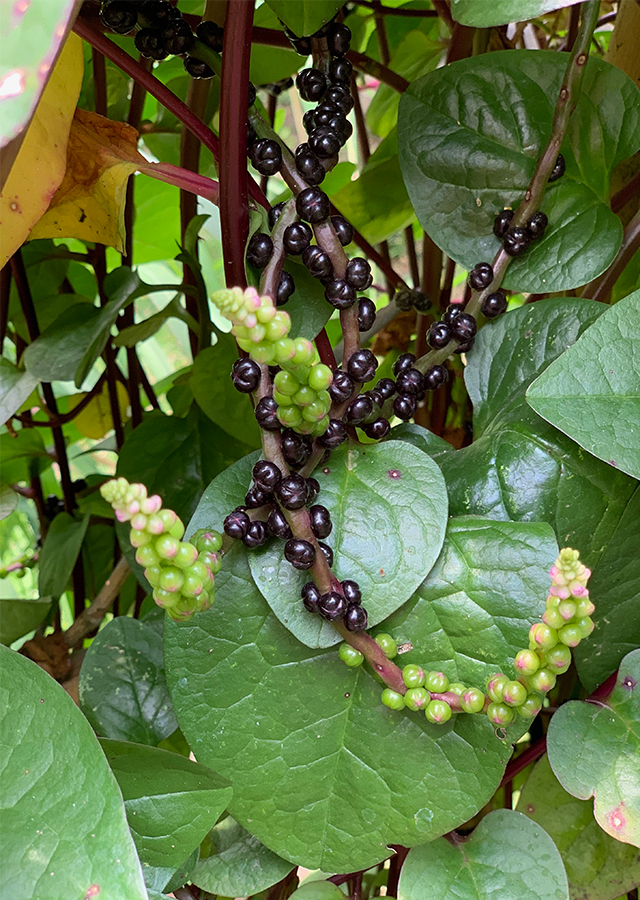
- Flowers compound, spike-shaped, located in the leaf axils.
- Fruit a fleshy berry, ovate, green when young and purple when ripe.
Cultivation
- Propagated through seed and stem cuttings.
- Seeds are sown first, then transplanted to the plot once they have 4 leaves.
Chemical Content
Saponins, riboflavin, niacin, thiamine, flavonoids, hydroxy-benzoic acid, hydroxycinnamic acid, phenolic carotenoids, antioxidant pigments (β-carotene, lutein, and zeaxanthin), syringic acid, ferulic acid, betacyanin, gomphrenin.
Benefits
Treats colds, appendicitis; delays premature aging (anti-aging); antioxidant, antimicrobial; lowers cholesterol; treats diabetes; reduces cardiovascular (heart) disease; addresses anemia (iron source), and measles.
Simplisia
- Select fresh Malabar spinach leaves. Remove any adhering debris. Wash and drain.
- Slice the leaves and place on a tray, then sun-dry, covered with a thin dark cloth.
- Once dry, place in clean, tightly sealed, airtight plastic.
Local Names
Lembayung (Minang), Genjerot (Java), Kandula (Madura), Malabar spinach.
Traditional Recipes
The following recipes reflect traditional knowledge passed down through generations, not a substitute for professional medical diagnosis or advice. Consult a healthcare provider before use.
1. Appendicitis
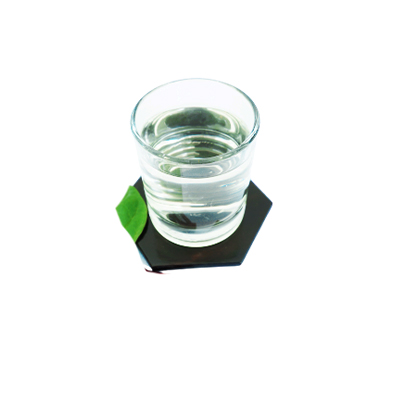
- Wash 70 g of the whole plant thoroughly, cut into small pieces, then boil in 1 cup of water until reduced to ½ cup. Let cool, then strain.
- Drink once a day.
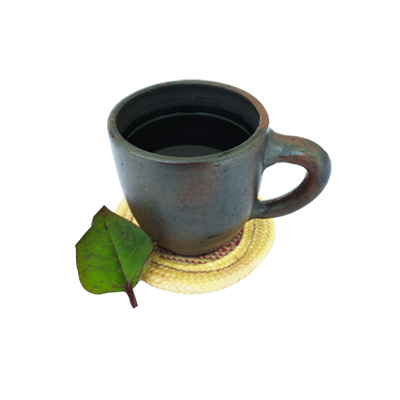
2. Measles
- Prepare 30 g of fresh Malabar spinach, wash thoroughly.
- Boil in 2 cups of water until reduced to 1 cup.
- Let cool, then strain.
- Drink the mixture once a day.
Reference Sources
- Hariana Arief. 2004. Tumbuhan Obat dan Khasiatnya. Penebar Swadaya, Jakarta.
- NCBI. NIH. National Library of Medicine. http://ncbi.nlm.nih.gov/Identificationandcharacterizationofbioactivephenolicconstituents,anti-proliferative,andanti-angiogenicactivityofstemextractsofBasellaalbaandrubra 20-01-2021.
- Tropical Plants Database, Ken Fern. 2014. Basella alba. http://tropical.theferns.info/viewtropical.php?id=Basella+alba 21-11-2020.