Begonia cucullata Willd.
Summary
Begonia (Begonia cucullata) is a herb 60-75 cm tall of the Begoniaceae family, a plant native to South America distributed from Bolivia to northern Argentina. Generally grown in pots as an ornamental plant, though in Paraguay its sap is traditionally used to treat sore throat. Its leaves and flowers can also be eaten raw or cooked as a vegetable.
Agroecology
Usually grows wild in humid tropical forests in lowlands to mountains and on moist hillside slopes. Found at elevations of 0-1,000 m above sea level. Not tolerant of low temperatures, below 12 °C, and waterlogged conditions, but tolerant of dry conditions. Prefers well-drained soil, rich in organic matter, and soil pH 5.5-6.5.
Morphology
- Roots taproot, dirty white in color.
- Stem reddish-green, rarely hairy when young, hairy when mature.
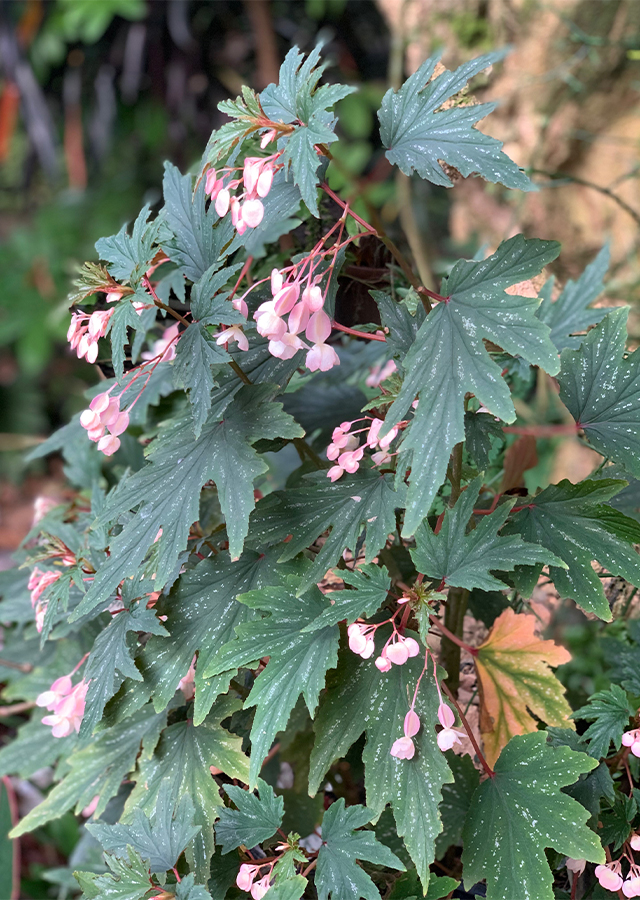
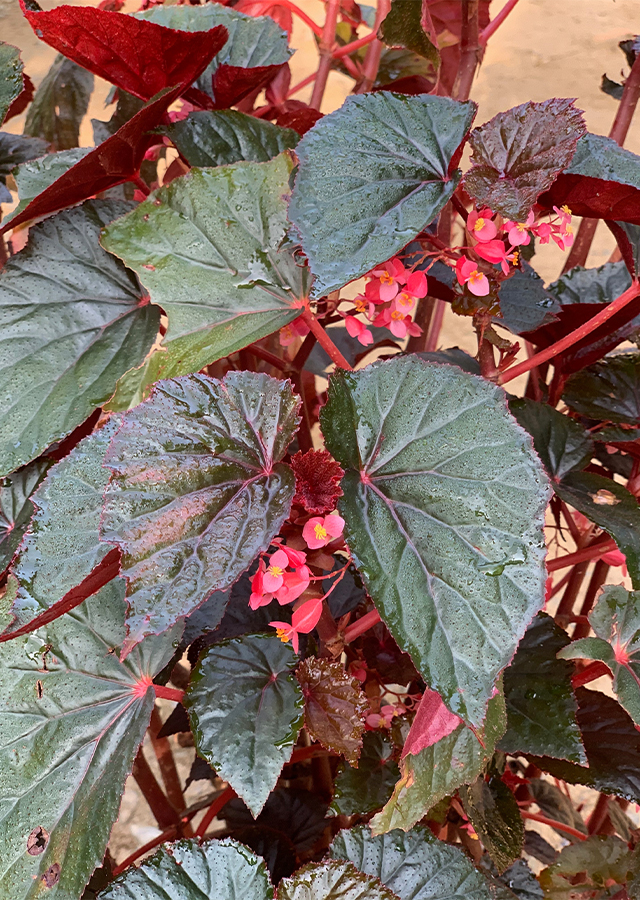
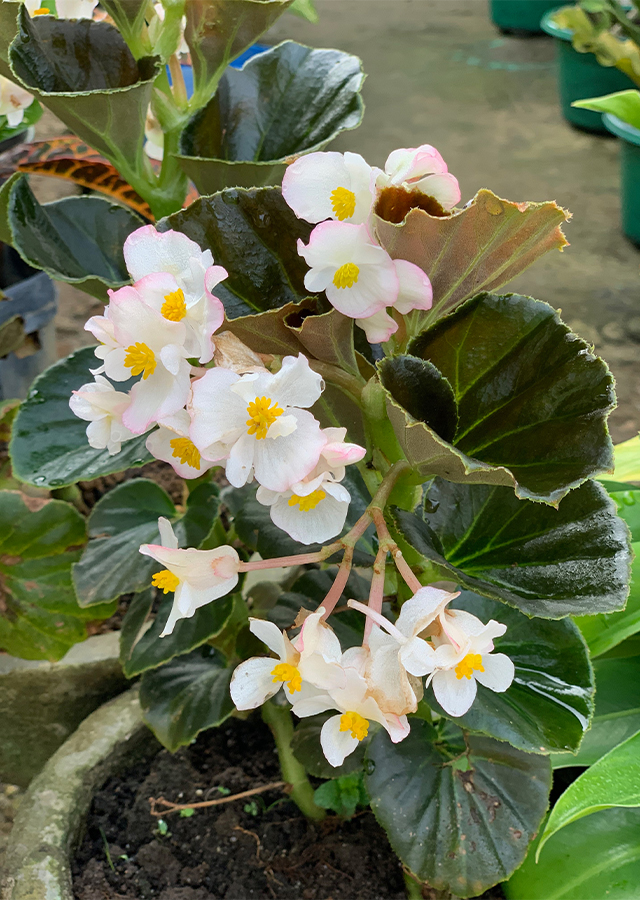
- Leaves single, sitting like a basal rosette, asymmetrical shape, tip nearly round, upper leaf surface glossy, pale green underneath and finely hairy, serrated edges, palmate venation.
- Flowers compound, panicle-shaped, stalk 80-90 cm long, one bract, thin, 5-6 cm long, 3-4 cm wide, finely hairy, stamens divided into three, paired, three-winged petals, one wide, the other two short, white to pink.
- Fruit a capsule, 24-30 mm long, three unequal-sized wings.
- Seeds round shaped, small in size, and white in color.
Cultivation
Propagated vegetatively (leaf cuttings) and generatively (seed).
Chemical Content
Flavonoids, phenolics, oxalic acid, and anthocyanins.
Benefits
Treats wounds, warts, fever, cough, stomach ache, spleen swelling, toothache and gum pain, sore throat, hiccups, diarrhea, dysentery, malaria, has analgesic, anti-inflammatory, laxative, and diuretic activity.
Simplisia
- Pick good leaves, not damaged and not rotten.
- Wash the material thoroughly with running water.
- Dry the leaves in the sun for several days.
- Store the dried material in a clean container.
Local Names
Riang-riang (North Sumatra), Hariang.
Traditional Recipes
The following recipes reflect traditional knowledge passed down through generations, not a substitute for professional medical diagnosis or advice. Consult a healthcare provider before use.
1. Fever
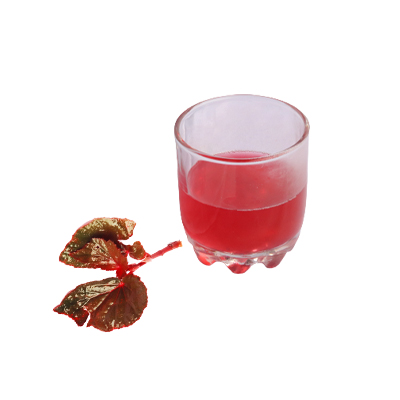
- Wash 30 g fresh plant thoroughly. Boil with 1 glass of water, boil until the water is reduced by half.
- Drink all at once, do this 2-3 times a day.
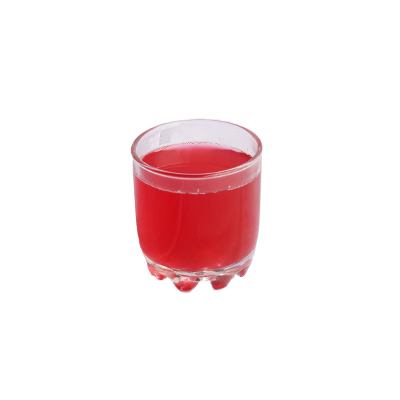
2. Menstrual Pain
- Clean 50 g fresh plant. Boil with 400 ml water for 15 minutes then strain.
- Drink the concoction twice a day, morning and evening.
Reference Sources
- Academia. (No date). TRADITIONAL USES OF BEGONIA SPECIES (BEGONIACAE) IN NEPAL. https://www.academia.edu/32450803/TRADITIONAL_USES_OF_BEGONIA_SPECIES_BEGONIACAE_IN_NEPAL 27-01-2021.
- Encyclopedia.com. (No date). Begonia. https://www.encyclopedia.com/plants-and-animals/plants/plants/begonia 27-01-2021.
- Philippine Medicinal Plants. (No date). Begonia. http://www.stuartxchange.org/Begonia.html#:~:text=Common%20names&text=Begonia%20(Tag.%2C%20Engl.)&text=Angel%20wing%20begonia%20(Engl.),Coral%20begonia%20(Engl.) 27-01-2021.
- Wahyu Ami, Ulung Gagas. 493 Resep Ramuan Herbal Berkhasiat untuk Cantik Alami Luar Dalam. Gramedia Pustaka Utama, Jakarta.
- http://kahaku.go.jp//Foliar flavonoids from begonia species in Japan 18-01-2021.