Benincasa hispida (Thunb.) Cogn.
Summary
Kundur (Benincasa hispida) is an annual climbing plant up to 6 meters long of the Cucurbitaceae family, originally cultivated in Southeast Asia and now spread to East and South Asia. Its young leaves, flower buds, and fruit are commonly cooked as a vegetable rich in vitamin C, which supports the immune system. In traditional Chinese medicine and Ayurveda, kundur is also believed to relieve migraines, coughs, and help manage diabetes.
Agroecology
Kundur is a tropical plant also cultivated in subtropical regions. Grows at elevations up to 1,500 m above sea level, average temperature 24-30 °C, average rainfall between 400-800 mm/year, soil pH 5-6.5. Prefers bright and warm conditions.
Morphology
- Roots taproot, dirty white in color.
- Stem woody, soft, hairy, and green in color.
- Leaves single, pinnate, lobed, smooth edges with a blunt tip, rounded leaf base, round stalk and green in color.
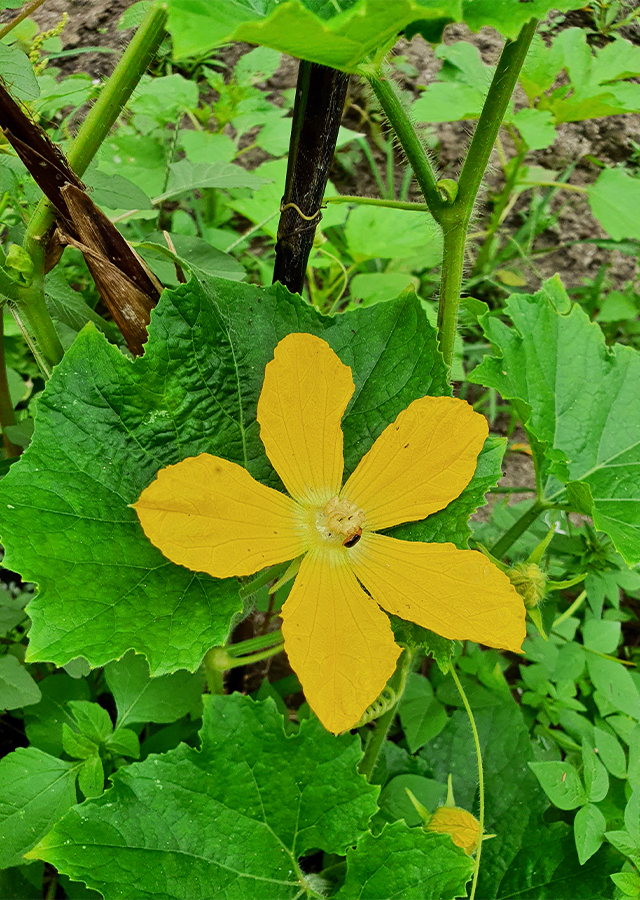
- Flowers single with both sexes at leaf axils. Calyx light green, funnel-shaped, split, and smooth. Stamens white. Anther round and green. Pistil white, petals yellow and finely hairy.
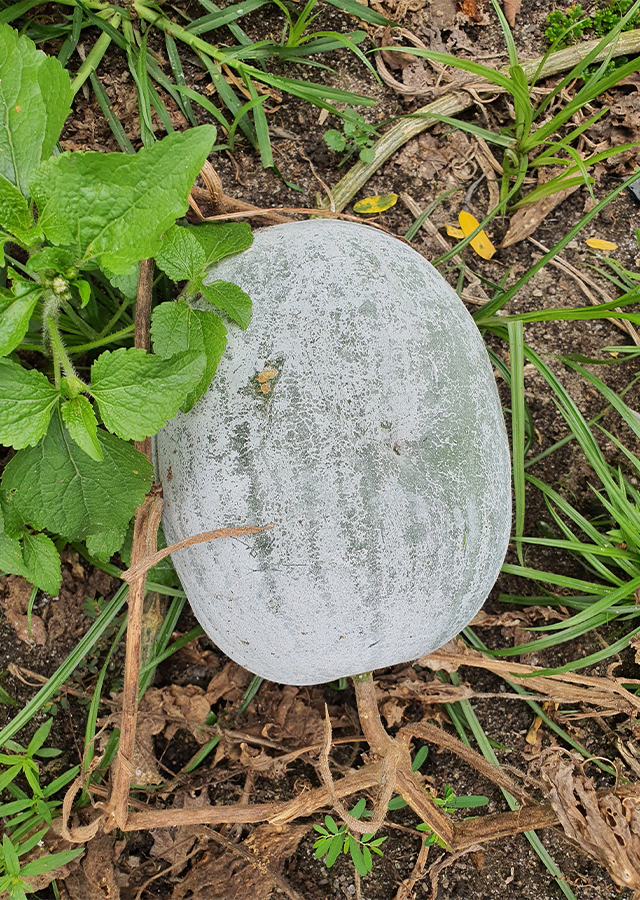
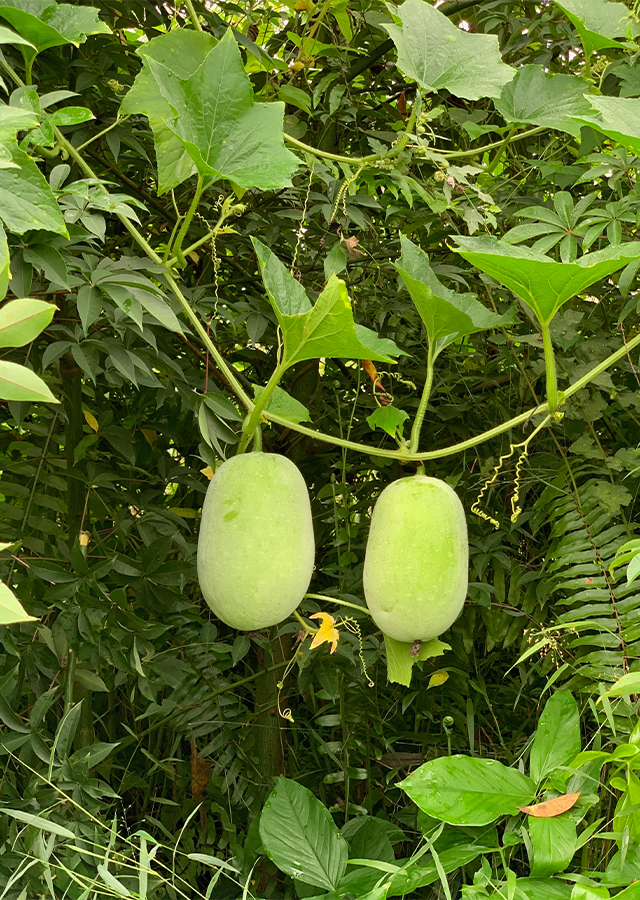
- Fruit elongated round shape, fleshy, whitish-green in color.
- Seeds hard, flat, white in color.
Cultivation
- Propagated generatively (by seed).
- Generally planted trailing near large trees.
Chemical Content
Amino acids, flavonoids, phenolic compounds, glycosides, essential oils, saponins, carotene, β-sitosterol, uronic acid, linoleic acid, oleic, isovanillin, sterols, triterpene, alkaloids.
Benefits
Prevents flu, natural migraine remedy, cough, fever, diabetes mellitus, plays a role in energy metabolism, helps maintain digestive health, good for heart health, stimulates collagen formation, helps weight loss, detoxifies the body.
Simplisia
- Peel the kundur fruit skin, discard the seeds. Cut into thin slices.
- Dry with an oven (temperature 60 °C) for 3-4 hours.
- Grind the dried kundur fruit into powder.
- Pack in a clean, airtight container (can be a plastic bag).
Local Names
Gundur (Batak), Kundo (Aceh), Serdak (Lampung), Baligo, Beligo (Java), Kondur (Madura), Lela (Nusa Tenggara).
Traditional Recipes
The following recipes reflect traditional knowledge passed down through generations, not a substitute for professional medical diagnosis or advice. Consult a healthcare provider before use.
1. Diabetes Mellitus
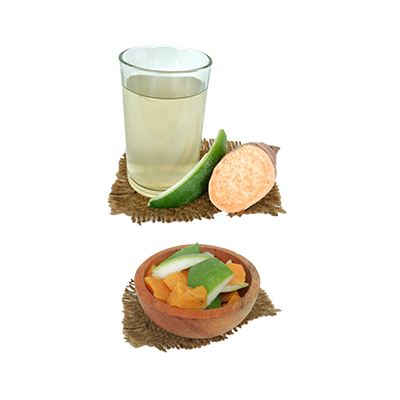
- Wash 15 g kundur skin and 30 g sweet potato then cut into pieces as needed.
- Boil with 1 liter of water until it boils and the water is reduced by half.
- Drink the decoction like tea, finishing it within 1 day.
- Meanwhile, the sweet potato can be eaten.
Reference Sources
- Badhani S, Kainth A, Kabra A, Parashar B. 2013. Evaluation of antioxidant activity of Benincasa hispida fruit extracts. Am. J. Pharm. Tech. Res. 3(2): 336-345.
- Jegan N, Chidambaranathan N, Pillai KK, Nalini G, Santhanakumar M. 2014. Hair growth promoting activity of Benincasa hispida on androgen induced Alopecia animal models. World Journal of Pharmacy and Pharmaceutical Sciences 3(10): 631-637.
- Qadrie ZL, Hawisa NT, Khan MWA, Samuel A, Anandan R. 2009. Antinociceptive and antipyretic activity of Benincasa hispida (Thunb.) Cogn. in Wistar albino Rats. Pak. J. Pharm. Sci. 22(3): 287-290.
- Zaini NAM, Anwar F, Hamid AA, Saari N. 2011. Kundur [Benincasa hispida (Thunb.) Cogn.]: A potential source for valuable nutrients and functional foods. Food Research International 44: 2368–2376.
- CABI. Invasive Species Compendium. Benincasa hispida (wax gourd) https://www.cabi.org/isc/datasheet/9423 12-10-2019
- Dalimartha Setiawan. 2008. 1001 Resep Herbal. Penebar Swadaya, Jakarta.