Biancaea sappan (L.) Tod.
Summary
Secang (Biancaea sappan) is a shrub up to 5-10 meters tall of the Fabaceae family, first recorded by the Spanish explorer Kimichi in Brazil, now distributed from Europe to Asia. Its wood decoction produces an ivory-red color used to dye woven products and traditional drinks. Its brazilin content is believed to have an anticancer effect, besides being traditionally used to treat diarrhea and malaria.
Agroecology
This plant is found in tropical regions, in open places at elevations of 500-1,000 m above sea level. Grows naturally in secondary forests. Annual temperature 24-28°C, rainfall 700-4,300 mm/year. Grows in clay soil and limestone rock, tolerates sandy soil, and soil pH 5-7.5.
Morphology
- Root a taproot.
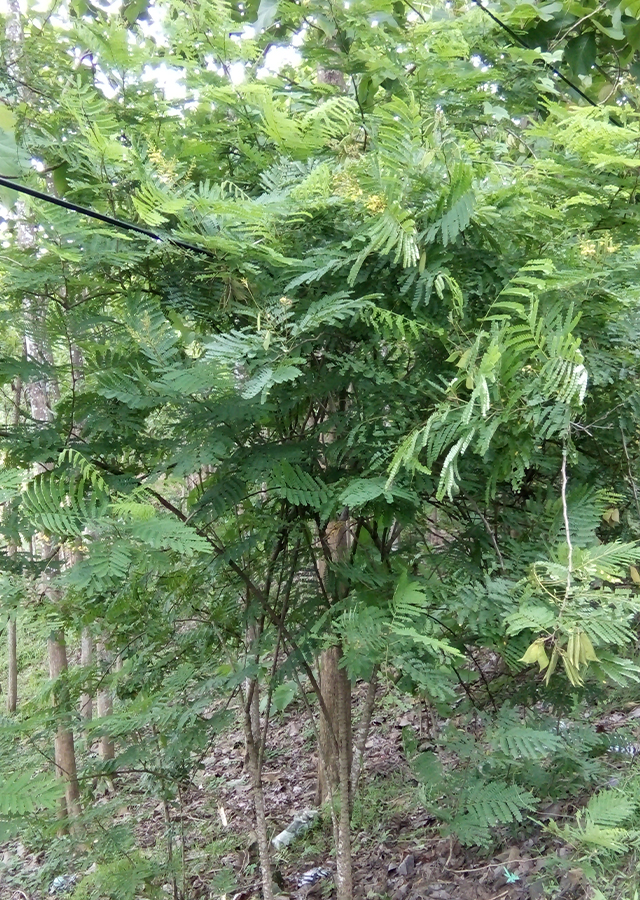
- Stem woody, round, thorny, mature bark grayish-brown, young bark green.
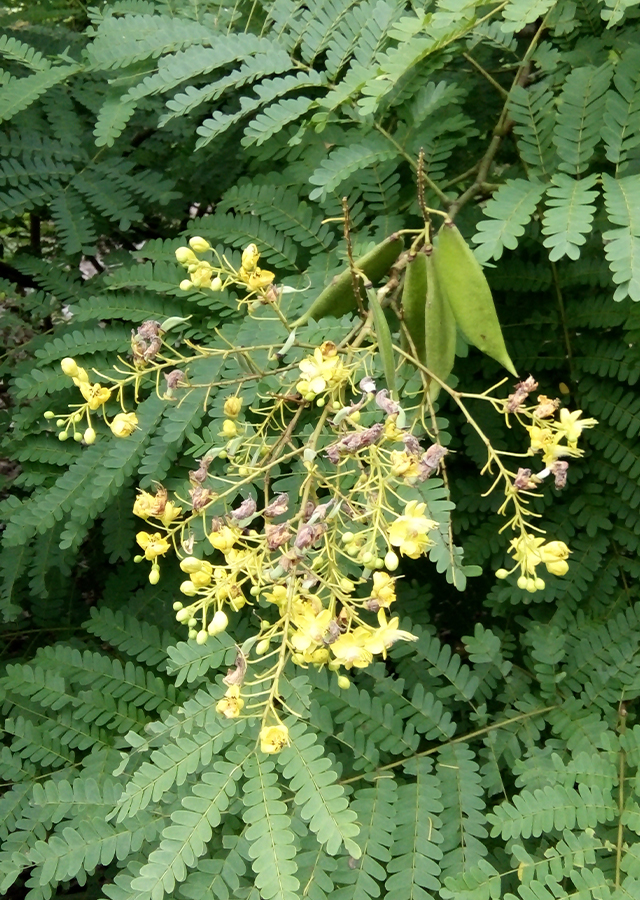
- Leaves compound doubly pinnate, 25-40 cm long, leaflets opposite, oblong-shaped, flat edges, leaf base curving inward.
- Flowers compound, panicle-shaped, emerging from the stalk tip, 10-40 cm long, sepals finely hairy at the edges, yellow sepals, round shape with a diameter of 4-6 mm. Flowers consist of four sepals, has stamens and pistil.
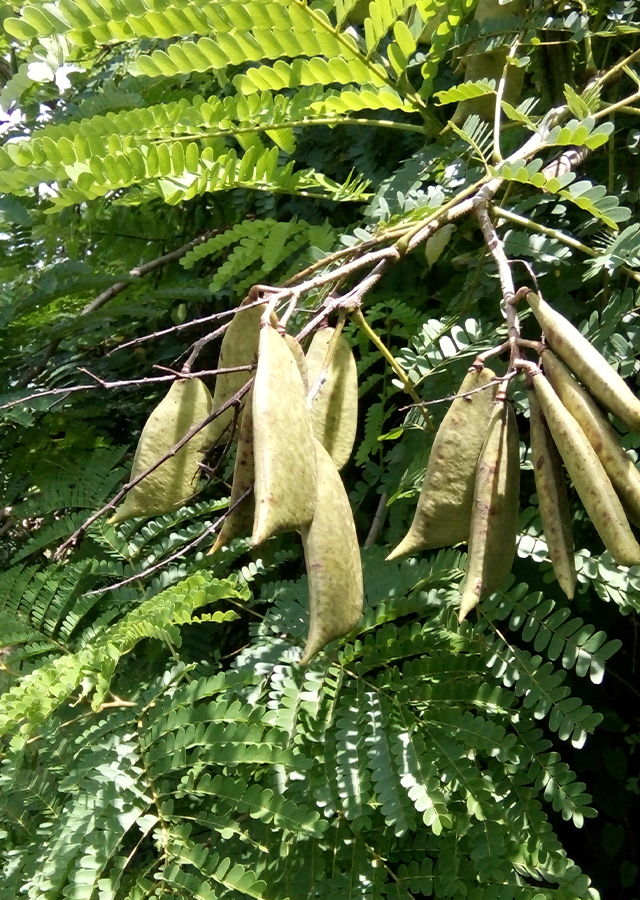
- Fruit a pod, flat, oblong. Fruit color green and will turn black when ripe.
- Seeds elongated round, yellowish-brown in color, 15-18 mm long, 8-11 mm wide, 5-7 mm thick.
Cultivation
- Propagated generatively (seed) as well as vegetatively (cuttings).
- Its wood can be harvested starting at 1-2 years of age.
Chemical Content
Gallic acid, brazilin, brazilein, sappanchalcone, sappanol, phangininoxy A, phanginin A, tannin, sappanone B, resorcin, palmitic acid, isoflavonoid, saponin, neocaesalpin A and B.
Benefits
Treats diarrhea, syphilis, impure blood, antiviral, antibacterial, bloody stool, malaria, tumor, cataract, ulcers, colds, addresses fatigue, osteoporosis, relieves breathing, acts as an antidote, postpartum treatment, nerve disorders.
Simplisia
- Wash secang wood thoroughly, then drain.
- Cut/shave the wood into smaller pieces.
- Dry the wood with the help of sunlight.
- Once dry, store in a closed container and protected from sunlight.
Local Names
Sopang (Toba), Seupeueng (Aceh), Sepang (Gayo), Sapang, Cacang (Minangkabau), Cang (Bali), Supa, Supang (Bima), Sapang (Makassar), Sepe (Rote), Sepel (Timor), Hapé (Sawu), Hong (Alor), Sefen (Weda), Sema (Manado).
Traditional Recipes
The following recipes reflect traditional knowledge passed down through generations, not a substitute for professional medical diagnosis or advice. Consult a healthcare provider before use.
1. Treating bloody stool
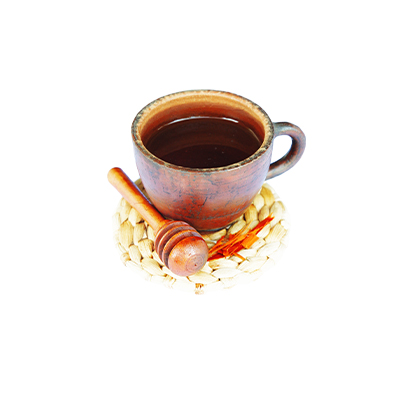
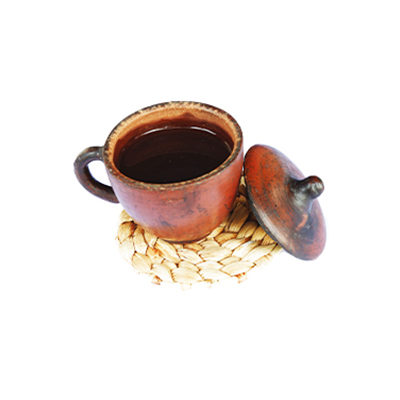
- Prepare 1 finger-length of dried secang wood, wash thoroughly and cut into small pieces. Boil the wood pieces with 3 glasses of water until boiling and the water reduces to 1½ glasses. Strain, add honey to taste so it's not too bitter.
- Drink twice a day, ¾ glass each time.
2. Relieving breathing
- Prepare 5 g secang wood, cut into small pieces.
- Then boil with 2 glasses of water for 15 minutes, cool then strain.
- Drink twice a day in equal amounts, morning and evening.
Reference Sources
- Deherba.com. 2018. Efektifkah Secang utuk Pengobatan Melena. https://www.deherba.com/secang-untuk-pengobatan-melena.html 28-05-2020.
- Acuan Sediaan Herbal Volume 6 Edisi Pertama. 2011. Badan Pengawas Obat dan Makanan.
- Sirait Midian dkk. 1985. Cara Pembuatan Simplisia. Departemen Kesehatan Republik Indonesia. Jakarta68.