Blechnum orientale L.
Summary
Blechnum orientale, known as pakis sipasan, is widely distributed from India and Nepal to southern China, Southeast Asia, Japan, Australia, and Polynesia. In Malaysia, this fern is known as an important edible medicinal plant, with its young leaves used as a vegetable by the indigenous Malay people, while traditionally parts of the plant are used to treat boils and various other ailments.
Agroecology
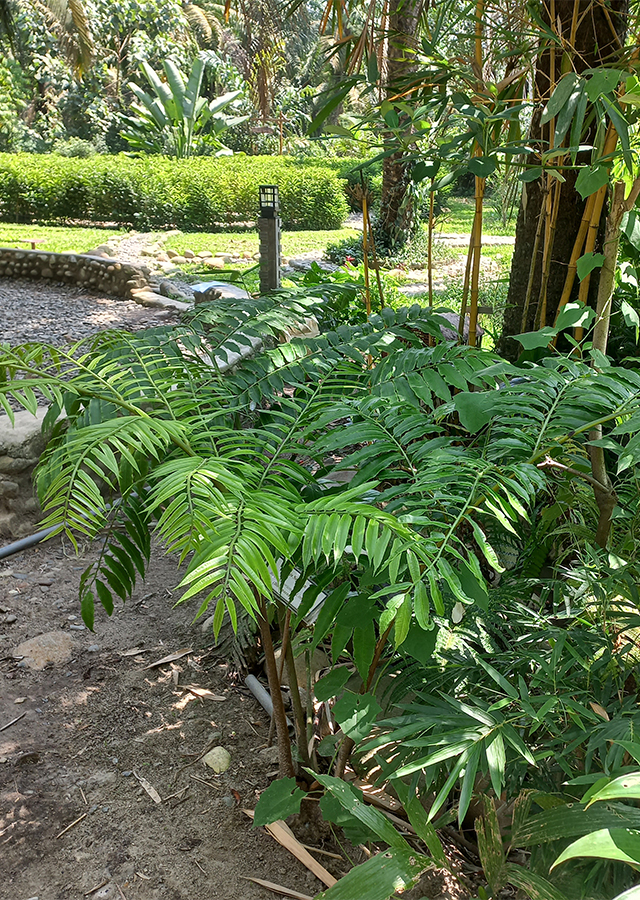
Pakis sipasan can be found growing from lowlands up to an elevation of 1,500 m asl. Usually found in open areas, moist locations, along roadsides in rainforest or dry areas, along riverbanks, and often growing as a primary colony after forest is cleared or burned. This species prefers open locations, but can tolerate partial shade conditions as well as shaded, wet areas. Plants grown in shade tend to have leaflets that appear wider, thinner, and paler with the leaf margin rolled inward.
Morphology
- Roots a short-creeping rhizome, upright, covered with dense scales.
- Stem somewhat upright, sturdy, covered with dark brown scales.
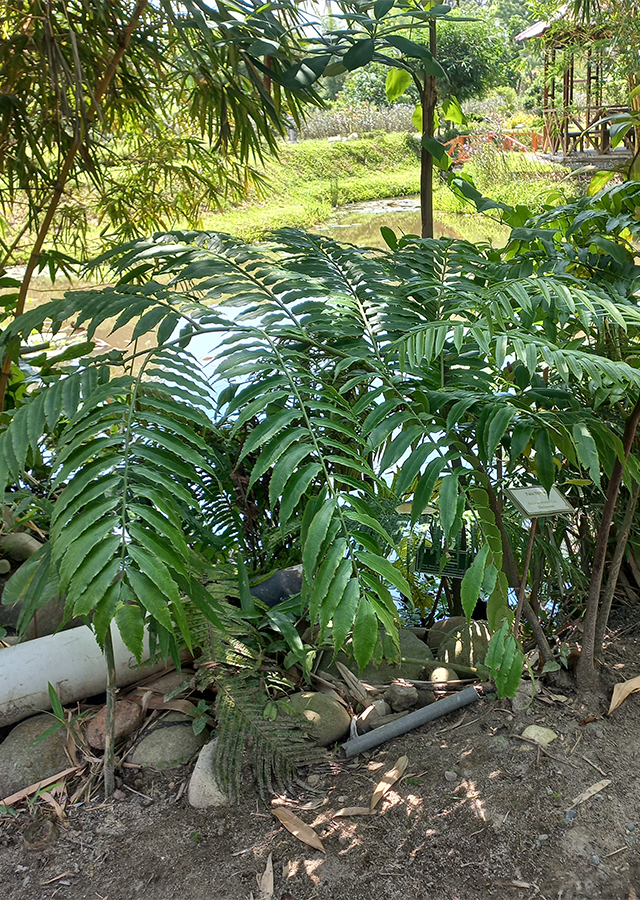
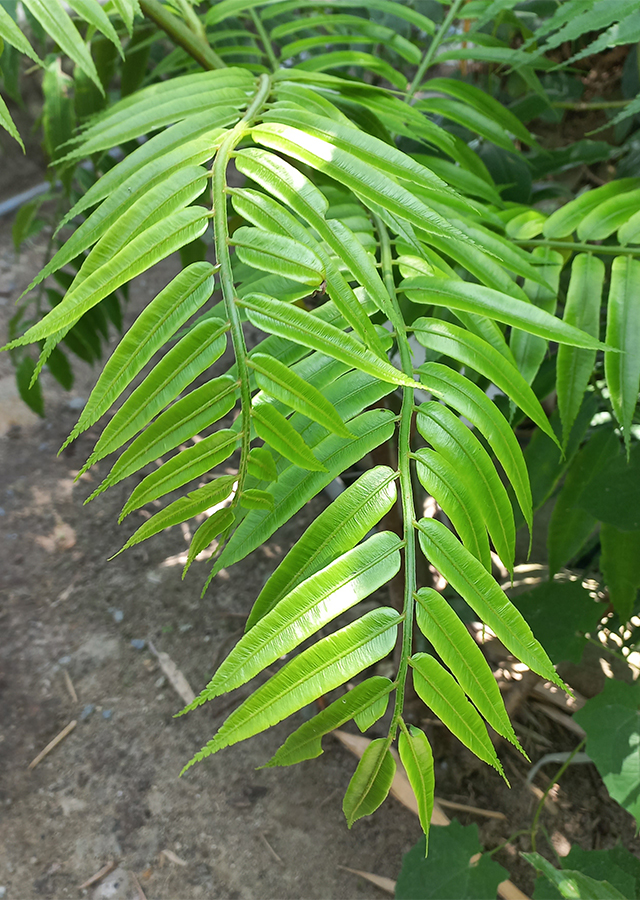
- Leaves compound, arranged alternately, green, pinnate, blade lanceolate to oblong, up to 200 cm long and up to 54 cm wide, midrib brownish to pinkish, hairless or with sparse hairs. Leaflets about 6-70 pairs, sessile, linear shaped, base rounded to reverse-triangular, tip tapering, margin toothed and wavy. Sori beneath the leaf, along near both leaf margins, linear and parallel with the rachis. Petiole up to 70 cm, purplish when young, scaly at the base. Stipes tufted, upright. Spores yellowish brown.
Cultivation
Plant propagation through spores.
Chemical Content
Essential oil, phenolic compounds, triterpenoids, flavonoids, tannins, saponins, quinones, steroids, polyphenol compounds, phenols, alkaloids, glycosides, cardiac glycosides, coumarins, betacyanin, proanthocyanidin, blechnic acid, 8-epiblechnic acid, brainic acid, 22-dehydrocampesterol, 24-alpha-ethyl-cholest-5-en-3-beta-ol, 24-alpha-ethyl-methyl-cholest-5-en-3-beta-ol, 24-beta-methyl-cholest-5-en-3-beta-ol, 24-alpha-cholest-5,22-dien-3-beta-ol, chlorogenic acid.
Benefits
Treats boils, abscesses, urinary tract disorders, worm infestation, impotence, diarrhea, leukemia, gastritis, headache, earache, stomachache, acute confusion (delirium), stops bleeding from wounds, treats skin fungal infections (especially ringworm), itchy skin, induces infertility in women, a natural contraceptive, heals intestinal wounds and typhoid. Has anti-inflammatory, anticancer, antimicrobial, antiviral, antioxidant, antidiabetic, and diaphoretic (sweat-inducing) activity.
Local Names
Hotal (Samosir), Galung (Sulawesi barat), Paku lipan, Paku leucir, Paku lubang.
Traditional Recipes
The following recipes reflect traditional knowledge passed down through generations, not a substitute for professional medical diagnosis or advice. Consult a healthcare provider before use.
1. Boils
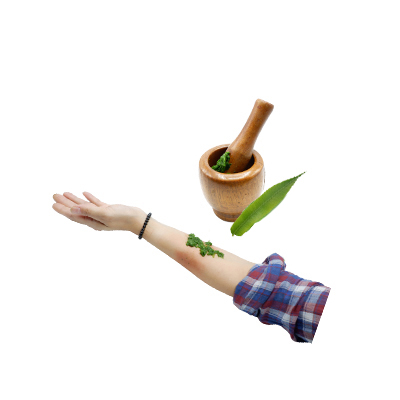
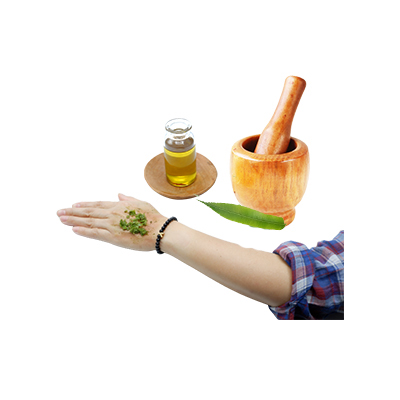
- Take fresh pakis sipasan leaves and wash until clean with running water.
- Grind until it becomes a paste.
- Apply the leaf paste as a poultice on the boil.
2. Skin fungal infection
- Prepare fresh pakis sipasan leaves and wash until clean with running water.
- Grind until it becomes a paste and add a little kerosene.
- Apply the leaf paste to the skin fungal infection.
Reference Sources
- Royal Botanic Gardens. Plants of the World Online: Blechnum orientale L.. https://powo.science.kew.org/taxon/urn:lsid:ipni.org:names:17059900-1. 18-04-2022.
- Hartini S. 2009. Keanekaragaman Tumbuhan Paku di Lokasi Calon Kebun Raya Samosir, Sumatera Utara. Warta Kebun Raya, 9(1).
- Stuartxchange. 2020. Philippine Medicinal Plants: Pakong-alagdan. http://www.stuartxchange.org/Pakong-alagdan.html. 18-04-2022.
- Verma S. C. et al. 2019. The Indian Fern Journal. Volume 36, Nos.1&2. The Indian Fern Society.
- Nikmatullah, M., Renjana E., Muhaimin M., Rahayu M. 2020. Potensi Tumbuhan Paku (Ferns & Lycophytes) yang Dikoleksi di Kebun Raya Cibodas sebagai Obat. AL-KAUNIYAH: Jurnal Biologi, 13(2): 278-287.
- Dash Gouri Kumar, Abdullah Mohammad Syafiq, Yahaya Ruhaiyem, Majeed Shahnaz. 2015. Blechnum orientale Linn.: An Important Edible Medicinal Fern. International Journal of Pharmacognosy and Phytochemical Research, 7(4); 723-726.
- Flora Fauna Web. 2021. Blechnopsis orientalis (L.) C.Presl. https://www.nparks.gov.sg/florafaunaweb/flora/5/5/5542. 18-04-2022.
- Tropical Plants Database, Ken Fern. 2021. Blechnum orientale. http://tropical.theferns.info/viewtropical.php?id=Blechnum+orientale. 18-04-2022.