Boesenbergia rotunda (L.) Mansf.
Summary
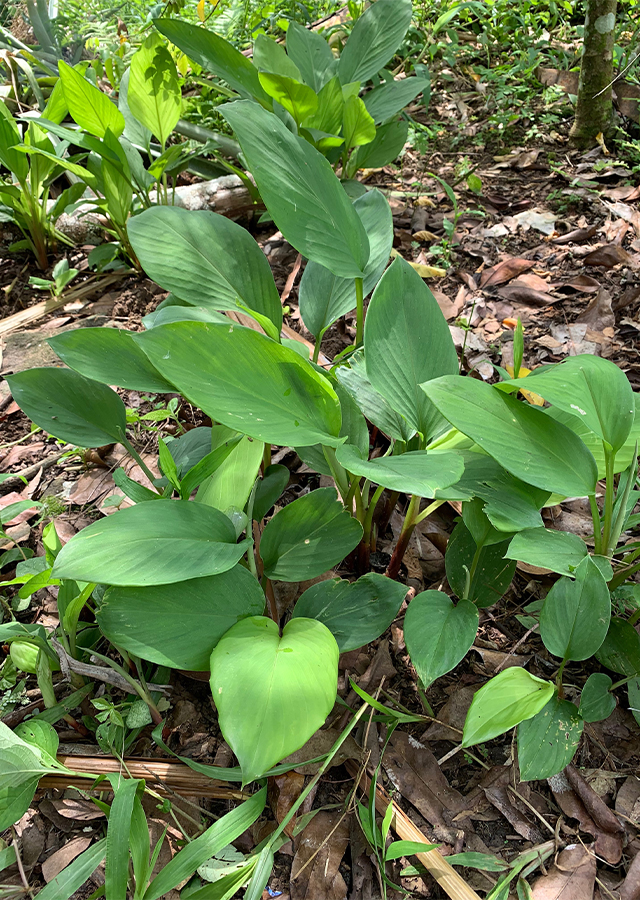
Fingerroot (Boesenbergia rotunda) is a herb 30-80 cm tall of the Zingiberaceae family, distributed from Yunnan in southern China to India and Sri Lanka. Its rhizome is commonly used as a cooking seasoning, while its young shoots are steamed as a vegetable believed to refresh and warm the body. In South Korea, fingerroot is even a raw material for cosmetics, besides being traditionally used to promote breast milk production and relieve cough.
Agroecology
This plant is commonly found in tropical lowlands with an average temperature of 18-30 °C, dense forest up to an elevation of 1,000 m above sea level, and rainfall of 1,200-3,000 mm/year. Grows well in areas with full sun, moist soil, pH 6-7, relatively fertile soil with good aeration and water circulation.
Morphology
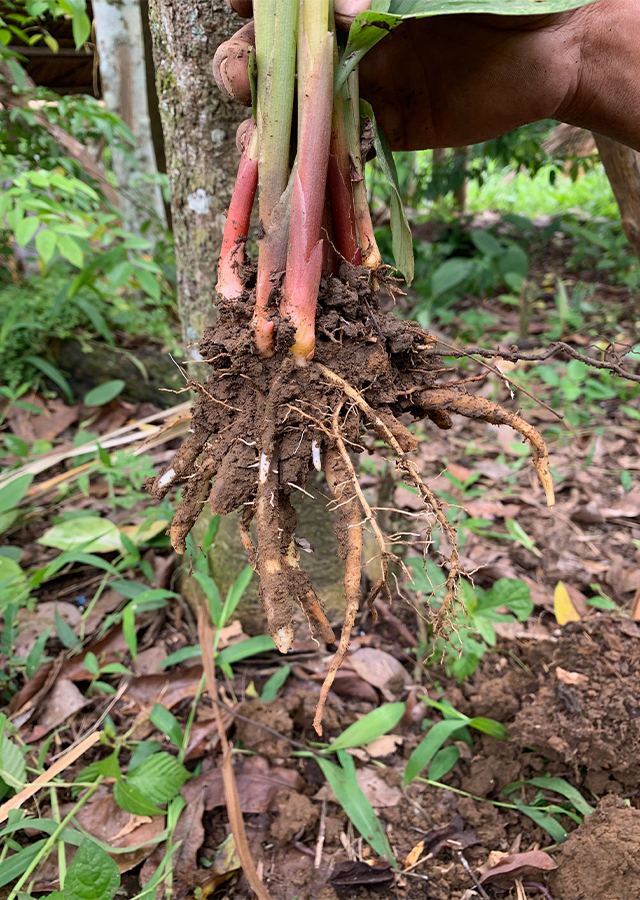
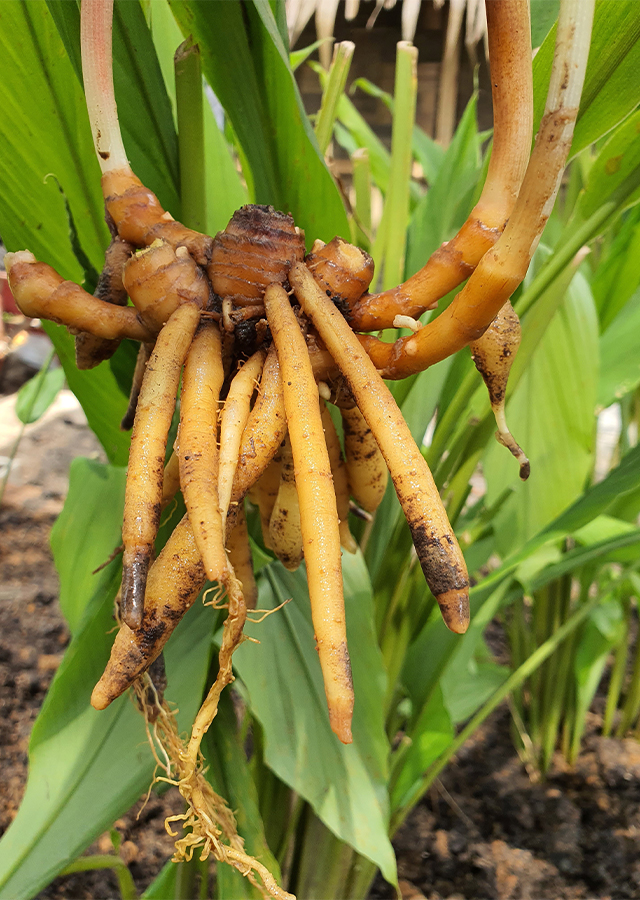
- Roots differentiate into a rhizome with maturity, elongated downward and round in shape.
- Rhizome yellowish-brown, smooth surface, long, slender, and finger-like.
- Stem is actually an underground stem in the form of a rhizome, yellowish-brown, aromatic, thickened.
- Leaves have 2-7 blades, lower leaves form sheaths.
- Flowers form an unbounded spike arrangement, in the leaf axils, protected by 2 spathes, stalk 41 cm long. It has 3 petals, colored pink or yellowish-white, tube-shaped, with the upper crown lobed, lanceolate.
Cultivation
Propagated by cutting the rhizome into several sections (each section with at least 2 buds), with a planting spacing of 30 cm.
Chemical Content
Resin, saponins, the flavonoid pinostrobin, alpinetin, essential oil (camphor, cineole, methyl cinnamate, hydromyrcene).
Benefits
Acts as an expectorant or addresses cough; relieves flatulence; stimulates appetite; treats diarrhea; heals canker sores, vaginal discharge; stimulates breast milk production.
Simplisia
- Prepare fingerroot rhizome and separate it from the roots. Wash thoroughly and drain. Slice the rhizome thinly and arrange on a woven bamboo tray.
- Sun-dry the slices until dry. Turn every 2-3 hours to speed up the drying process. Dry for about 6 days until completely dry. Blend the material until fine.
- Store the dried material in a tightly closed, light-proof container.
Local Names
Koncih (Sumatra), Tamu kunci (Minangkabau), Konce (Madura), Kunci (Central Java), Dumu kunci (Bima), Tamu konci (Makasar), Tumu kunci (Ambon).
Traditional Recipes
The following recipes reflect traditional knowledge passed down through generations, not a substitute for professional medical diagnosis or advice. Consult a healthcare provider before use.
1. Leukorrhea (Vaginal Discharge)
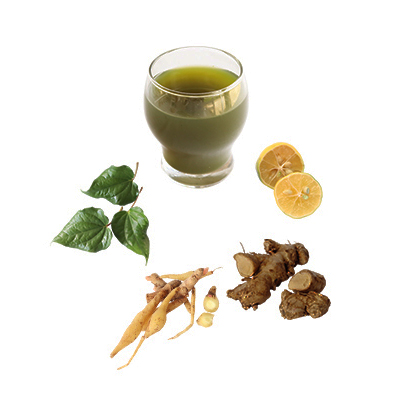
- Prepare 50 g fingerroot, 50 g lempuyang ginger, 7 betel leaves, 1 tsp lime juice.
- Clean all ingredients, then pound until fine. Divide the mixture into 3 portions.
- Steep the pounded ingredients in ½ cup of hot water, add lime juice, and mix well.
- Drink the mixture warm twice a day until symptoms improve.
- Continue drinking once a week until fully recovered.
Reference Sources
- Tropical Plants Database, Ken Fern. Boesenbergia rotunda. http://tropical.theferns.info/viewtropical.php?id=Boesenbergia+rotunda 26-01-2021.
- Ministry of Health. 2009. Guidelines For the Use of Herbal Medicines in Family Health Care. Ministry of health, republic of indonesia.
- Sirait Midian dkk.1985. Cara Pembuatan Simplisia. Departemen Kesehatan Republik Indonesia. Jakarta72.