Bonnaya ciliata (Colsm.) Spreng.
Summary
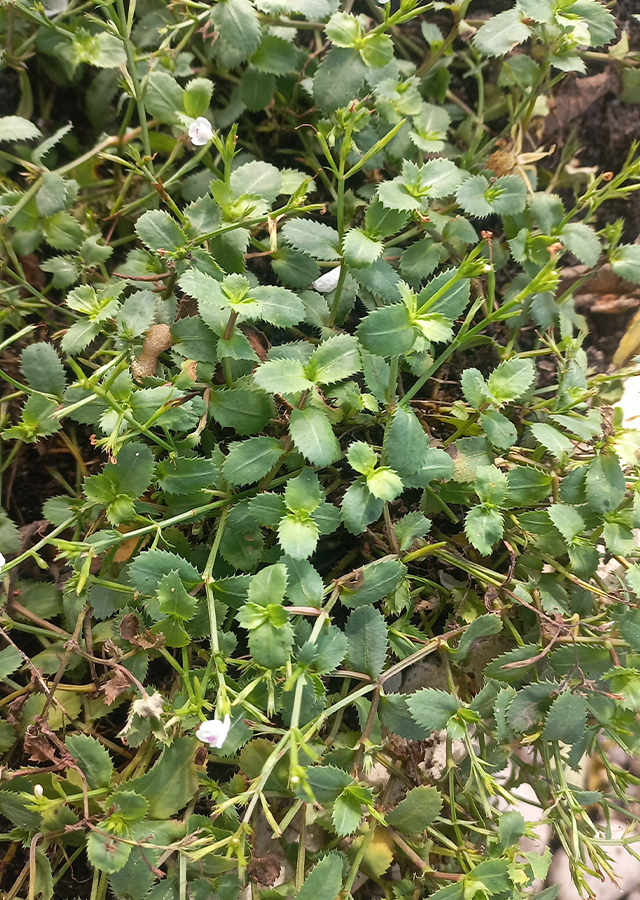
Bonnaya ciliata, known as kecapung, is a weed herb that grows wild from India and Japan to Southeast Asia and northern Australia. Despite being classified as a weed, this plant has long been used in traditional medicine for various ailments, from digestive disorders to skin problems.
Agroecology
Bonnaya ciliata can be found growing in sunny or shaded areas, grassy areas, wastelands, roadsides, fallow fields, rainfed rice fields, disturbed places, at elevations from sea level up to 1,300 m asl. This species generally grows in light, sandy, or gravelly soil, often in clusters, and prefers moist locations. This species is also able to tolerate a few days of submersion.
Morphology
- Roots a taproot, white or brown.
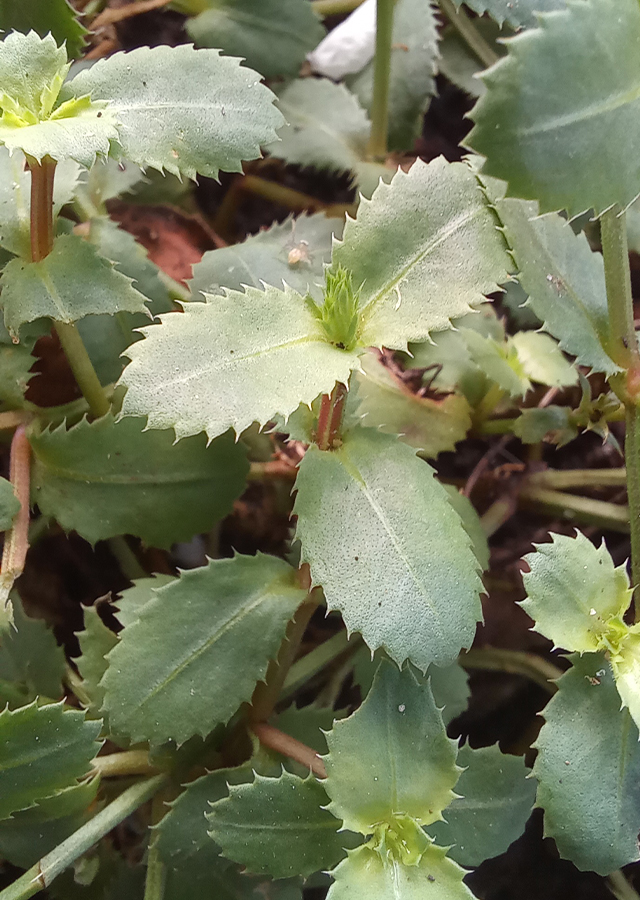
- Stem much-branched, the branches bent and sometimes rooting at their last node, square-shaped, solid, hairless or hairy. Stipules absent.
- Leaves opposite, elliptic-oblong, base rounded, tip blunt to acute, margin aristate-dentate, sessile.
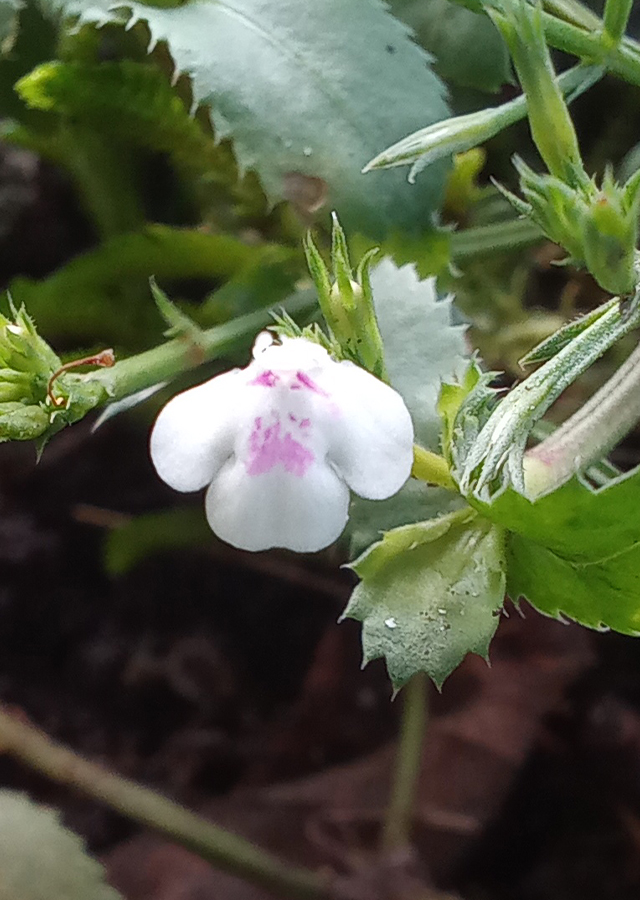
- Flowers bisexual, solitary or clustered in axillary or terminal racemes, stalked. Calyx has 5 lobes and is linear, while the corolla is pink or bluish pink, curved tubular with 5 petals, 2-lipped. Ovary about 2-3 mm long, elongate. Bracts leafy, about 2-3 mm long. Stamens 2, anthers unequal, staminodes with divergent hooks.
- Fruit a capsule about 1-1.5 cm long, linear, winged septum, exceeding the calyx.
- Seeds black.
Cultivation
Propagation is generative through seed.
Chemical Content
β-sitosterol, stigmasterol, lup-20(29)en-3β-ol, flavonoids, phenolic compounds.
Benefits
A postpartum remedy, treats menorrhagia (excessive menstruation), gonorrhea, jaundice, urination disorders, headache, liver complaints, spleen disease, constipation, cough, worm infestation, skin diseases, diabetes, anemia, bronchitis, asthma, reduces fever, addresses loss of appetite, hypertension. Has hepatoprotective (liver-protective) activity.
Local Names
Informasi tidak ditemukan. Butuh penelusuran lebih lanjut.
Traditional Recipes
The following recipes reflect traditional knowledge passed down through generations, not a substitute for professional medical diagnosis or advice. Consult a healthcare provider before use.
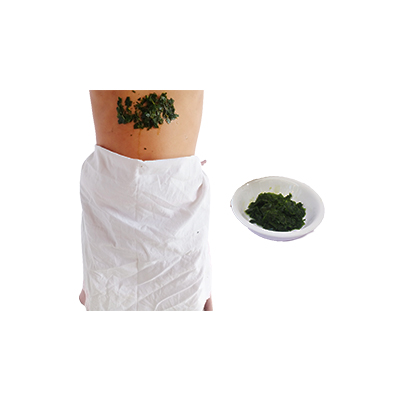
1. Postpartum remedy
- Take an adequate amount of kecapung leaves.
- Grind until it becomes a paste.
- Apply to the abdomen.
- The sap from the crushed leaves is given after giving birth
Reference Sources
- Royal Botanic Gardens. Plants of the World Online: Bonnaya ciliata (Colsm.) Spreng.. https://powo.science.kew.org/taxon/urn:lsid:ipni.org:names:799773-1. 09-04-2022.
- Tropical Plants Database, Ken Fern. Lindernia ciliata. http://tropical.theferns.info/viewtropical.php?id=Lindernia+ciliata. 09-04-2022.
- Umakrithika S. 2021. A comprehensive overview of plant genus: Lindernia. Journal of Pharmacognosy and Phytochemistry, 10(5): 42-48.
- Pl@ntNet. Riceweeds en - Linderniaceae - Lindernia ciliata (Colsm.) Pennell. http://publish.plantnet-project.org/project/riceweeds_en/collection/collection/information/details/LIDCI. 09-04-2022.