Borassus flabellifer L.
Summary
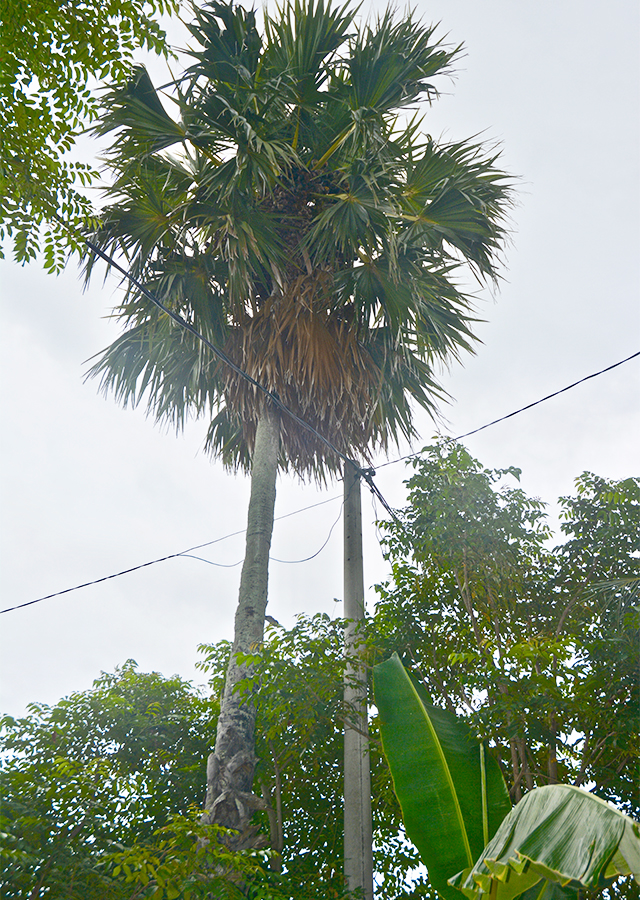
Siwalan (Borassus flabellifer) is a palm up to 15-20 meters tall of the Arecaceae family, native to India, distributed as far as Papua New Guinea and Africa. As a multipurpose tree, siwalan produces sap for sugar, fruit for consumption, and leaves for crafts across East Java, Bali, and Nusa Tenggara. Siwalan is traditionally believed to care for the digestive system and regulate blood sugar levels.
Agroecology
Siwalan grows in lowlands, coasts to mountains (0-800 m above sea level). Adapts easily to dry regions. Optimal temperature ± 30°C, average rainfall 500-2,000 mm/year. Grows ideally in hydromorphic alluvial soil, old gray alluvial, yellow gray, red latosol, and reddish-brown latosol.
Morphology
- Stem single, cylindrical, sturdy, upright, straight, blackish bark color.
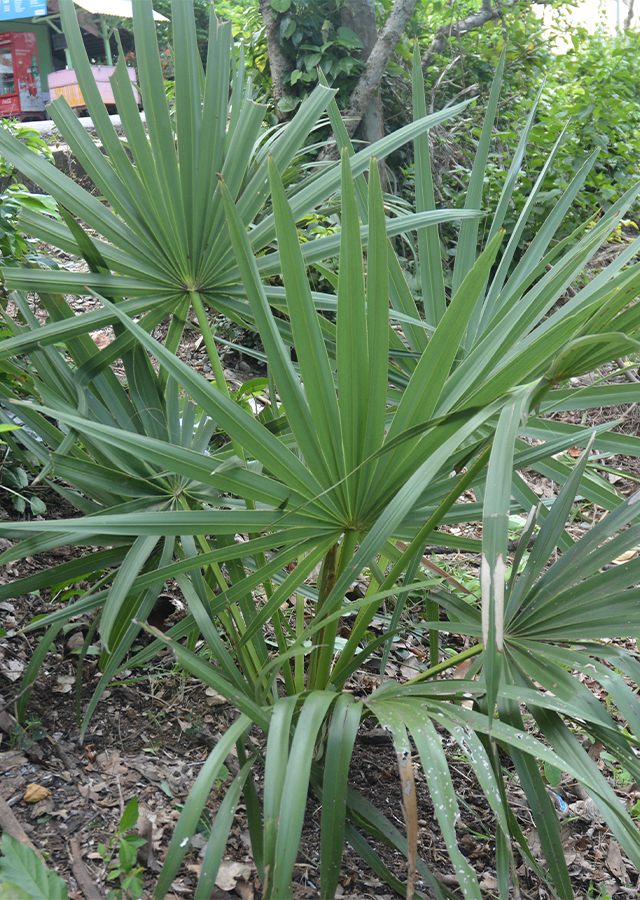
- Leaves fan-like, round, stiff, palmate, grayish-green. Sheath and petiole edges have irregular black thorns.
- Flowers female sometimes branched while male branches a lot. Milky white flower color, clustered, embedded on its cob.
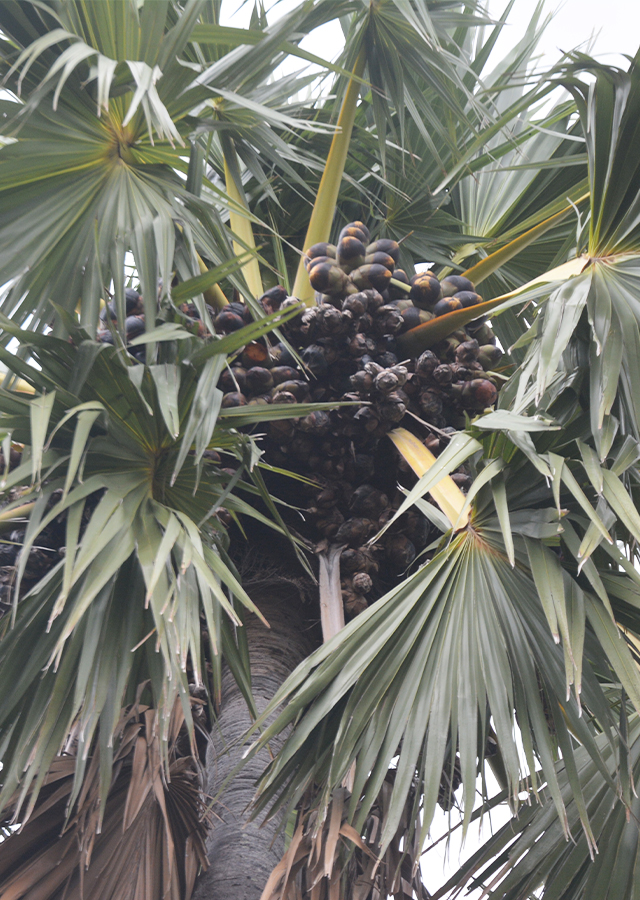
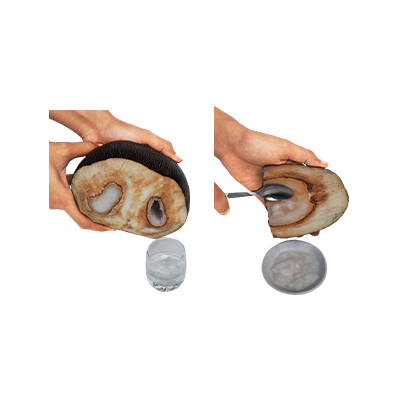
- Fruit clustered in a bunch, about 20 fruits, round with a diameter of 7-20 cm, blackish-brown skin. Each fruit has 3-7 pieces of clear white fruit flesh and covered by a thick, hard shell.
Cultivation
- Propagated by seed.
- Seed sowing is done by soaking the seed in warm water for 24 hours, and scarifying the seed coat so it germinates quickly.
Chemical Content
Flavonoid, alkaloid, saponin, tannin, carotenoid, β-carotene, steroid, triterpenoid, propanediol acetate, benzenediol acetate, propanediamine.
Benefits
Cares for the digestive system, treats diarrhea, cares for liver and kidney function, maintains skin health, regulates blood sugar levels, improves fertility, treats erectile dysfunction (low libido), removes stress.
Local Names
Lonta (Minangkabau), Ental, Siwalan (Sunda, Java, and Bali), Taal (Madura), Dun tal (Lombok), Jun tal (Sumbawa).
Traditional Recipes
The following recipes reflect traditional knowledge passed down through generations, not a substitute for professional medical diagnosis or advice. Consult a healthcare provider before use.
1. Low libido
- Consume the water and flesh of young siwalan fruit, 1-2 fruits every day.
2. Diarrhea
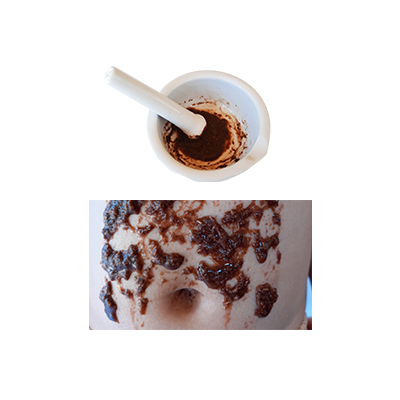
- Prepare siwalan root as needed.
- Wash thoroughly then pound and add rice-washing water as needed.
- Dose: 5-6 g a day.
- External use: Apply the paste to the stomach.
Reference Sources
- Heyne, K. 1987. Tumbuhan Berguna Indonesia, jilid1. Yayasan Sarana Wana Jaya, Jakarta373-376.
- Barry JP, Celles JS. 1991. Flore de Mauritanie 2: 360-550. Centre Regional de Documentation Pedagogique, Nice.
- Tambunan Parlindungan. 2010. 27 Potensi dan Kebijakan Pengembangan Lontar untuk Menambah Pendapatan Penduduk (The Potential and Policy for Lontar Development to Increase the People Income). https://www.researchgate.net/publication/313230499_POTENSI_DAN_KEBIJAKAN_PENGEMBANGAN_LONTAR_UNTUK_MENAMBAH_PENDAPATAN_PENDUDUK. D12-04-2020
- Apriyanti, Irni Resmi. 2018. Studi Potensi Pemanfaatan Limbah Serat Batok Siwalan (Borassus flabellifer L.) Sebagai Bahan Baku Kerajinan Lokal (Benang) Gresik. https://media.neliti.com/media/publications/266098-studi-potensi-pemanfaatan-limbah-serat-b-2aaead2b.pdf 12-04- 2020.