Brassica oleracea var. palmifolia DC
Summary
Brassica oleracea var. palmifolia or kale lacinato has grown in the Tuscany region of Italy since the 18th century and has become a signature ingredient in local cuisine, especially the thick soup ribollita. Its leaves are usually boiled then sautéed with flavorful ingredients like anchovies, while its straight, slender stem is even used to make walking sticks, alongside its nutrient content beneficial for maintaining immunity and relieving joint pain.
Agroecology
Suitable for planting in light (sandy), medium (loamy), and heavy (clay) soil, prefers well-drained soil and can grow in heavy clay soil. Suitable soil pH ranges from slightly acidic, neutral, and alkaline (slightly alkaline) and can grow in very acidic and very alkaline soil (4.3-8.3). Prefers moist soil and can grow in semi-shade (light woodland) or without shade. This plant can tolerate maritime exposure.
Morphology
- Roots a taproot.
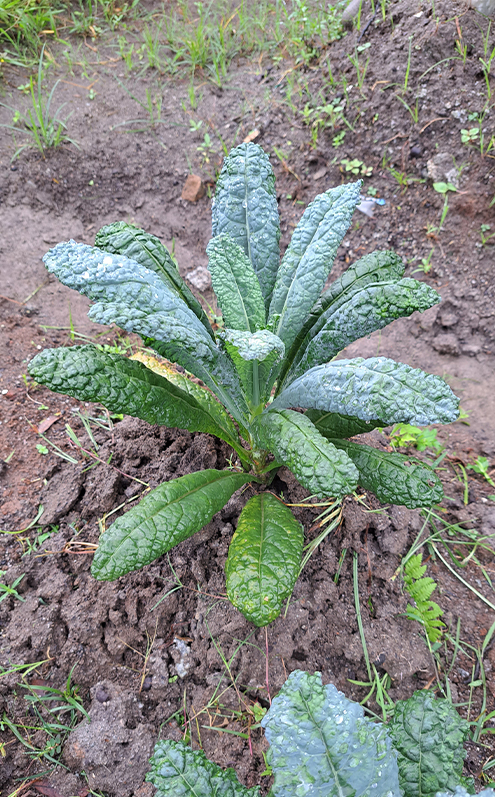
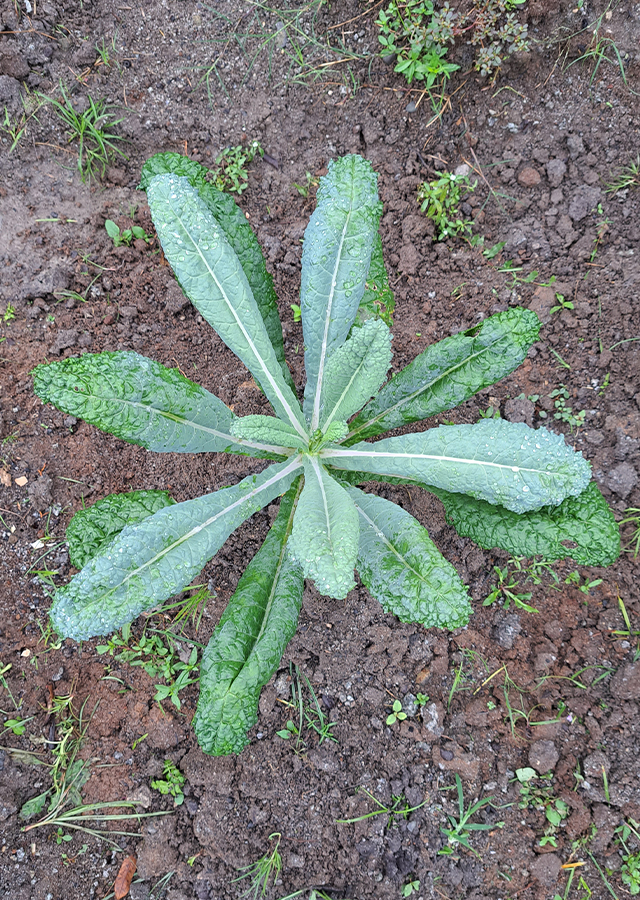
- Stem woody and fibrous, unbranched, topped with a leaf rosette.
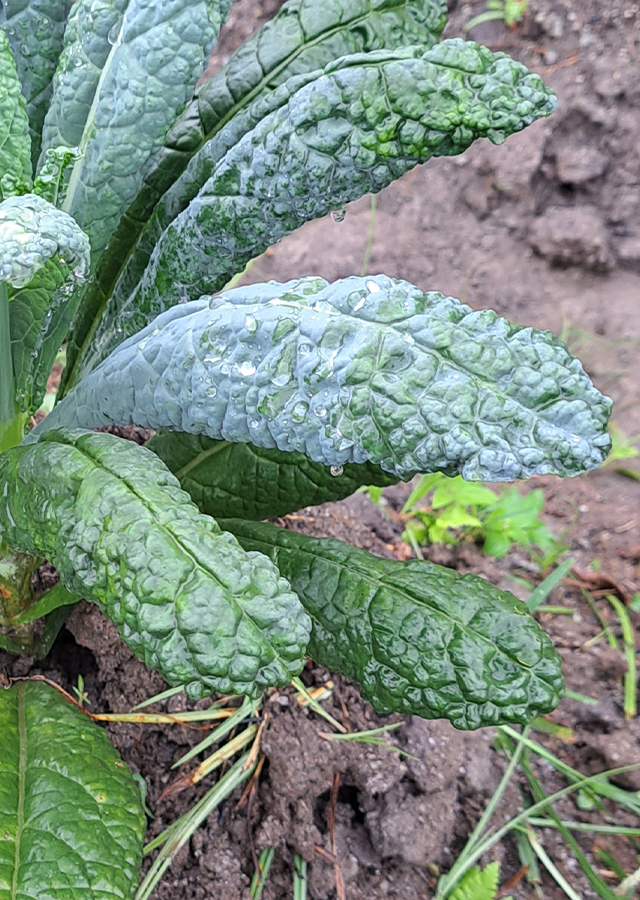
- Leaves green and sword-shaped (elongated). Leaf margin wavy. Leaf surface glossy. Has a sweet, savory, and delicious taste. Its wavy leaf texture gives a crisp, enjoyable effect when chewed.
Cultivation
Propagation is done generatively using seed. The seed is first sown in a nursery, and after growing for about 2 weeks the plant can be transplanted to the field.
Chemical Content
Glucoraphanin, sinigrin, gluconapin, gluconasturtiin, glucoerucin, glucobrassicin, and 4-methoxyglucobrassicin.
Benefits
Boosts the immune system, treats flu, eye strain, Alzheimer's, relieves joint pain, addresses obesity, cleans infected wounds. Has antioxidant and analgesic activity.
Local Names
Kale tuscan.
Traditional Recipes
The following recipes reflect traditional knowledge passed down through generations, not a substitute for professional medical diagnosis or advice. Consult a healthcare provider before use.

1. Cleans infected wounds
- Take kale lacinato leaves and wash until clean then drain.
- Remove the midrib and iron the leaf.
- Apply the leaf to the affected area while still hot.
Reference Sources
- Useful Tropical Plants. 2021. Brassica oleracea palmifolia. http://temperate.theferns.info/plant/Brassica+oleracea+palmifolia. 11-07-2022.
- Dina Yulia Agustina. 2022. ANALISIS KADAR OKSALAT PADA DUA JENIS TANAMAN KALE (Brassica oleracea var. acephala dan Brassica oleracea var. palmifolia ) DENGAN METODE SPEKTROFOTOMETRI UV. Fakultas Farmasi Universitas Bahkti Kencana Bandung Indonesia. Jurnal Ilmiah Ibnu Sina Vol 7 No 1 (2022): JIIS. DOI: https://doi.org/10.36387/jiis.v7i1.798.