Brassica rapa subsp. pekinensis (Lour.) Kitam.
Summary
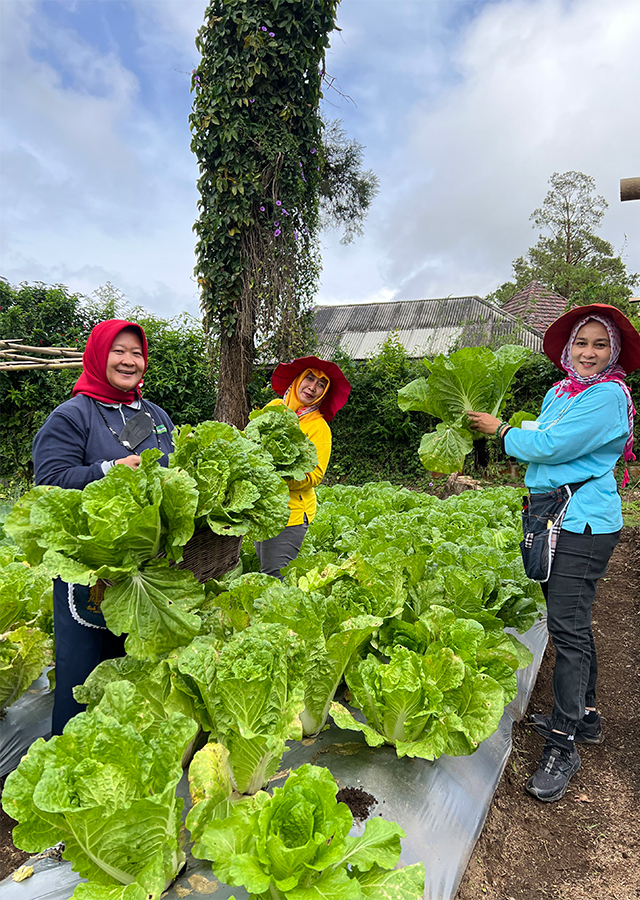
Napa cabbage (Brassica rapa subsp. pekinensis) is an annual herb 26-33 cm tall from the Brassicaceae family popular in China, Korea, and Japan, the main ingredient of kimchi with about 200 types known in Korea. Rich in provitamin A, ascorbic acid, and fiber, napa cabbage is also popular in Indonesia as a savory vegetable. Napa cabbage is believed to help lower blood pressure and maintain digestive tract health.
Agroecology
Areas suitable for growing napa cabbage are loamy to sandy loam soil types, loose, containing organic matter, with an optimum soil pH of 6.0-6.8. Elevation of 600-1,500 m asl. Other requirements are an open location receiving direct sunlight and smooth water drainage. Napa cabbage is rarely grown in lowland areas because it will not form a head. Even if it does form a head, the head is very small or hollow. A good planting time for napa cabbage is toward the end of the rainy season (March) or the start of the rainy season (October) because the plant is somewhat resistant to rain. However, plant care during the rainy season will be more demanding than during the dry season due to leaf caterpillar attacks.
Morphology
- Roots a taproot with fibrous roots growing and spreading in all directions around the soil surface.
- Stem the true stem is short and winged, located at the base within the soil. The true stem is not woody and whitish in color. The true stem measures 1.5 cm long and 3.5 cm in diameter.
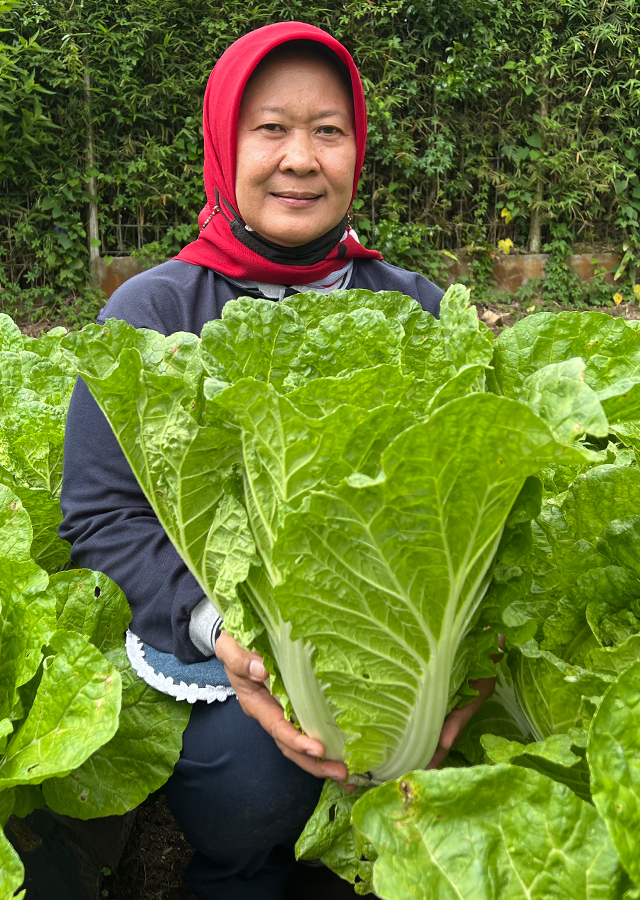
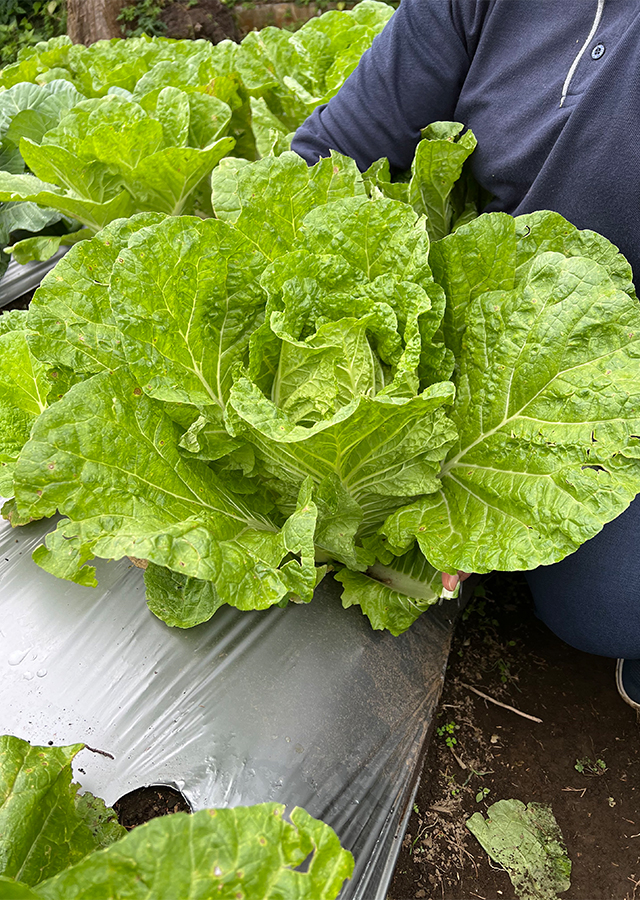
- Leaves oblong shaped and somewhat wide, rough, wrinkled, finely to coarsely hairy (though some have smooth, hairless leaves), light green to dark green. Leaves have a long, white petiole, somewhat wide and flat, limp and smooth. The leaf sheaths wrap around each other with the younger leaf sheaths, forming a head, but the older (lowest) leaves open outward. In addition, the leaves also have pinnate, branching veins. The leaves of the napa cabbage plant are the part consumed in various food forms, especially the head part (the cluster of leaves that forms the head).
- Flowers, the stalk emerges from the leaf axil growing upward. The flower structure consists of a green calyx, light yellow petals, and short-stalked stamens.
- Seeds hard, glossy and smooth, and blackish brown in color.
Cultivation
Napa cabbage reproduces generatively using seed. Before planting in the field, the seed is better sown first. Seedlings are transplanted to the field after having 2 true leaves (18-20 days old). Planting uses a spacing of 50 x 60 cm, with planting holes made according to the spacing at hoe depth or measuring 30 x 30 x 30 cm.
Chemical Content
1,2-Benzenedicarboxylic acid and 2,3-dicyanopropionamide.
Benefits
Reduces the risk of heart disease, protects the body from inflammation, maintains bone health and strength, helps lower blood pressure, maintains digestive tract health, regulates blood sugar levels, prevents anemia, maintains body hydration, maintains eye health, maintains kidney health, helps with weight loss, has good non-cytotoxic antimicrobial and antioxidant properties against pathogenic bacteria.
Local Names
Sawi debok.
Traditional Recipes
The following recipes reflect traditional knowledge passed down through generations, not a substitute for professional medical diagnosis or advice. Consult a healthcare provider before use.
1. Maintains body health
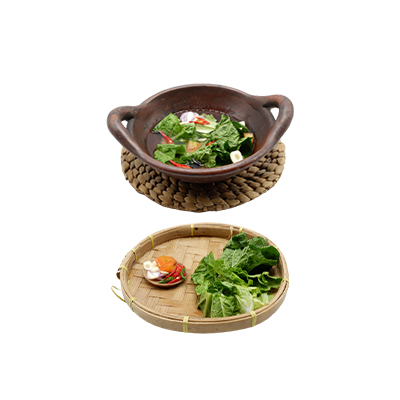
- Prepare an adequate amount of napa cabbage leaves and wash until clean.
- Boil, adding salt and sugar for flavor.
- Eat with rice as a side dish.
Reference Sources
- Useful Tropical Plants Database. 2022. Brassica rapa pekinensis. https://tropical.theferns.info/viewtropical.php?id=Brassica+rapa+pekinensis. 24-1-2022.
- Sukendar. 2013. Budidaya Sawi Putih. http://shukendar.blogspot.com/2011/12/budidaya-sawi-putih.html. 24-1-2022.
- Hello Sehat. 11 Manfaat Sawi Putih yang Sayang untuk Dilewatkan. https://hellosehat.com/nutrisi/fakta-gizi/manfaat-sawi-putih/. 24-1-2022.
- Heru. Klasifikasi Tanaman Sawi Putih. http://bertanamhiasan.blogspot.com/2013/11/klasifikasi-tanaman-sawi-putih.html. 24-1-2022.
- Rubab M, dkk. Preservative effect of Chinese cabbage (Brassica rapa subsp. pekinensis) extract on their molecular docking, antioxidant and antimicrobial properties. Published online 2018 Oct 3. doi: 10.1371/journal.pone.0203306. https://www.ncbi.nlm.nih.gov/pmc/articles/PMC6169867/.