Broussonetia papyrifera (L.) L'Hér. ex Vent.
Summary
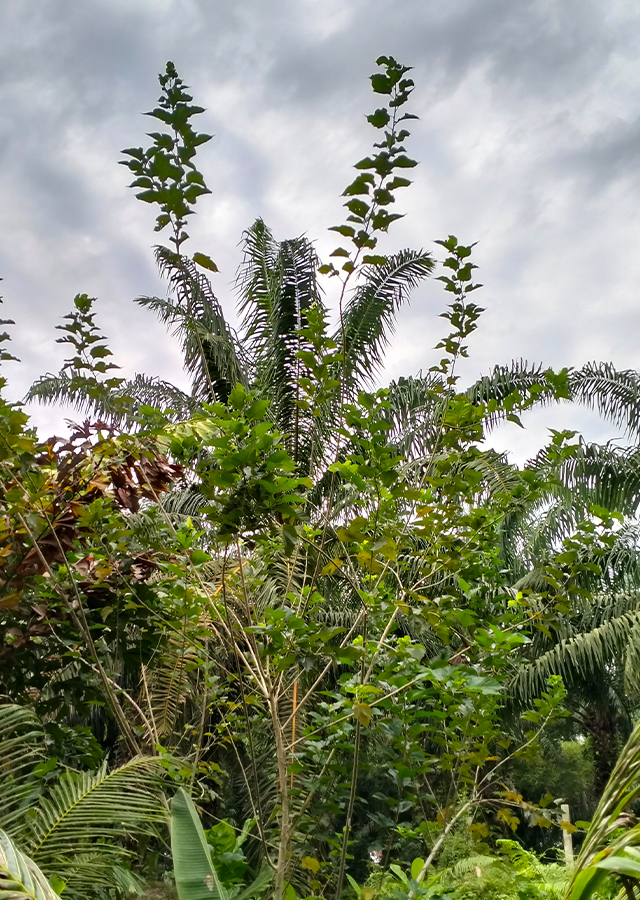
Daluang (Broussonetia papyrifera) is a shrub or small tree, 10-20 meters tall, from the Moraceae family thought to originate from China and Japan, spread as far as Sumatra and Maluku in Indonesia. Its bark fiber has for centuries been used to make paper in Japan and traditional tapa cloth on Pacific islands such as Fiji and Tahiti. Daluang extract has been recognized by the Korea Food and Drug Administration as an ingredient in traditional Korean medicine believed to have anti-inflammatory and diuretic properties.
Agroecology
This plant can be found growing well in mixed forests, forest edges, and along rivers in subtropical and warm, humid climates, at elevations of 0-1,600 m asl. It thrives in well-drained soil, sandy and light soil, with a pH range of 5-7.5 but tolerating 4.5-8, in full sun, temperatures of 0-40 °C, and annual rainfall ranging from 700-2,500 mm.
Morphology
- Roots have stolons or rhizomes with relatively shallow rooting.
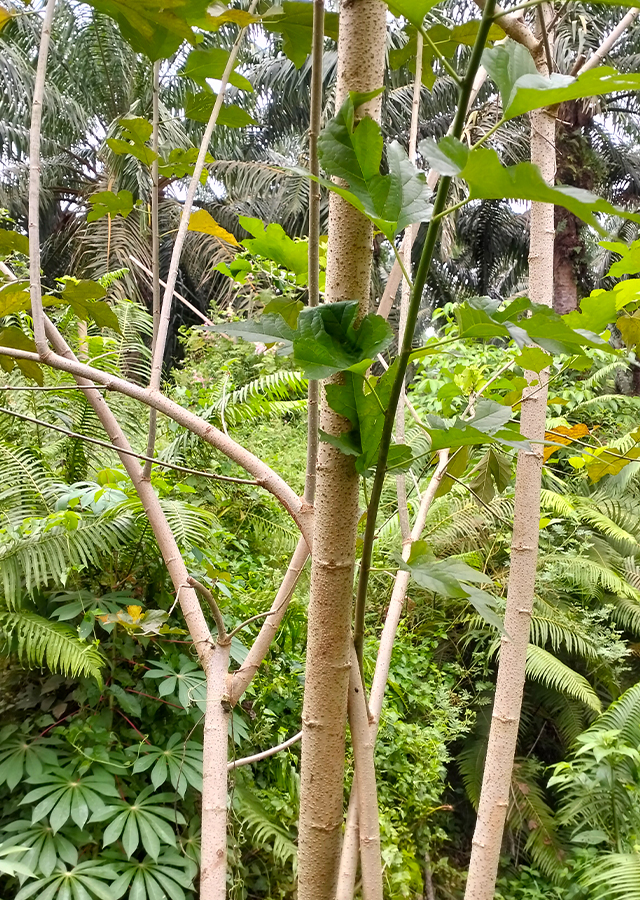
- Stem cylindrical, 50-70 cm in diameter, with milky white sap. Bark light gray, smooth, with shallow fissures or ridges; the inner bark consists of tough interwoven fibers.
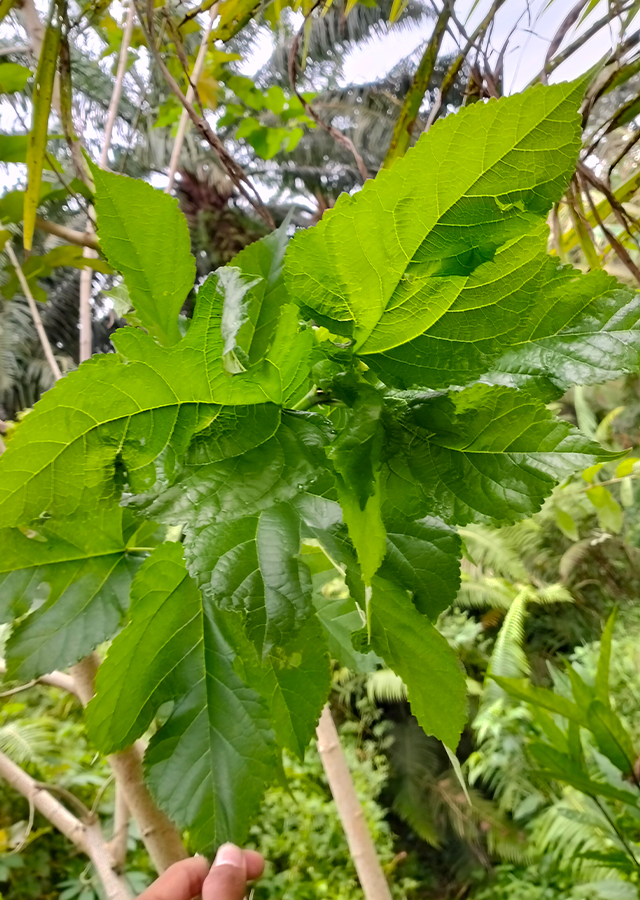
- Leaves rough (covered with fine hairs when young), petiolate, serrated margins, heart-shaped to rounded base, tapering or somewhat pointed tip, dark green on the upper surface and paler green with hairs on the lower surface, arranged alternately or oppositely. Leaf shape varies. Some leaves have deep lobes, others are unlobed (even on the same shoot).
- Flowers male and female borne on separate plants; female flowers consist of pistils forming a rounded head, tubular perianth, hairy to tomentose, filiform, 7-10 mm long, solitary in the leaf axils or beneath the leaves, while male flowers are solitary or usually clustered on short shoots, yellowish-white, spiny, perianth 4-lobed, hairy, with 4 stamens.
- Fruit round or pear-shaped, glossy reddish, fleshy, compound with achenes hanging from the stalk.
- Seeds small, with flat cotyledons and a long radicle.
Cultivation
- Propagation is done generatively (seeds) and vegetatively (cuttings, root suckers).
- Germination usually occurs within 1-3 months at a temperature of 15 °C.
Chemical Content
Broussonin A, broussonin B, kazinol F, broussochalcone A, 1-(2,4-dihydroxyphenyl)-3-(4-hydroxyphenyl)-propane, 1-(4-hydroxy-2-methoxyphenyl)-3-(4-hydroxy-3-prenylphenyl)-propane, isolicoflavonol, broussochalcone B, broussoflavonol A and B, broussoflavonol C, D, E, and F, butyrospermol acetate, erythrinasinate, papyriflavonol A, lignoceric acid, marmesin, octocosan-l-ol, squalene, 7-hydroxycoumarin, protocatechuate acid, ferulic acid, protocatechuic acid, epicatechin.
Benefits
Treats gonorrhea, ascites (fluid buildup in the abdominal cavity), menorrhagia (heavy menstrual bleeding), anuria (kidney failure to produce urine), dysentery, treats wounds and insect bites, skin disorders, eye disorders and impotence, has diaphoretic and laxative properties, diuretic, hemostatic, anti-inflammatory, antiasthmatic, antioxidant, anticancer, antinociceptive, antimicrobial.
Local Names
Saeh (West Java), Glugu or Galugu (East Java), Dhalubang or Dhulubang (Madura), Kembala (East Sumba), Rowa (West Sumba), Malak (Seram Islands).
Traditional Recipes
The following recipes reflect traditional knowledge passed down through generations, not a substitute for professional medical diagnosis or advice. Consult a healthcare provider before use.
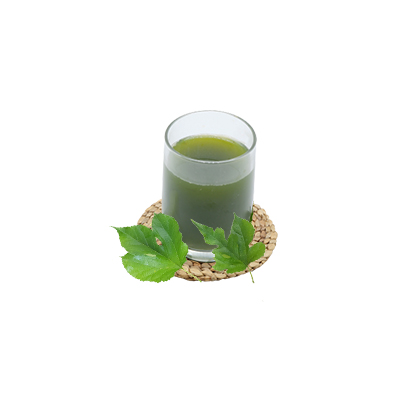
1. Dysentery
- Prepare fresh daluang leaves as needed and wash until clean.
- Blend into juice.
- Strain, then drink.
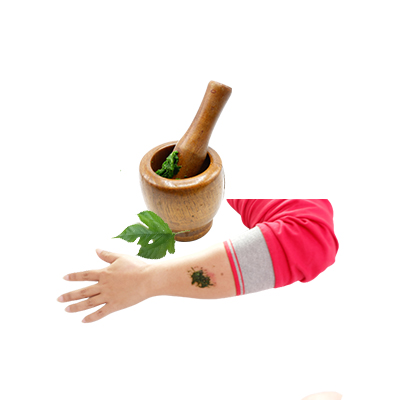
2. Treating insect bites
- Take fresh daluang leaves as needed and wash until clean.
- Mash until it becomes a paste.
- Apply to the insect bite.
Reference Sources
- Royal Botanical Garden. 2021. Plants of the World Online: Broussonetia papyrifera (L.) L'Hér. ex Vent. [diakses 12 September 2021]. http://powo.science.kew.org/taxon/urn:lsid:ipni.org:names:850861-1.
- CAB International. 2021. Invasive Species Compendium: Broussonetia papyrifera (paper mulberry). [diakses 12 September 2021]. https://www.cabi.org/isc/datasheet/10017#todescription.
- Prosea. 2019. Broussonetia papyrifera (PROSEA). [diakses 12 September 2021]. https://uses.plantnet-project.org/en/Broussonetia_papyrifera_(PROSEA).
- Useful Tropical Plants Database. 2021. Broussonetia papyrifera. [diakses 12 September 2021].https://tropical.theferns.info/viewtropical.php?id=Broussonetia+papyrifera.
- Sun J et al. 2012. Chemical Composition and Antioxidant Activities of Broussonetia papyrifera Fruits. PLoS ONE 7(2):e32021. doi:10.1371/journal.pone.0032021.
- Shende MV et al. 2021. Looking A head to Reviewing Some Pharmacologically Active Phytoconstituents Present in Broussonetia papyrifera (L.) Hert. ex Vent. International Journal of Current Research and Review 13(12): 88-93. DOI: http://dx.doi.org/10.31782/IJCRR.2021.131222.