Caesalpinia pulcherrima (L.) Sw.
Summary
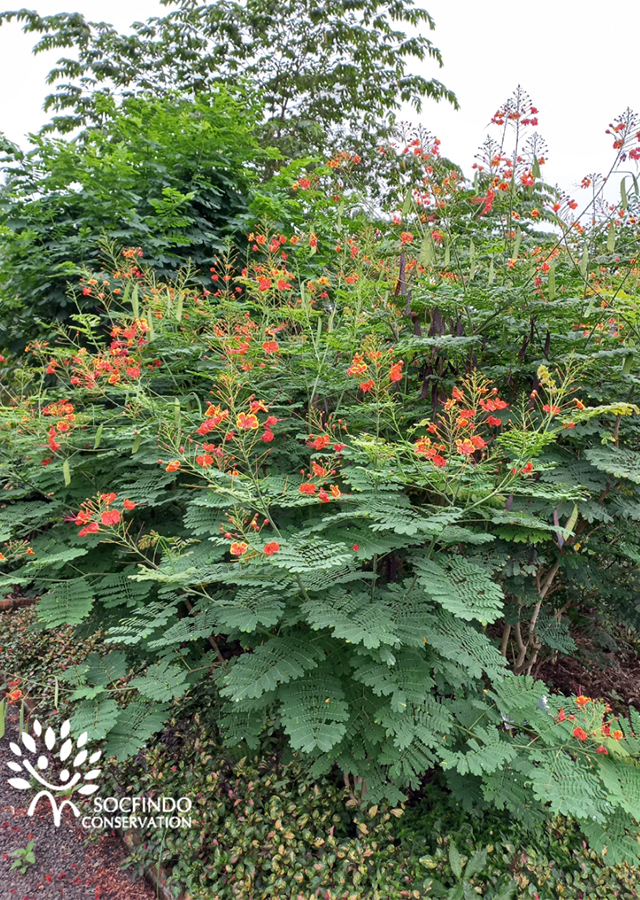
Kembang merak merah (Caesalpinia pulcherrima) is a shrub 3-4 meters tall from the Fabaceae family, a plant native to Asia first introduced to the West Indies and now popular as a garden ornamental. In Mexico and Nicaragua, its green seed pods are boiled and eaten, while in the Amazon it is used as a traditional emmenagogue. Kembang merak merah has also proven antioxidant and antibacterial, effective against MRSA infections.
Agroecology
C. pulcherrima grows easily at elevations of 0-2,000 m asl in soil with moderate moisture, fertile, well-drained but can also grow in clay, sand, loam, alkaline to acidic, and saline soil types, with moderate salt-aerosol tolerance. Light requirements are full sun, partial sun or partial shade, but this species flowers best in full sun.
Morphology
- Roots red, round and not too long, including a primary or taproot.
- Stem green, turning grayish-brown as the stem becomes more woody, covered with thorns, which swell at the base as the stem matures.
- Leaves alternate, compound, bipinnate (twice-compound), pinnae 4-8 pairs, each with 7-11 pairs of elliptical, blunt leaflets, pinnate, leaflets light green, unequally slanted about 2-2.5 cm.
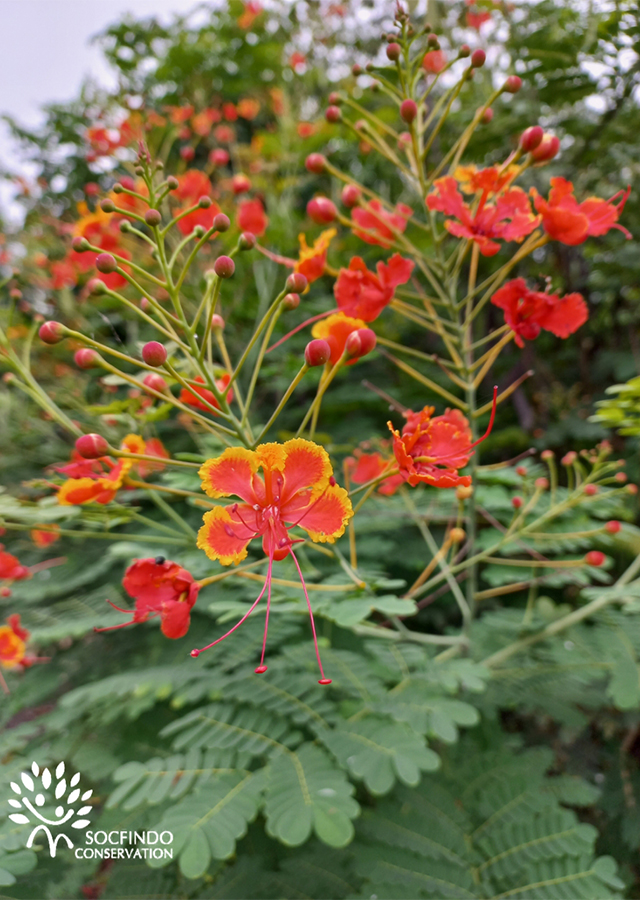
- Flowers pink-red, unscented with long stamens and pistil. There is one modified petal smaller than the other 4 petals.
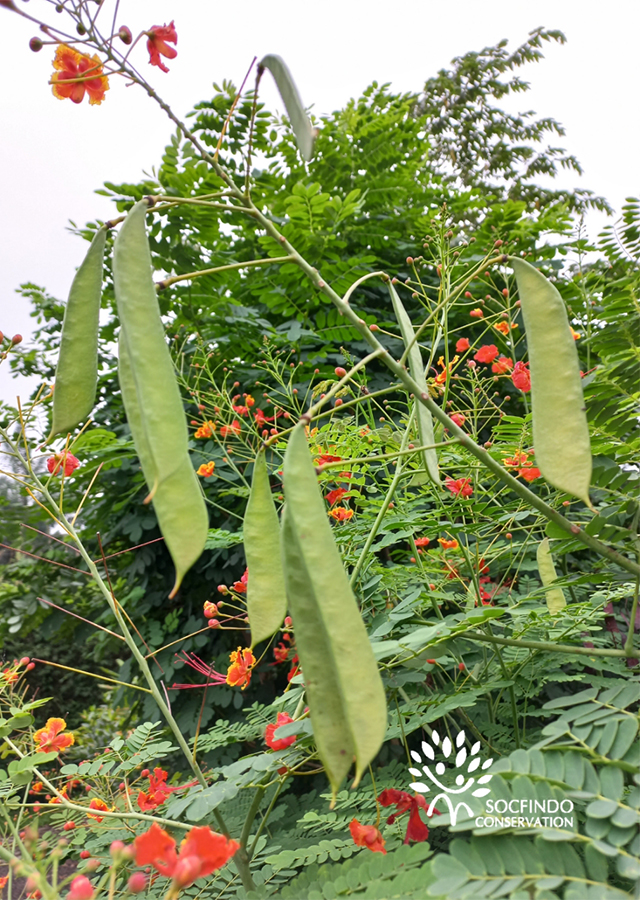
- Fruit a pod, oblong, thin, brown to black, up to 10 cm long. Pods split to disperse a single row of seeds.
- Seeds numerous, flat, dense, brown, usually 6-8 per pod.
Cultivation
Propagation generatively by seed. Before planting, seeds are first soaked in clean water for 8 hours to facilitate germination.
Chemical Content
Diterpenoids, isovouacapenol, sitosterol, and flavonoids (5,7-dimethoxyflavanone, 5,7-dimethoxy-3,4'-methylenedioxyflavanone, isobonducellin, 2'-hydroxy-2,3,4'-6'-tetramethoxychalcone and bonducellin, peltogynoid, bonducellin, 6-methoxypulcherrimin, and homoisoflavonoid), gallic acid, red dye substance, gum, tannin, resin, benzoic acid, cassane-type diterpene esters, pulcherralpin, lupeol, β-sitosterol, myricetin, saponin, phenol, terpenoid, tannin, and alkaloid, pulcherrin J, 6-cinnamoyl-7-hydroxyvouacapen-5-ol, phytosterol, saponin, and lignin.
Benefits
Treats intermittent fever, treats colds, cough, skin diseases, treats liver disease, as a mouthwash for canker sores in the mouth and throat, treats erysipelas (bacterial skin infection) and eye inflammation, as a tonic, treats diarrhea and dysentery, wounds, pain, chest pain, shortness of breath, kidney stones, malaria, bronchitis, bloating, malignant tumors, can induce or cause abortion, has laxative and emmenagogue (promoting menstruation) properties. Has antipyretic and antimicrobial activity.
Simplisia
- Prepare kembang merak merah flowers, wash clean with running water then drain.
- Dry under sunlight or with an oven at 40 °C until moisture content reaches 10%.
- Once completely dry, store in a clean, airtight place.
Local Names
Merakan (Java), Kembang patra kembala (Sunda), Perak kegel (Madura), Bunga kacang (North Sulawesi), Jambul merak (Malay).
Traditional Recipes
The following recipes reflect traditional knowledge passed down through generations, not a substitute for professional medical diagnosis or advice. Consult a healthcare provider before use.
1. Irregular menstruation
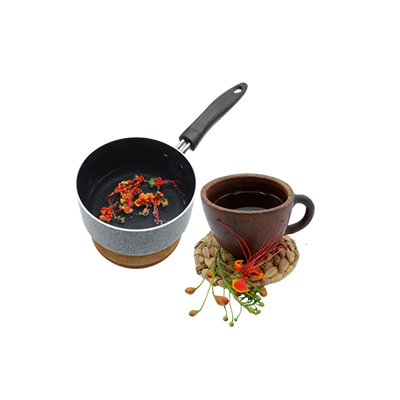
- Boil 15-30 g fresh kembang merak merah flowers.
- Let stand until warm/cool.
- Strain the decoction, then drink.
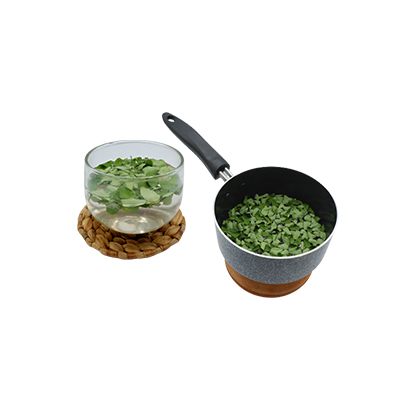
2. Canker sores
- Wash kembang merak leaves as needed until clean.
- Boil the leaves until boiling.
- Let cool then strain.
- Use the strained water for gargling.
Reference Sources
- Royal Botanical Gardens. 2021. Plants of the World Online : Caesalpinia pulcherrima (L.) Sw. http://www.plantsoftheworldonline.org/taxon/urn:lsid:ipni.org:names:1164658-2. 01-10-2021.
- Flora Fauna Web. 2021. Caesalpinia pulcherrima (L.) Sw. f. rosea. https://www.nparks.gov.sg/florafaunaweb/flora/5/1/5115. 01-10-2021.
- Stuartxchange. Phillipine Medicinal Plants : Bulaklak ng Paraiso. http://www.stuartxchange.ph/Bulaklak.html. 01-10-2021.
- CAB International. 2021. Caesalpinia pulcherrima (peacock flower). https://www.cabi.org/isc/datasheet/10728. 01-10-2021.
- PlantStory. 2021. Kembang Merak (Caesalpinia pulcherrima). https://plantstory.com/glossary/caesalpinia-pulcherrima-kembang-merak. 01-10-2021.
- Nasution Rita Eviana. 2020. Mengenal Tumbuhan Kembang Merak. cyberextension. http://cybex.pertanian.go.id/mobile/artikel/90488/-Mengenal-Tumbuhan-Kembang-Merak/. 01-10-2021.