Calendula officinalis L.
Summary
Calendula officinalis or calendula is native to Central and Southern Europe, West Asia, and the United States, and is popularly grown as an ornamental thanks to its beautiful flower color and shape. This aromatic herb has long been used in the Ayurvedic medicine system, with its flowers brewed as a digestion-soothing tea—though not recommended for pregnant women due to the risk of miscarriage. Calendula is also an ingredient in about 200 cosmetic formulations such as creams and lotions, and its essential oil has potential as an insect repellent.
Agroecology
Its growth prefers fertile, moist, well-drained soil in full sun to semi-shade.
Morphology
- Stem angled, hairy, and solid.
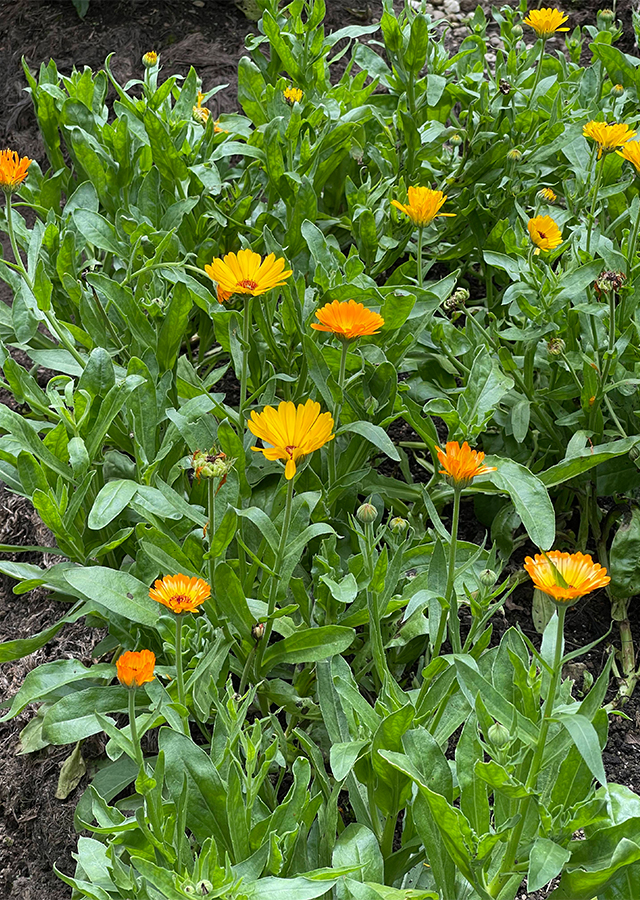
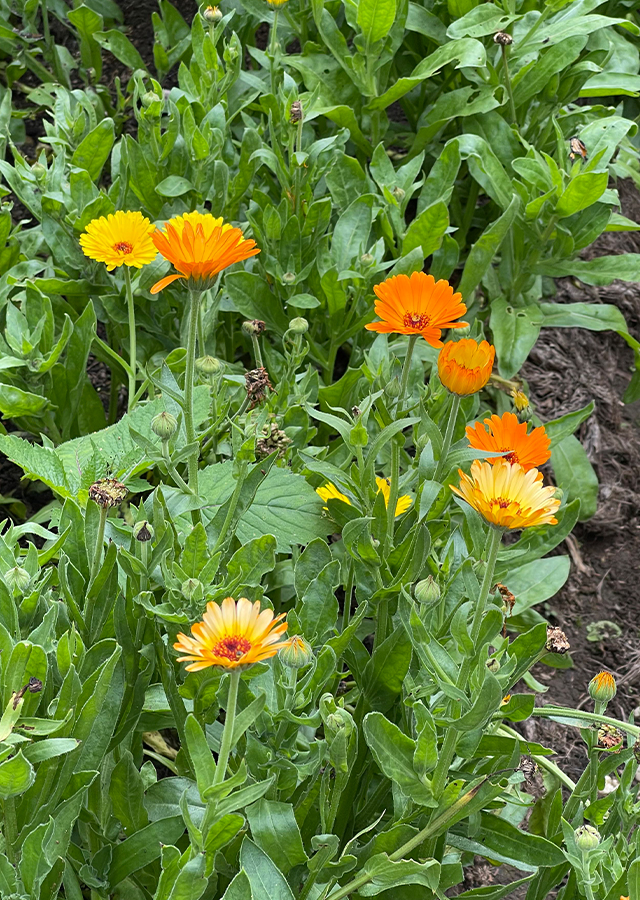
- Leaves fragrant, green, unifoliate, spear-shaped to oblong, about 10-20 cm long and 1-4 cm wide, the lower ones spatulate. Venation pinnate, margin serrate or toothed, tip acute, obtuse.
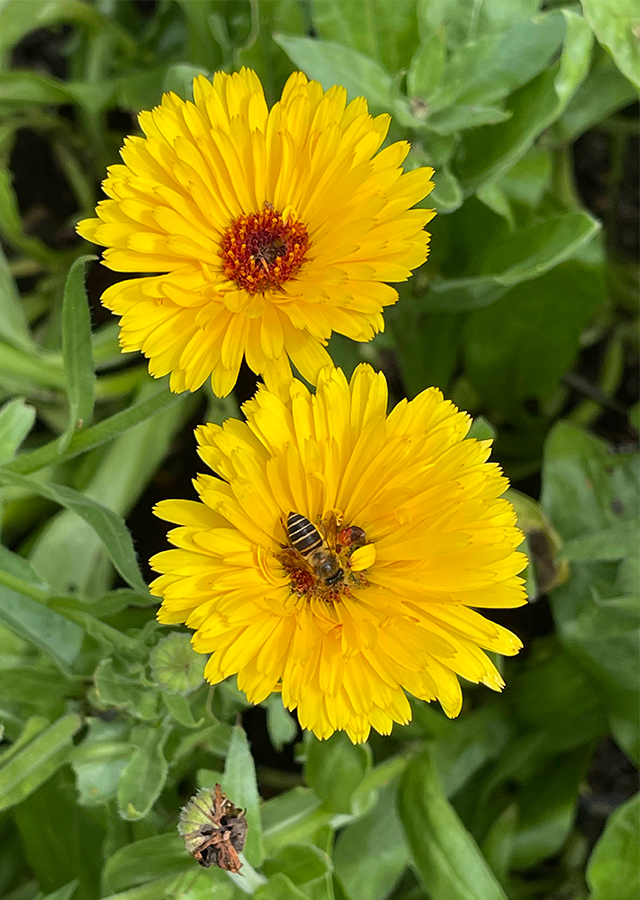
- Flowers aster-like, with marginal flower heads bright yellow to dark orange. Corolla oblong-spatulate, disc florets rounded, tridentate at the top, 1.5-2.5 cm long and 4-7 mm in diameter, with a tubular floret length of 5 mm.
- Fruit dry, spiny, golden brown, crescent-shaped. Botanically classified as an achene.
Cultivation
Plant propagation through seed.
Chemical Content
Essential oil (α-copaene, α-ionone, α-humulene, geranylacetone, γ-muurolene, β-ionone, ledene, α-muurolene, γ-cadinene, δ-cadinene, α-cadinene, α-calacorene, caryophyllene oxide, copaen-4-α-ol, β-oplopenone, viridiflorol, ledol, 1,10-di-epi-cubenol, 1-epi-cubenol, epi-α-muurolol, α-cadinol, and cadalene), tannins, saponins, triterpenes, triterpenoids, esters, flavonoids (quercetin, isorhamnetin, isoquercetin, isorhamnetin-3-O-β-D-glycoside, rutin, isoquercitrin, neohesperidoside, isorhamnetin-3-O-neohesperidoside, isorhamnetin-3-O-2-rhamnosyl rutinoside, isorhamnetin-3-O-rutinoside, quercetin-3-O-glucoside, quercetin-3-O-rutinoside, narcissin, calendoflaside, calendoflavoside, and calendoflavobioside), steroids, carotenoids (lutein, zeaxanthin, beta-carotene), quinones (plastoquinone, phylloquinone, α-tocopherol, and ubiquinone), coumarins (scopoletin, umbelliferone, and esculetin), terpenoids, amino acids (alanine, arginine, aspartic acid, asparagine, valine, histidine, glutamic acid, leucine, lysine, proline, serine, tyrosine, threonine, methionine, and phenylalanine), and polysaccharides (rhamnoarabinogalactans and arabinogalactans).
Benefits
Heals wounds and burn cases, various dermatological lesions, diaper rash, skin tumors, skin damage, addresses blood purification, prevents infection, controls seizures and prevents fungal growth, an eyewash, a remedy for gastrointestinal diseases (including gastric swelling), a vermifuge, inflammation of the oral and pharyngeal mucosa, nervous disorders, measles and smallpox, jaundice, constipation, suppressed menstrual flow, external varicose veins. Has analgesic, antidiabetic, antiulcer, anti-inflammatory, antibacterial, antifungal, antiviral, cytotoxic, antioxidant, hepatoprotective activity.
Simplisia
- Prepare an adequate amount of fresh calendula flowers, wash clean with running water.
- Dry under the sun or with an oven at 40°C until the moisture content reaches 10%.
- Grind using a blender until it becomes powder.
- Store in a clean, airtight container.
Local Names
Information not found. Further research is needed.
Traditional Recipes
The following recipes reflect traditional knowledge passed down through generations, not a substitute for professional medical diagnosis or advice. Consult a healthcare provider before use.

1. Treats smallpox
- Pick a few calendula flower blooms then wash until clean.
- Boil until it boils.
- Let it cool to warm/cold.
- Strain then drink.
Reference Sources
- Royal Botanic Gardens, Kew. Plants of The World Online: Calendula officinalis L.. https://powo.science.kew.org/taxon/urn:lsid:ipni.org:names:187894-1. 08-12-2022.
- Sharma S, Kumari K. 2021. AN OVERVIEW ON CALENDULA OFFICINALIS LINN.: (POT MARIGOLD). Journal of Advanced Scientific Research. 12 (3) Suppl 2: 13-18.
- Al-Snafi A. E. 2015. THE CHEMICAL CONSTITUENTS AND PHARMACOLOGICAL EFFECTS OF CALENDULA OFFICINALIS - A REVIEW. Indian Journal of Pharmaceutical Science & Research, 5(3): 172-185.
- Flora Fauna Web. 2021. Calendula officinalis. https://www.nparks.gov.sg/florafaunaweb/flora/6/0/6036. 08-12-2022.