Calliandra tergemina var. emarginata (Humb. & Bonpl. ex Willd.) Barneby
Summary
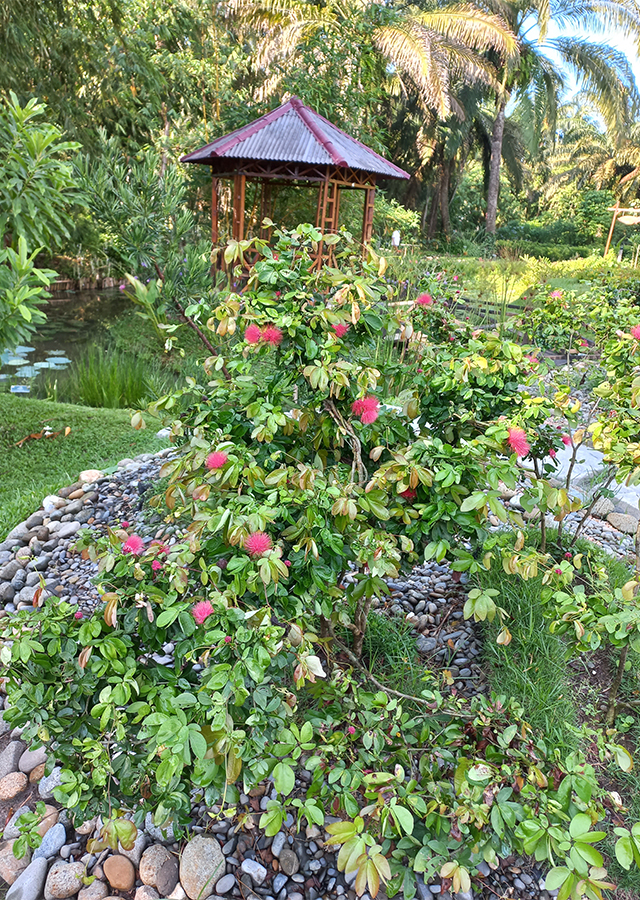
Bunga kaliandra (Calliandra tergemina var. emarginata) is a shrub or small tree 1-5 meters tall from the Fabaceae family that originates from Mexico to Panama, growing naturally along riverbanks and mountain slopes. Its genus name comes from the Greek 'kalos' (beautiful) and 'andros' (stamen), referring to its striking silky red stamens. Bunga kaliandra is used as a tanning agent and is also traditionally believed to treat eye inflammation and skin ulcers.
Agroecology
Bunga kaliandra is cultivated in tropical and subtropical climate zones in full sun or slight shade. This plant is hardy, with foliage damage, down to about -2 °C and down to about -5 °C for very short periods. Bunga kaliandra requires soil rich in organic matter, well-drained, and watered regularly during dry periods. Due to its contained size and relatively slow growth, it can also be used in small gardens; it tolerates pruning fairly well for a more compact shape.
Morphology
- Roots taproot with many fibrous roots.
- Stem cylindrical, upright, woody, many low, dense branches.
- Leaves compound, opposite, leaflets kidney- or lung-shaped, light to medium green, with 3 leaflets (2 terminal pairs, 1 single and smaller) per petiole. Young leaves orange, maturing to green. Leaves and petioles somewhat velvety due to fine hairs on the surface. Leaves droop and fold at night.
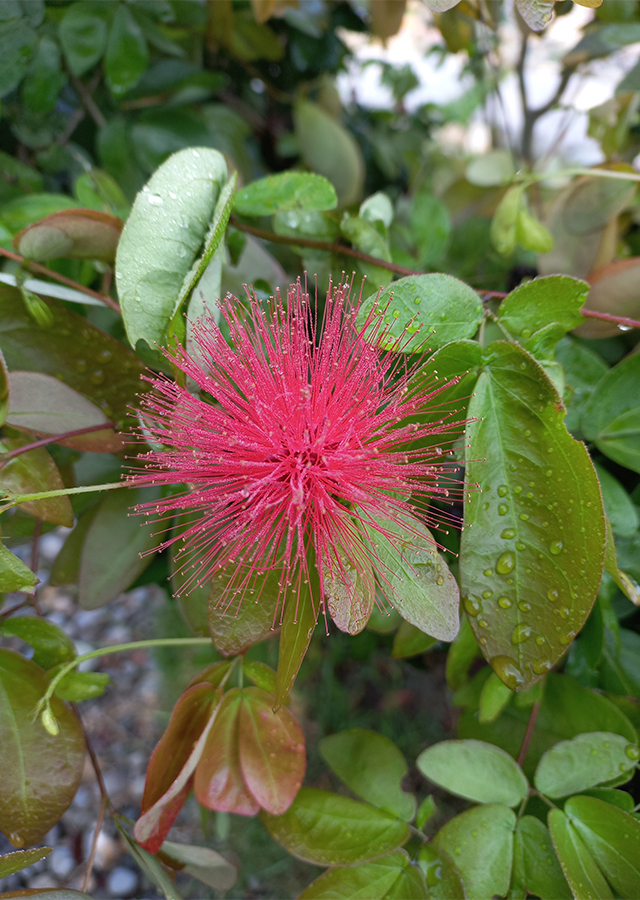
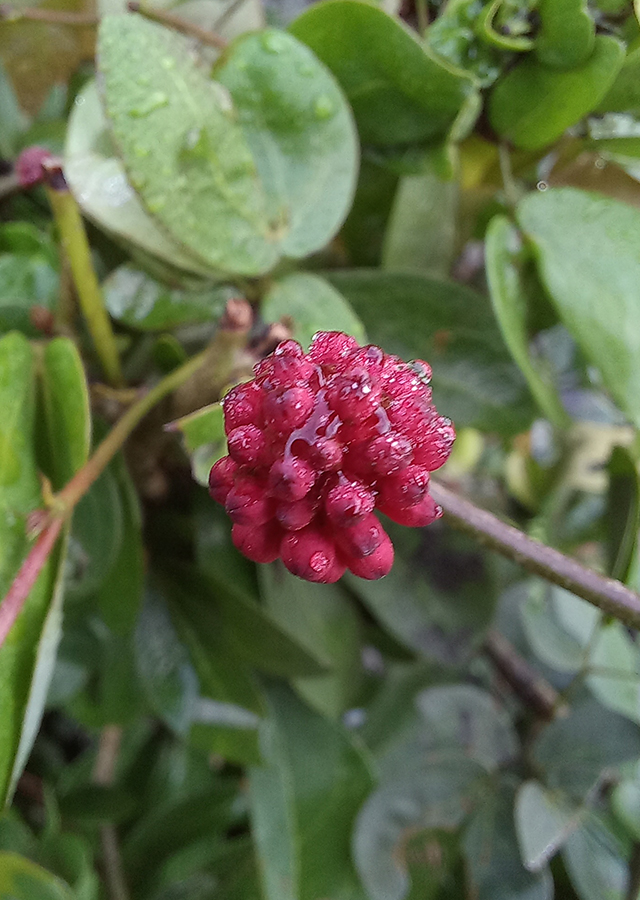
- Flowers globular, mimosa-like powder puffs, 2.5 to 6 cm in diameter, with many red or pink-red fibrous stamens, lasting 2-3 days before wilting. Unopened flower buds resemble a bunch of red fruit. Flowers freely, providing nectar for hummingbirds, bees, and butterflies such as Parthenos sylvia (Malaysian Blue Clipper).
- Fruit a pod with a long pointed tip, 5-10 cm long and about 0.7 cm wide, brown.
- Seeds flattened, splitting, maturing from green to brown, oblong to elliptical, about 0.6 cm long and 0.3 cm wide, with a thickened margin, before splitting explosively from tip to base, twisting back in a double curve to eject the seeds several meters away.
Cultivation
Propagation by seed (easier) or stem cuttings. For seed propagation, seeds are first soaked for one day in water, then placed in sandy soil rich in loamy humus at a temperature of 20-24 °C, with a germination time of 1-3 weeks and first flowering beginning at two years of age.
Chemical Content
Galloylated flavonol rhamnosides identified as kaempferol-3-O-(2″,3″,4″-tri-O-galloyl)-α-l-rhamnopyranoside, quercetin-3-O-(3″,4″-di-O-galloyl)-α-l-rhamnopyranoside, and quercetin-3-O-(2″,3″,4″-tri-O-galloyl)-α-l-rhamnopyranoside, along with five galloylated and non-galloylated flavonol rhamnosides.
Benefits
Treats eye inflammation and skin ulcers, internal body complaints.
Local Names
Bunga lusiana.
Traditional Recipes
The following recipes reflect traditional knowledge passed down through generations, not a substitute for professional medical diagnosis or advice. Consult a healthcare provider before use.
1. Skin ulcers
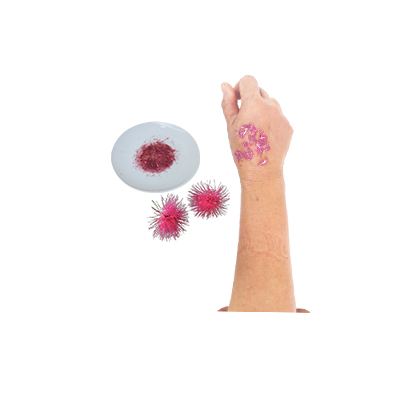
- Take kaliandra flowers as needed, wash until clean.
- Mash and mix with a little water.
- Apply as a poultice on the ulcer.
Reference Sources
- Royal Botanic Gardens. Plants of the World Online: Calliandra tergemina var. emarginata (Humb. & Bonpl. ex Willd.) Barneby. https://powo.science.kew.org/taxon/urn:lsid:ipni.org:names:1119494-2#synonyms. 22-06-2022.
- Flora Fauna Web. 2022. Calliandra tergemina var. emarginata (Humb. & Bonpl. ex Willd.) Barneby. https://www.nparks.gov.sg/florafaunaweb/flora/2/7/2771. 22-06-2022.
- Pietro Puccio. Calliandra tergemina var. emarginata. Monaco Nature. Encyclopedia. https://www.monaconatureencyclopedia.com/calliandra-tergemina-var-emarginata/?lang=en. 22-06-2022.
- Elaine Wan Ling Chan, Alexander I Gray, John O Igoli, Sui Mae Lee, Joo Kheng Goh. 2013. Galloylated flavonol rhamnosides from the leaves of Calliandra tergemina with antibacterial activity against methicillin-resistant Staphylococcus aureus (MRSA). DOI: 10.1016/j.phytochem.2014.07.028.