Callicarpa longifolia Lam.
Summary
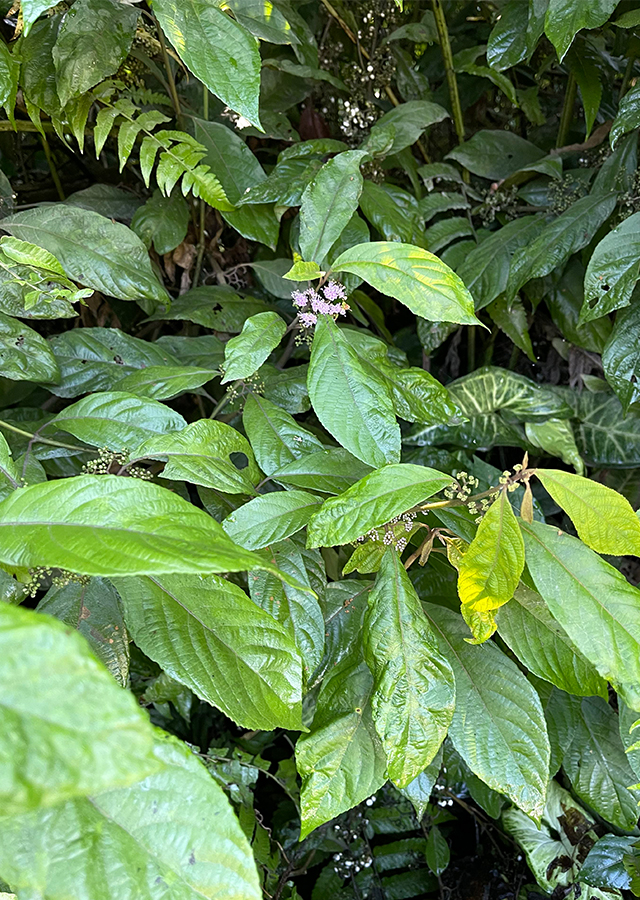
Sangkareho (Callicarpa longifolia) is a shrub up to 6 meters tall from the Lamiaceae family spread from Southern China to Papua New Guinea and Australia. The Dayak people have for generations concocted this plant to address postpartum vaginal discharge, while the Kutai people use it as a cooling powder for acne. Sangkareho is also traditionally believed to relieve swelling and postpartum pain.
Agroecology
Sangkareho can be found growing in secondary forests, disturbed areas such as roadsides or open areas in primary forest, thickets, along rivers and streams, hillsides, at elevations from sea level up to 1,700 m asl. This plant prefers very fertile, well-drained soil, a position in full sun, and environmental conditions with an air temperature of 30.4 °C and humidity of 76%. In the wild, this plant is often found in poor, moist, sandy soil.
Morphology
- Roots taproot, yellowish-brown, branched with many root hairs. Has a bitter taste, slightly bland, and a distinctive somewhat pungent odor.
- Stem round, green, small-speckled, covered with hair like flakes, brown or brownish-white. Sympodial branching pattern.
- Leaves single, young leaves greenish-brown, mature leaves dark green, oppositely arranged, blade elliptical to ovate, serrated margin, tapering tip, pointed to narrowing base, pinnate venation, upper surface scattered with branched hairs and sessile yellow glands. Lower surface almost hairless or thinly covered.
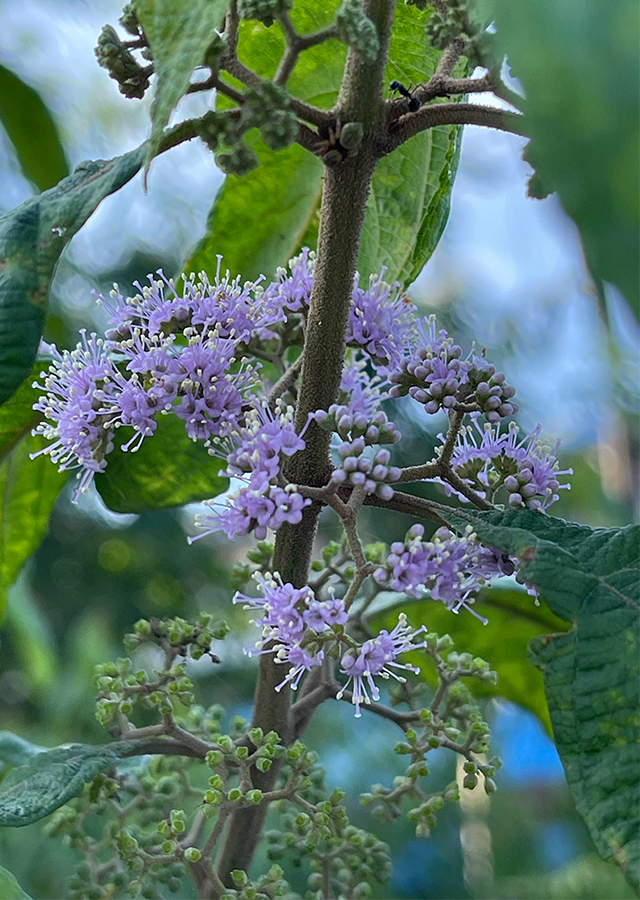
- Flowers small, calyx narrow funnel-shaped with 4 shallow lobes marked by thickened tips, outer surface finely hairy, inner surface hairless, greenish-brown. Corolla pale pink to purple, divided into 4 lobes, outer surface prominently hairy, inner surface hairless. 4 stamens emerging from the base of the corolla tube. Cyme-type inflorescence, compound or clustered, appearing in the leaf axils.
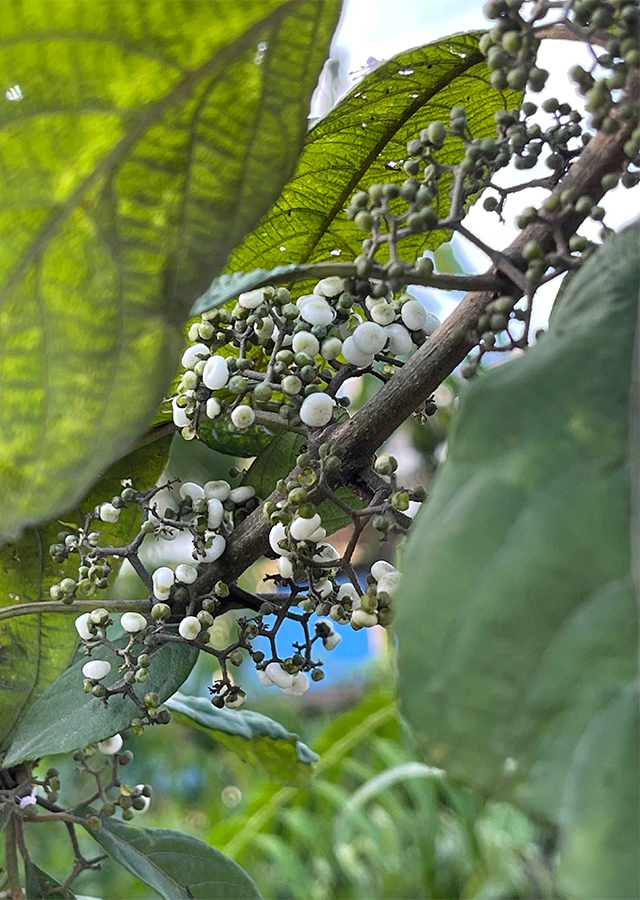
- Fruit green and turning white or cream when ripe, fleshy, covered with small hairs and yellow glands, each fruit containing 1-4 seeds.
Cultivation
- Propagation is done generatively (seeds) and vegetatively (stem cuttings).
- Germination usually occurs within 1-3 months at a temperature of 18 °C.
Chemical Content
Flavonoids, tannins, saponins, and terpenoids.
Benefits
Treats stomach ache, diarrhea, syphilis, fever, malaria, swelling, mouth sores, boils, acne, bruises and wounds, cancer, postpartum care, postpartum vaginal discharge, has analgesic activity.
Simplisia
- Prepare sangkareho leaves, then wash with clean water.
- After clean, drain to remove excess wash water.
- Slice at 1.5 cm width so the drying process is faster.
- Dry by air-drying in a place protected from sunlight.
- Grind the dried leaves into powder then sieve with a 60-mesh sieve.
- Store in a clean, airtight container.
Local Names
Kerehau, Kayu nasi-nasi.
Traditional Recipes
The following recipes reflect traditional knowledge passed down through generations, not a substitute for professional medical diagnosis or advice. Consult a healthcare provider before use.
1. Postpartum vaginal discharge
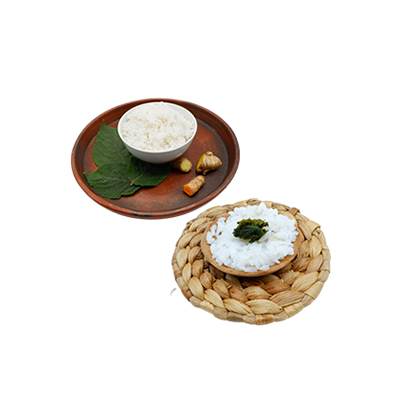
- Prepare 7 sangkareho leaves, turmeric, ginger, and galangal about the size of a fish eye each, then warm soft rice.
- Pound the sangkareho leaves, turmeric, ginger and galangal until smooth.
- Mix the smooth ingredients with warm soft rice.
- Form into small balls for easy swallowing.
- Eat once a day; on the second day reduce the amount to 5 leaves, on the third day reduce to 3 leaves. If the discharge continues after the third day, repeat with the same amount as the first day, and so on for subsequent days until the postpartum discharge fully recovers.
Reference Sources
- Ibrahim. 2016. INVENTARISASI TUMBUHAN OBAT TRADISIONAL SUKU DAYAK BAKUMPAI DI KECAMATAN MURUNG KABUPATEN MURUNG RAYA. [skripsi]. INSTITUT AGAMA ISLAM NEGERI PALANGKA RAYA.
- Supomo dkk. 2016. Karakterisasi dan Skrining Fitokimia Daun Kerehau (Callicarpa longifolia Lamk.). Jurnal Kimia Mulawarman 13(2).
- Royal Botanic Gardens. 2021. Plants of the World Online: Callicarpa longifolia Lam. http://www.plantsoftheworldonline.org/taxon/urn:lsid:ipni.org:names:861382-1. 18-09-2021.
- Useful Tropical Plants Database. 2014. Callicarpa longifolia. https://tropical.theferns.info/viewtropical.php?id=Callicarpa+longifolia. 18-09-2021.
- Flora Fauna Web. 2019. Callicarpa longifolia Lam. https://www.nparks.gov.sg/florafaunaweb/flora/5/5/5575. 18-09-2021.