Calocybe indica Purkay. & Chandra
Summary
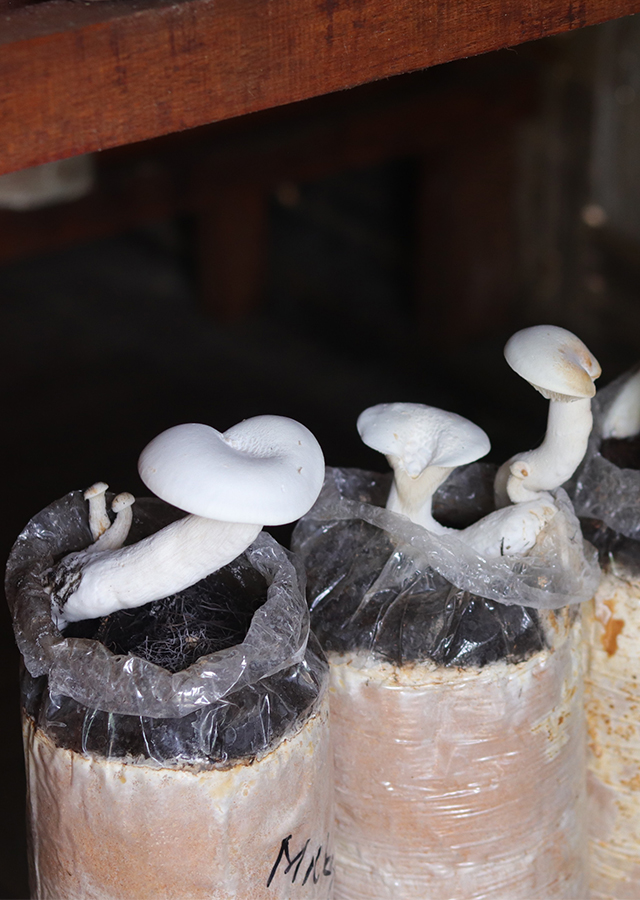
Milky mushroom (Calocybe indica) is a saprophytic fungus from the Lyophyllaceae family native to India, the fourth most widely cultivated mushroom in that country since being introduced by Purkayastha and Chandra in 1974. Rich in protein and fiber and cholesterol-free, this mushroom is popular in West Bengal as a healthy food. Milky mushroom is believed to help lower bad cholesterol and address diabetes.
Agroecology
Milky mushroom is a robust, fast-growing strain that can grow on various substrates, such as rice straw, rice husk, grass stems and leaves, bagasse, corn cobs, tea or coffee waste, green gram and bean husks, coconut coir, and even newspaper and cardboard. This mushroom can grow in countries with hot humidity (60% to 70%) with a temperature range of 25-35°C throughout the year. In its native country, milky mushroom is usually found growing in humus-rich soil, grasslands, agricultural fields, or along roadsides in tropical and subtropical regions. Milky mushroom undergoes two phases, namely a dark phase and a light phase. In the dark phase, mycelium development occurs, and in the light phase pin heads begin to grow. Mushrooms appear between May and August after the rainy season.
Morphology
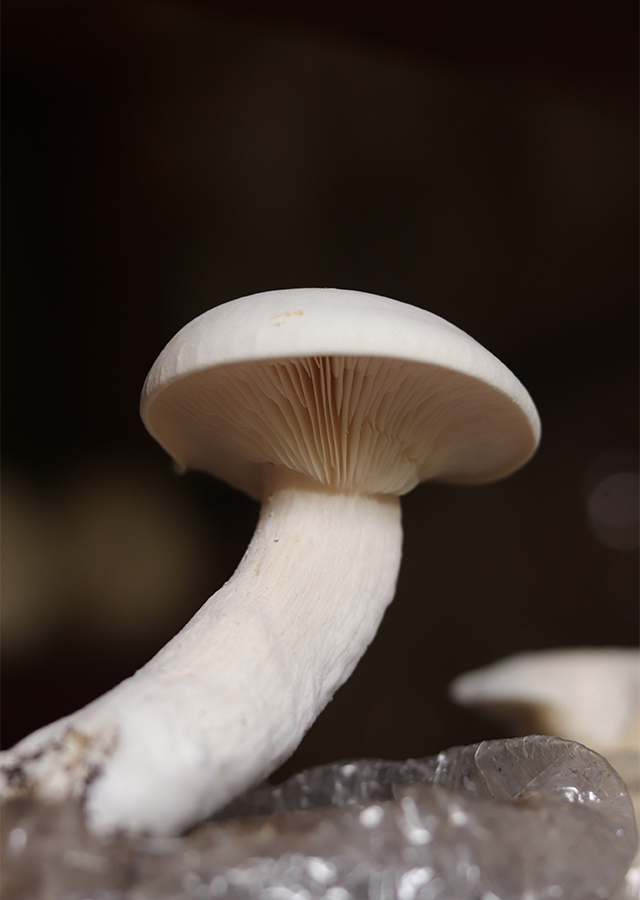
- Stipe fleshy, often sinuous, widening or thickening toward the base, surface smooth.
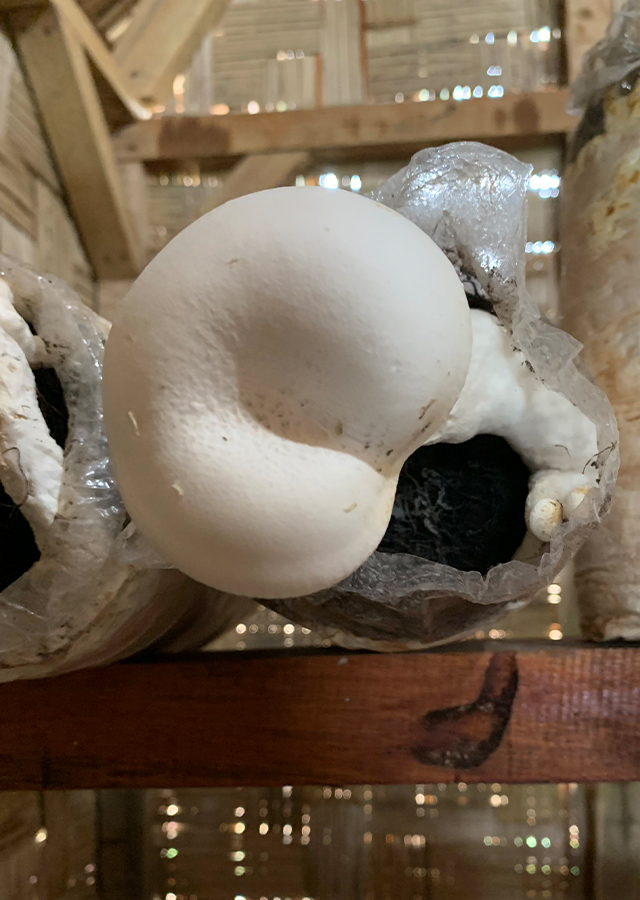
- Fruiting body milky white to pale yellowish white. Cap 40-70 mm in diameter, broadly convex, becoming flat with growth or age. Surface initially white to yellowish white, becoming gray to grayish orange, smooth, hairless.
- Gills sinuous, narrowly crowded, white, with many lamellulae.
- Spores white.
Cultivation
- Laboratory process: Mushroom mycelium is transferred to bags of grain such as sorghum or corn. All procedures must be carried out under sterile culture conditions. Once grown, the mushroom spawn is then planted in the substrate.
- Making mushroom bags: The substrate is soaked in fresh water for 8-16 hours to saturate the substrate with water. After soaking, pasteurization must be carried out to kill competing microbes and other organisms. The substrate is then air-dried for several hours. When the desired dryness is reached, spawn is added in layers to the substrate in a bag with about 20 small holes. The log is then compressed, tied, and incubated at room temperature for 2 weeks.
- After 2 weeks, the bag is slit and a casing layer consisting of soil, carbonized rice husk, or a combination of both is added on top. After casing, let it sit in a shaded location at normal room temperature and 80-90% relative humidity.
- Mushroom fruiting requires a space with little light.
- Mushrooms can be harvested when the cap is fully open, but there is still a small indentation between the edge and the gills. Harvest by holding the stem and twisting it gently.
- Milky mushroom's shelf life lasts 7 days at room temperature; with refrigeration, milky mushroom will last 20 days without significant quality loss.
Chemical Content
Amino acids (alanine, aspartic acid, glutamine, glutamic acid, glycine, hydroxyproline, histidine, lysine, threonine, tyrosine, valine, arginine, and proline), thiamine, riboflavin, nicotinic acid, pyridoxine, biotin, ascorbic acid, phenolic compounds, terpenes, and steroids.
Benefits
Lowers bad cholesterol levels, helps treat diabetes, addresses constipation, strengthens and regulates the immune system, helps relieve asthma and other allergies. Has antihyperglycemic, antioxidant, antibiotic, antitumor, and anticancer effects.
Local Names
Informasi tidak ditemukan. Butuh penelusuran lebih lanjut.
Traditional Recipes
The following recipes reflect traditional knowledge passed down through generations, not a substitute for professional medical diagnosis or advice. Consult a healthcare provider before use.
1. Addresses constipation
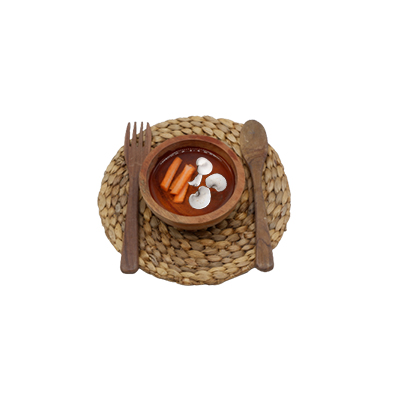
- Prepare milky mushroom and wash until clean.
- Boil the mushroom until cooked, carrots can be added if desired.
- Eat the mushroom to address constipation.
Reference Sources
- EOL. Calocybe indica Purkay. & A. Chandra 1974. https://eol.org/pages/6683991/articles. 07-04-2022.
- TERI-WRC. 2018. Calocybe indica. http://wildedibles.teriin.org/index.php?album=Mushrooms/Calocybe-indica. 07-04-2022.
- Anju R.P., Mary Ukkuru.P. 2016. Health Impact and Medicinal Properties of Nutritionally Edible Milky Mushroom (Calocybe Indica). International Journal of Advanced Engineering Research and Science (IJAERS), 3(11).
- Kumar S., Sharma V.P., Shirur M., Kamal S. 2017. Status of milky mushroom (Calocybe indica) in India-a review. Mushroom Research 26 (1) : 21-39.
- Magazine Agriculture. 2017. The Story of Milky Mushroom. https://www.agriculture.com.ph/2017/10/09/the-story-of-milky-mushroom/. 07-04-2022.