Cananga odorata (Lam.) Hook.f. & Thomson
Summary
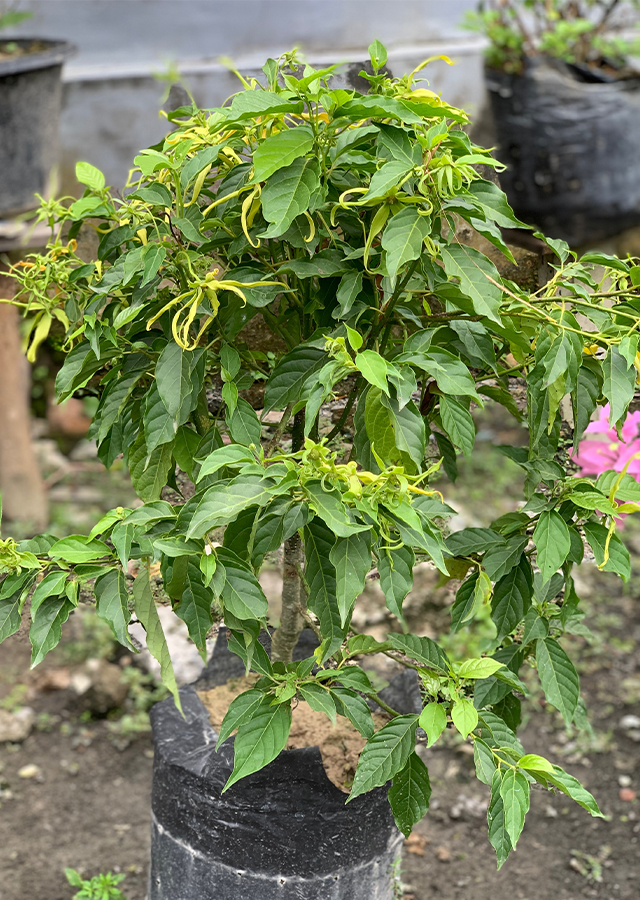
Kenanga (Cananga odorata) is a shrub up to 2 meters tall of the Annonaceae family, a plant native to Indonesia also found in Polynesia and Melanesia, and the identity flora of Aceh and North Sumatra. Its distinctively fragrant flowers are commonly used in cultural rituals and as a natural hair fragrance. Traditionally, kenanga is also believed to relieve shortness of breath, malaria, and high blood pressure.
Agroecology
Grows well in areas with elevations below 1,200 m above sea level and will bloom abundantly in areas at elevations of 20-700 m above sea level. Rainfall 250-4,000 mm/year with dry months reaching 4 months, temperature 10-35 °C.
Morphology
- Stem straight, hard wood, bark grayish-white in color.
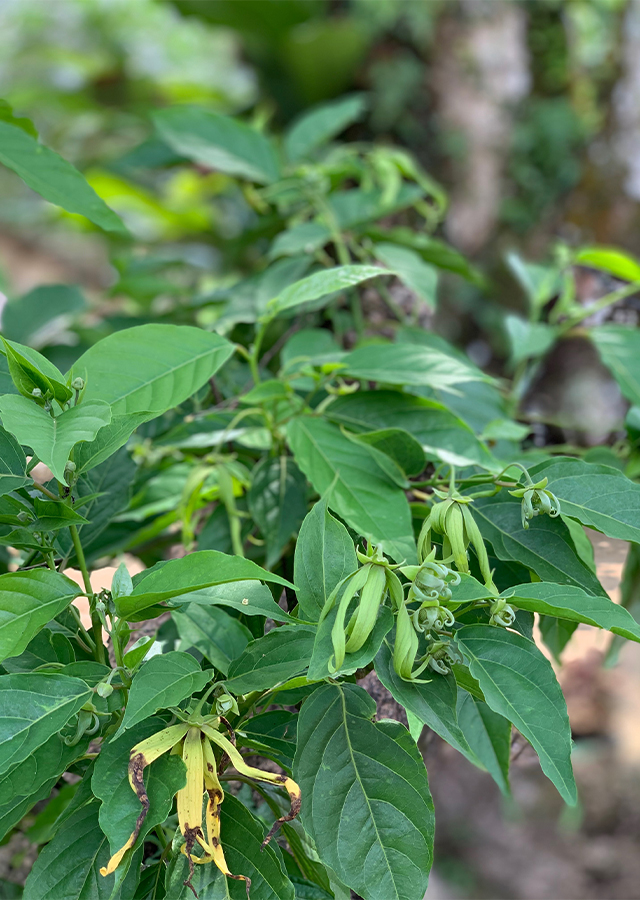
- Leaves oblong shaped, smooth, pointed tip, 10-23 cm long, 4.5-14 cm wide.
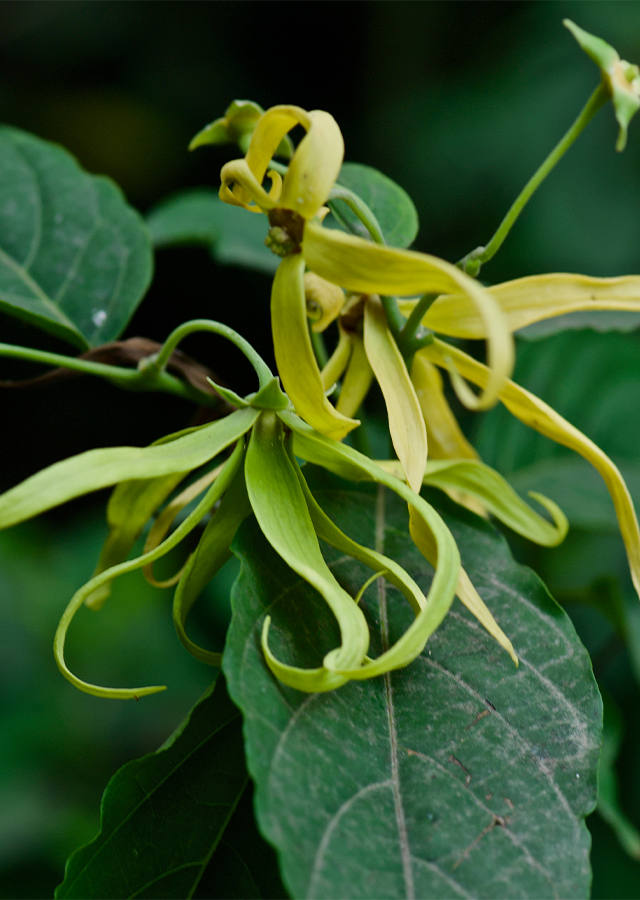
- Flowers compound, drooping clusters green in color, turning yellow when mature. Very fragrant smell.
- Fruit inverted egg-shaped, green when young and turning blackish when mature. Fruit length 2 cm, thick-fleshed.
Cultivation
Propagated generatively (by seed) and vegetatively (stem cuttings and air-layering).
Chemical Content
Flowers: benzoic acid, farnesol, geraniol, linalool, benzyl acetate, eugenol, safrole, cadinene, pinene. Bark: alkaloids, flavonoids, saponins, steroids, triterpenoids, and tannins.
Benefits
Treats shortness of breath, malaria remedy, treats bronchitis, postpartum care, pneumonia remedy, stomach ache, lowers blood pressure in hypertension, headache remedy, eye inflammation, gout, rheumatism, acne.
Simplisia
- Kenanga flowers are taken from a mature plant then wet-sorted, washed with running water.
- Drying is done by placing the material on a tray then covering with black cloth and drying in the sun.
- Once dry, the material is ground into powder.
- Store in a closed, airtight container, at room temperature.
Local Names
Bungong selanga (Aceh), Kenango (Java), Anga (Bima), Kananga wangi (Ambon), Bunga kaeik (Roti), Sapalin, Sipaniune, Kupaleuo (Seram).
Traditional Recipes
The following recipes reflect traditional knowledge passed down through generations, not a substitute for professional medical diagnosis or advice. Consult a healthcare provider before use.
1. Acne
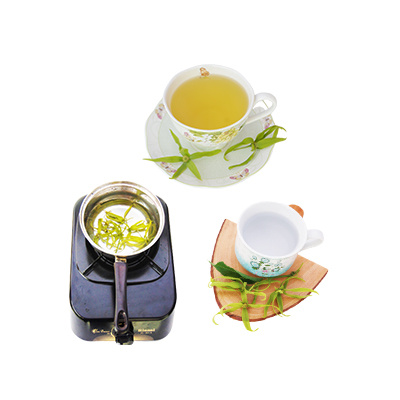
- Prepare 30 g kenanga flowers and 400 ml water.
- Wash the flowers thoroughly then boil until the water is reduced to 200 ml, strain.
- Drink twice a day, morning and evening.
Reference Sources
- Khasiat Tanaman Kenanga (Cananga odorata). Larasati, Sanggar.http://birdbody.blogspot.com/2015/12/khasiat-tanaman-kenanga-cananga-odorata.html. 11-12-2020
- Kenanga (Cananga odorata) Bunga Khas Sumatera Utara. Alamenda. 05-03-2011. https://alamendah.org/2011/03/05/kenanga-cananga-odorata-bunga-khas-sumatera-utara/. 20-09-2020
- Wardah. 2020. Obat Jerawat. Seunagan. Aceh
- The Plant List.Cananga odorata var. fruticosa (Craib) J.Sinclair. http://www.theplantlist.org/tpl1.1/record/kew-2695746 20-01-2021