Canna indica L.
Summary
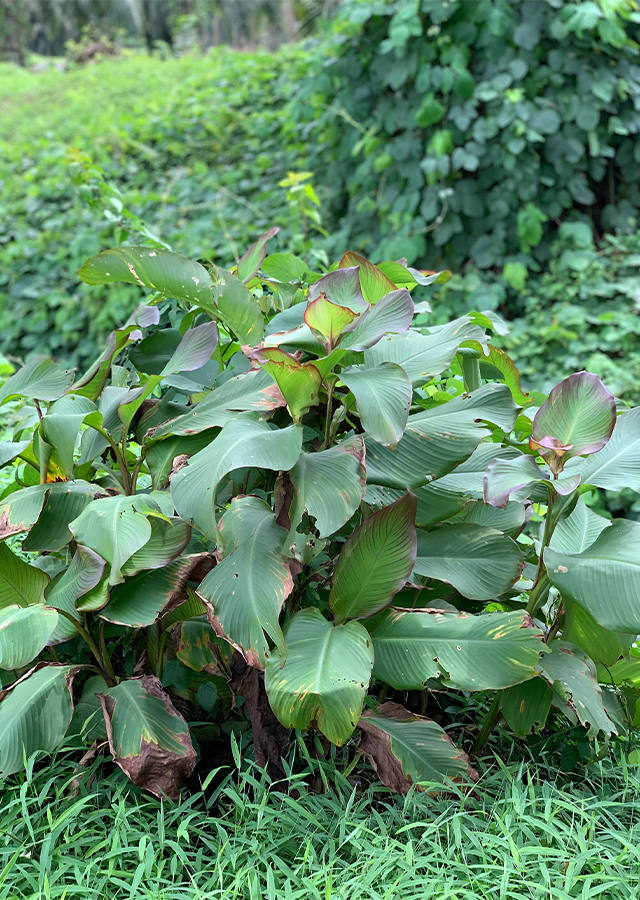
Ganyong (Canna indica) is a herb up to 2 meters tall of the Cannaceae family, originating from South America, brought by the Portuguese and spread to Asia and Africa. Its starch-rich tuber can be processed into a rice substitute, while its young shoots are eaten as a vegetable. Ganyong is also traditionally believed to be antipyretic and help stop bleeding.
Agroecology
Grows wild in forests, mountains, fields up to highlands at elevations of 2,500 m above sea level. Ganyong is ideal at temperatures of 18-32 °C and requires direct sunlight. Prefers fertile, loose soil with good aeration and drainage with humidity of 50-90%.
Morphology
- Roots fibrous, thick.
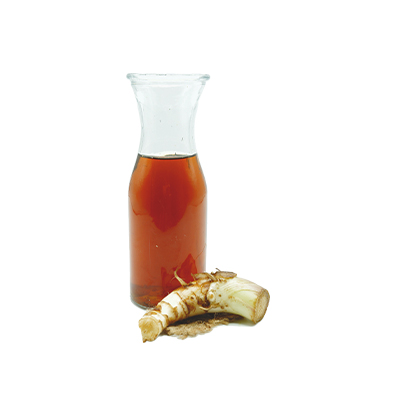
- Tuber thick, surrounded by brownish-purple scales.
- Stem watery, clump-forming, soft, grows upright, round shaped. A regular, overlapping cluster of leaf sheaths.
- Leaves elongated elliptical, tapering base and tip, green sometimes streaked with purple.
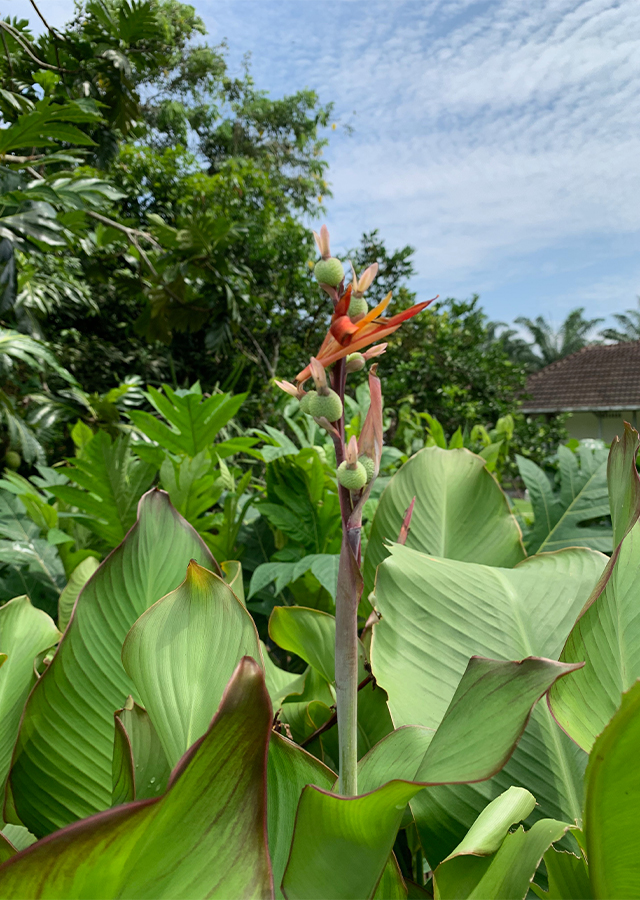
- Flowers orange-red with a yellow base and imperfect stamens.
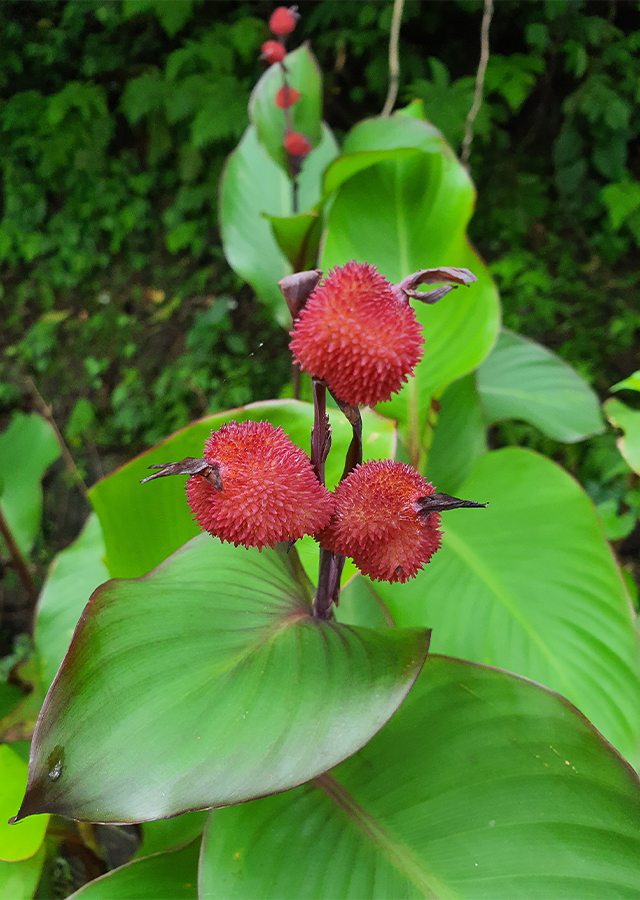
- Fruit a 3-chambered capsule, each containing 5 seeds, green in color.
Cultivation
Propagated through seed, tubers (from a parent clump 10–15 months old), and offshoots (10–15 months old).
Chemical Content
2-terpene, 4-coumarin, alkaloids, flavonoids, tannins, sterols, terpenoids, cardiac glycoside, steroids, saponins, phlobatannin, lutein, cyanidin.
Benefits
Antipyretic and diuretic remedy, diarrhea, acute hepatitis, hypertension, hemorrhoids, vertigo and bloody cough remedy, addresses vaginal discharge and reproductive cancer, urinary tract inflammation, cures internal heat, stops bleeding, antioxidant, and analgesic.
Simplisia
Not yet available.
Local Names
Hosbe (Batak), Ganyal (Sunda), Limbong, Nyindra, Mindro (Java), Bunga tasbih (Jakarta), Milu-milu (Bali), Tasa'be (Babangeng, South Sulawesi).
Traditional Recipes
The following recipes reflect traditional knowledge passed down through generations, not a substitute for professional medical diagnosis or advice. Consult a healthcare provider before use.
1. Acute Hepatitis (Jaundice in Hepatitis Patients)
- Wash 60-120 g ganyong rhizome, slice thinly. Boil with 3 glasses of water until reduced by half, cool and strain.
- Drink twice a day, 3/4 glass each time. Drink regularly for 20 days, maximum 47 days. Maximum daily dose 250 g. Effects appear after 1 week. The white part of the eyeball and yellowed skin will quickly fade.
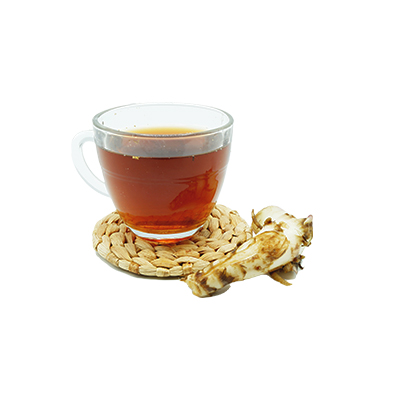
2. Hemorrhoids
- Wash 60 g fresh rhizome, then slice thinly. Boil with 3 glasses of water until 1 glass remains.
- Once cool, strain and drink twice a day, 1/2 glass each time.
Reference Sources
- Kanase V, Vishakarma S. 2018. Treatment of various disease by Canna indica L. A promising herb. Asian J. Pharm. Clin. Res. 11(12): 51-56.
- Kumbhar ST, Patil SP, Une HD. 2018. Phytochemical analysis of Canna indica L. roots and rhizomes extract. Biochemistry and Biophysics Reports 16:50–55.
- Kurdi A. 2010. Tanaman Herba Indonesia, cara mengolah dan manfaatnya bagi kesehatan. SMKN 1 Tanjung.
- Snafi AEA. 2015. Bioaktive components and pharmacological effect of Canna indica-an overview. International Journal of Pharmacology & Toxicology 5(2): 71-75.
- Suhartini T. 2016. Keragaman Karakter Morfologi Tanaman Ganyong. Buletin Plasma Nutfah 16(2): 118-125.
- Remaja Kerokhanian Sapta Darma Sragen. 2014. Daftar Tanaman Obat Indonesia. Sragen356
- Tropical Plants Database, Ken Fern. tropical.theferns.info. Canna indica. http://tropical.theferns.info/viewtropical.php?id=Canna+indica 02-02-2021