Capsicum annuum L.
Summary
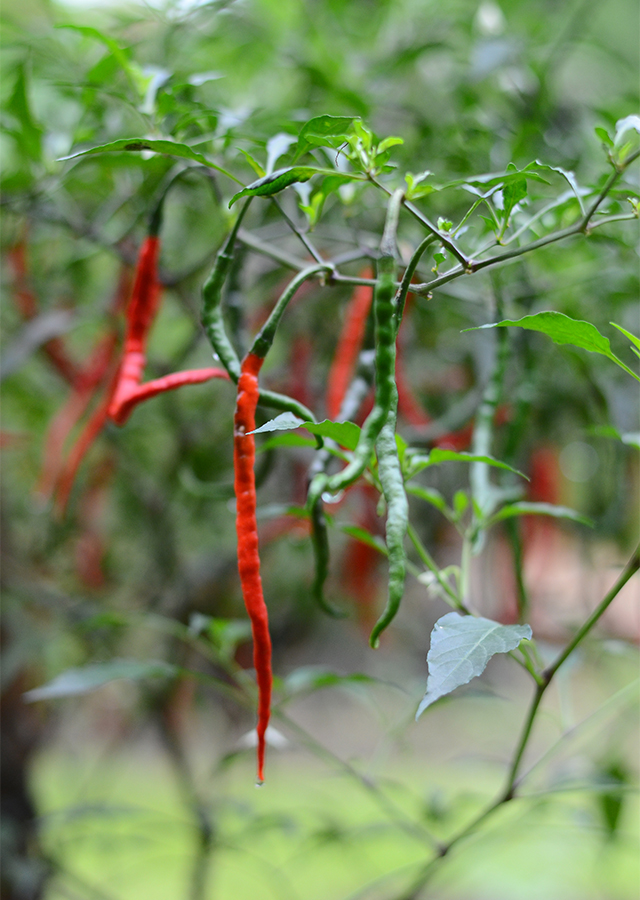
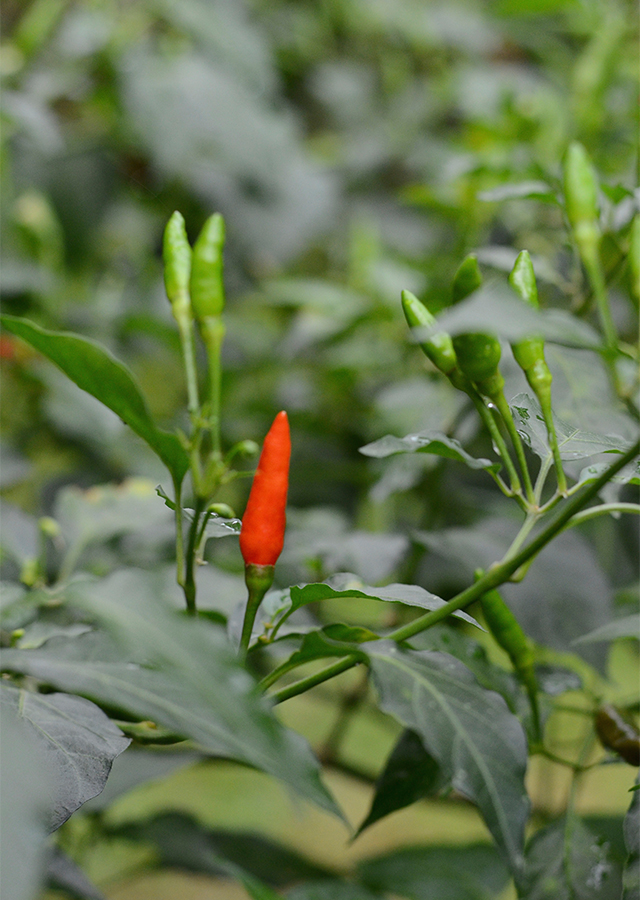
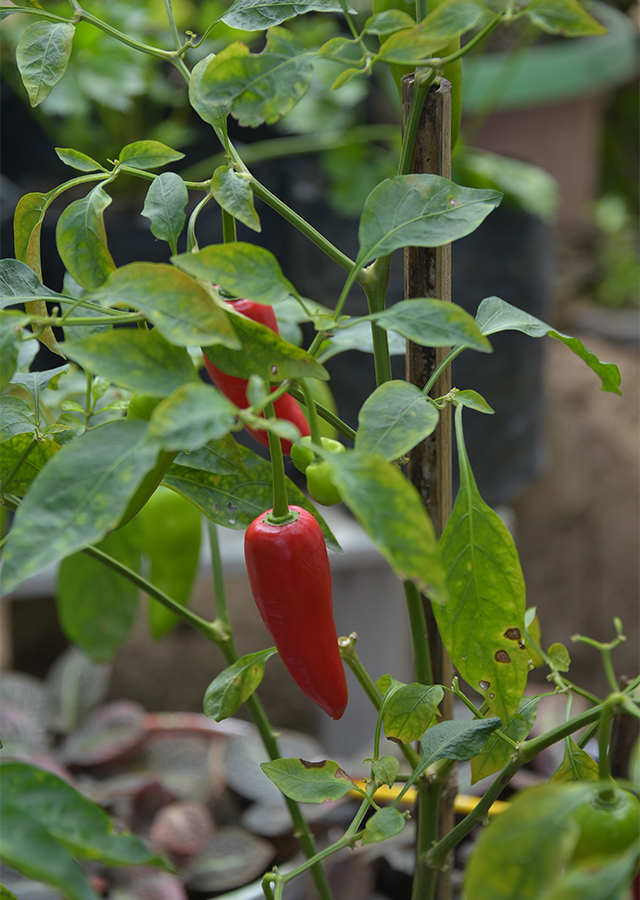
Chili pepper (Capsicum annuum) is an annual shrub 1-2.5 meters tall of the Solanaceae family, originating from tropical America, used as a spicy seasoning since 3,000 years before the common era. The bioactive content of its spicy fruit has pharmacological effects, one of which is as a natural pain reliever. The many varieties of chili pepper that now exist also make it popular as an ornamental plant, besides being believed to aid digestion and boost appetite.
Agroecology
Chili pepper can grow in lowlands and mountainous areas up to 2,000 m above sea level, tropical climates with temperatures around 16-23 °C, pH around 5.5-6.8. In Indonesia it is generally cultivated from coastal to mountainous areas.
Morphology
- Roots taproot, with many shallow lateral roots.
- Stem woody, cylindrical, many branches.
- Leaves single, oval shape with a tapering tip, pinnate venation.
- Flowers trumpet-shaped, white and purple in color.
- Fruit green and yellowish-white (before ripening) and red or yellow (ripe), flesh in dry segments without juice.
Cultivation
- Propagated generatively (by seed), seeds from a healthy parent plant.
- Soak seeds in warm water (6 hours).
- Plant seeds at a depth of 1.5 cm. Cover again with growing medium.
Chemical Content
Capsaicin, dihydrocapsaicin, flavonoids, carotene, capsorubin, zeaxanthin, cryptoxanthin, phenolics (lutein, capsaicinoids, quercetin), alkaloids, terpenoids, steroids, saponins.
Benefits
Treats rheumatism, canker sores, toothache, influenza, boosts appetite, antiseptic, kills cancer cells, aids digestion, improves brain performance, relieves stress, prevents obesity, helps weight loss, helps red blood cell formation.
Simplisia
Not yet available.
Local Names
Capli (Aceh), Lacina (Batak Karo), Lombok, Mengkreng (Java), Cabi (Lampung), Lombok, Sabrang (Sunda), Rica (Manado), Tabia (Bali).
Traditional Recipes
The following recipes reflect traditional knowledge passed down through generations, not a substitute for professional medical diagnosis or advice. Consult a healthcare provider before use.
1. Diabetes
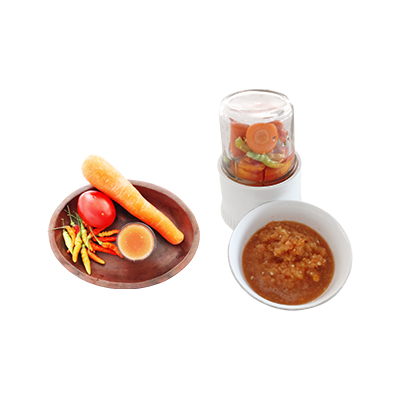
- Wash 25 g chili peppers thoroughly. Blend with 100 g carrot, 50 g tomato and enough water. Strain.
- Drink once a day before eating.
2. Rheumatism
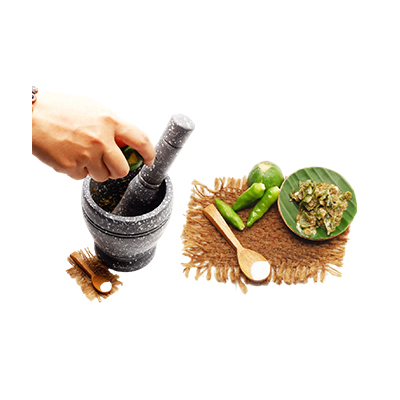
- Grind 10 bird's eye chilies until fine. Add 1/2 teaspoon slaked lime and the juice of a lime, then mix well.
- Rub the mixture on the affected part of the body.
Reference Sources
- Adi Lukas Tersono. 2007. Terapi herbal berdasarkan golongan darah. Agromedia Pustaka, Jakarta.
- Herbalisnusantara.com. Referensi asosiasi herbalisnusantara (pusat pelatihan dan pengobatan herbal indonesia), download 699 ebook tanaman obat indonesia. 18-07- 2020