Cardiospermum halicacabum L.
Summary
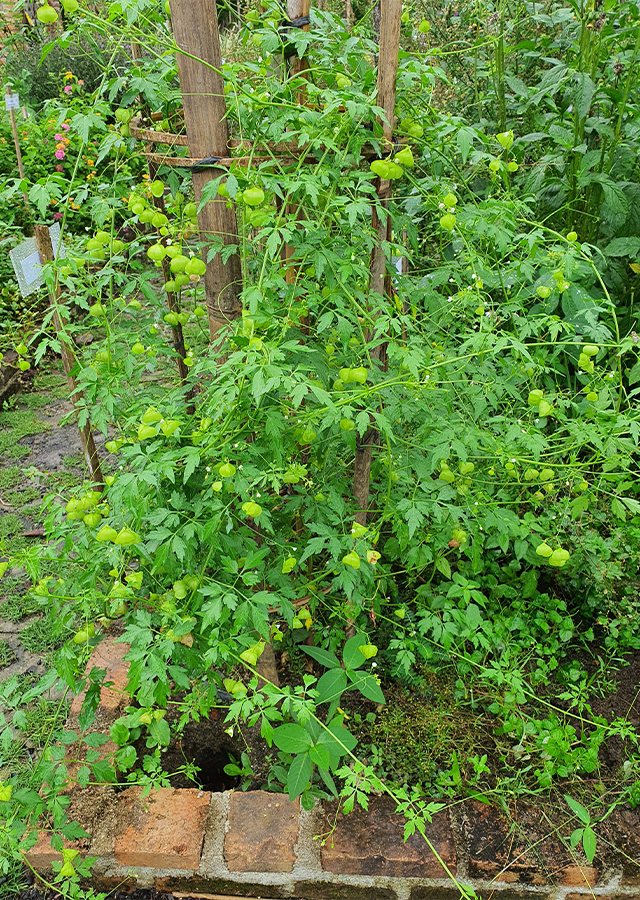
Balloon vine (Cardiospermum halicacabum) is an annual or perennial climbing plant up to 3 meters tall of the Sapindaceae family, native to the West Indies and widely distributed in tropical regions of Africa, the Americas, and Asia. Its young leaves can be eaten as a vegetable, while in Ayurvedic medicine this plant has long been used to address various health disorders. Traditionally, balloon vine is believed to purify the blood and relieve dysentery.
Agroecology
This plant grows wild in grassy fields, roadsides, forests, and farmland, in dry locations with full sun. This plant grows at elevations of 700 m above sea level, with an annual temperature of 18-20 °C, and annual rainfall of 450-900 mm/year.
Morphology
- Stem 5-ridged, slender, hairless.
- Leaves compound, palmate, alternately arranged. Leaflets consist of 3 parts, sharply curved. Toothed margins, green.
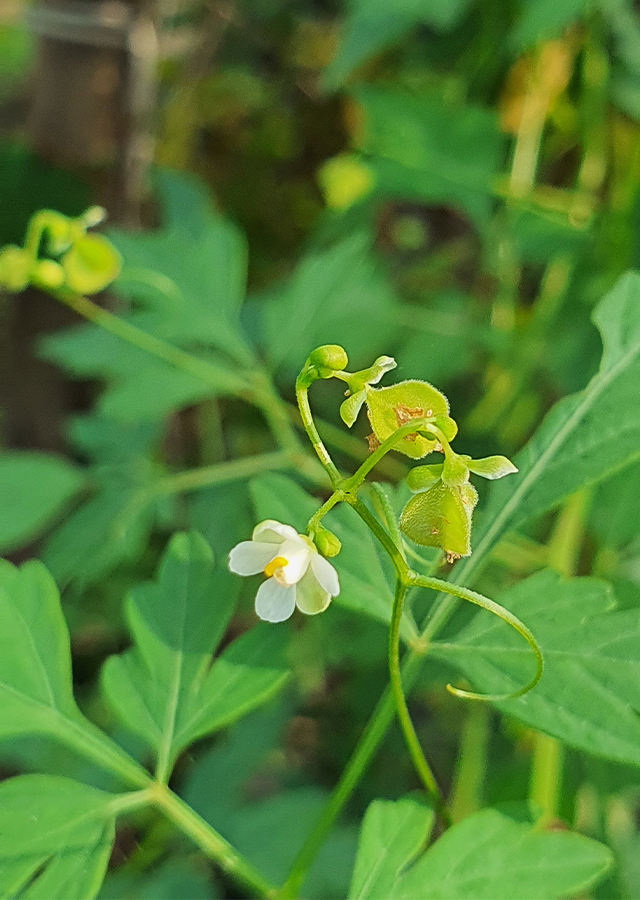
- Flowers small, white, gathered in inflorescences, emerging from the leaf axils.
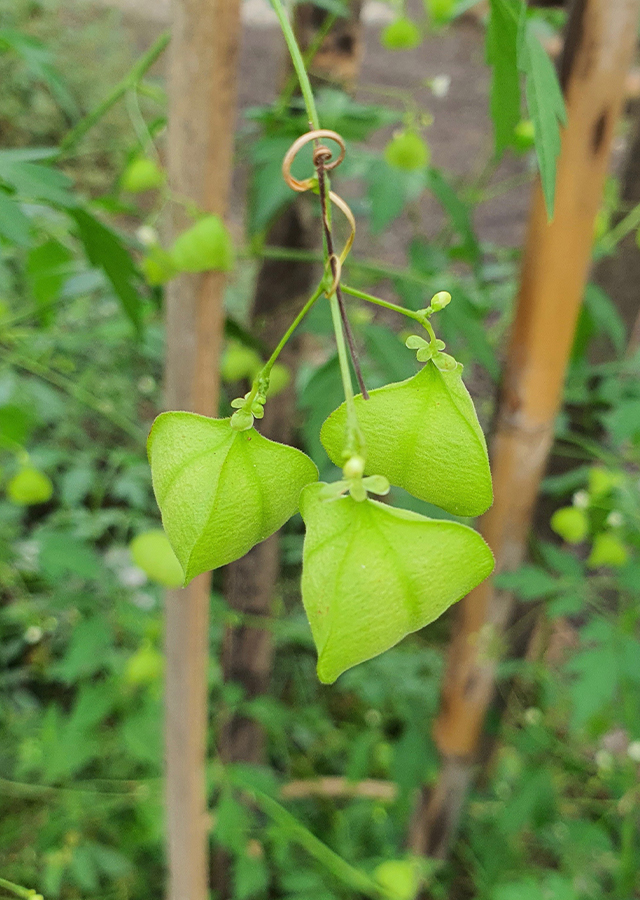
- Fruit membrane-like, inflated three-angled, green, finely hairy.
- Seeds round, black, with a white pattern in the center, glossy, ≤ 5 mm in diameter.
Cultivation
- Propagated vegetatively (by stem cuttings) and generatively (by seed).
- Seeds germinate at temperatures of 15-40 °C.
Chemical Content
Saponins, tannins, amino acids, apigenin, protocatechuic acid, protocatechualdehyde, hentriacontanol, calycosin, rutin, quercetin, phenolics, aliphatic esters, flavonoids, benzeneacetic acid, caryophyllene, phytol, neophytadiene.
Benefits
Dissolves blood clots and swelling; purifies the blood; neutralizes heat and toxins; anti-inflammatory; treats diarrhea, constipation, dysentery; normalizes the menstrual cycle; heals hepatitis; used as a postpartum poultice.
Simplisia
- Prepare the whole balloon vine plant.
- Wash thoroughly under running water.
- Air-dry the material, or use an oven at 40 °C until the moisture content is 10%.
- Store in a clean, airtight container.
Local Names
Ketipes, Parenan, Pulungan (Java), Cenet areuy (Sunda) and Pepare kurung (Jakarta).
Traditional Recipes
The following recipes reflect traditional knowledge passed down through generations, not a substitute for professional medical diagnosis or advice. Consult a healthcare provider before use.
1. Hepatitis
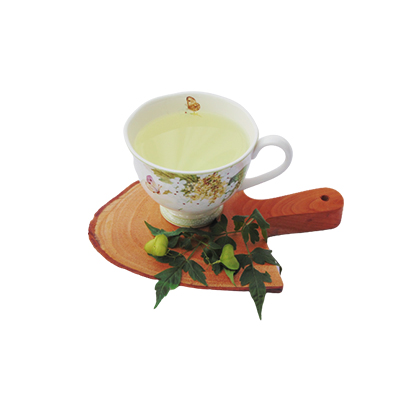
- Wash and cut as needed 30-60 g of fresh balloon vine, or 10-15 g dried.
- Boil in 3 cups of water until reduced to 1½ cups, strain the mixture and let cool.
- Drink twice a day, morning and evening.
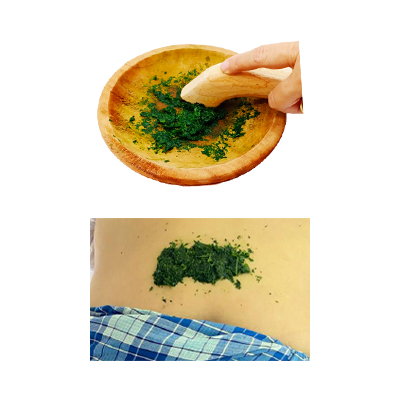
2. Postpartum Abdominal Poultice
- Prepare a sufficient amount of balloon vine leaves.
- Grind the leaves until mashed.
- Apply to the abdomen to help expel remaining impure blood in women after childbirth.
Reference Sources
- Chen J, 2013. Study on chemical constituent of Cardiospermum halicacabum. www.ncbi.nlm.nih.gov 06-05- 2020.
- Plants for A Future. Cardiospermum halicacabum. https://pfaf.org/user/Plant.aspx?LatinName=Cardiospermum+halicacabum 12-06-2020
- Dalimartha Setiawan. 2006. Ramuan tradisional untuk pengobatan penyakit Hepatitis. Penebar Swadaya, Jakarta
- HealtsBenefitsTimes. https://www.healthbenefitstimes.com/balloon-vine/ 26-06-2020
- National Parks. https://www.nparks.gov.sg/florafaunaweb/flora/1/3/1362 18-01-2021