Carica papaya L.
Summary
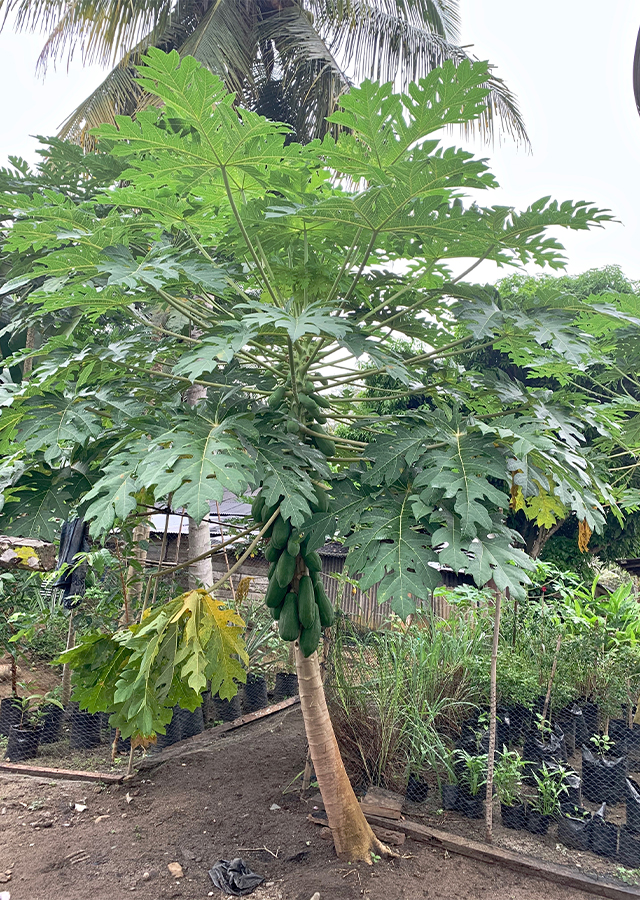
Papaya (Carica papaya) is a herb 2.5-10 meters tall of the Caricaceae family, originating from South America and now widely cultivated in Indonesia, especially East Java and Lampung. Its antioxidant content is believed to protect the heart and boost good cholesterol levels, while its leaves are commonly cooked as a vegetable or meat tenderizer. Traditionally, papaya is also used to treat worm infections and malaria.
Agroecology
Grows at elevations of 500-1,000 m above sea level. Prefers moist, fertile soil conditions, not waterlogged, soil pH 5.5-7, optimum air temperature 23-27 °C, rainfall 1,000-2,000 mm/year, and air humidity 40%.
Morphology
- Roots taproot, yellowish-white in color.
- Stem not woody, round, hollow, sappy, with leaf base scars.
- Leaves green, single, palmate venation, tapering tip, diameter 25-75 cm, dark green upper surface, somewhat lighter green underside.
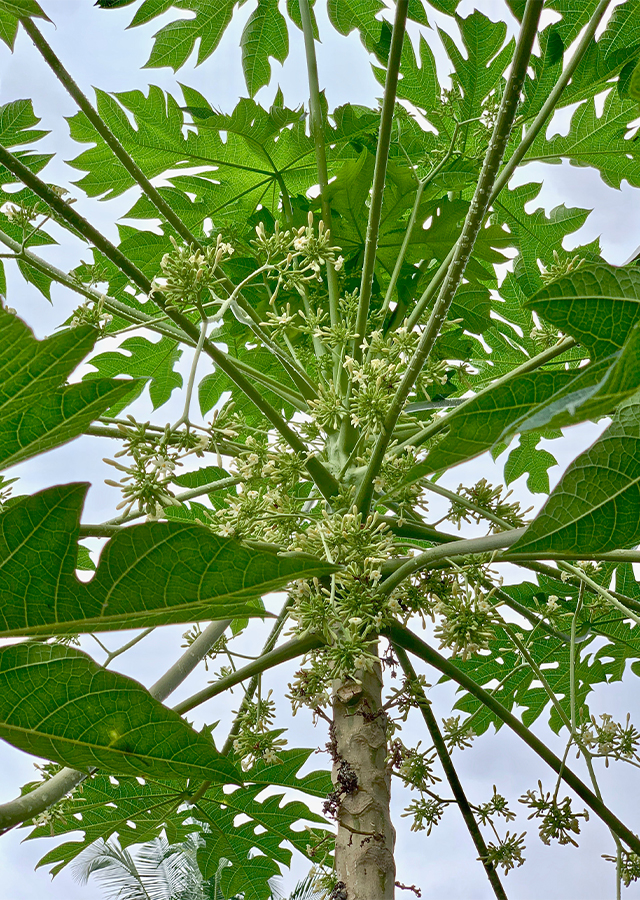
- Flowers trumpet-shaped, located at leaf axils, five-lobed edges, yellowish-white.
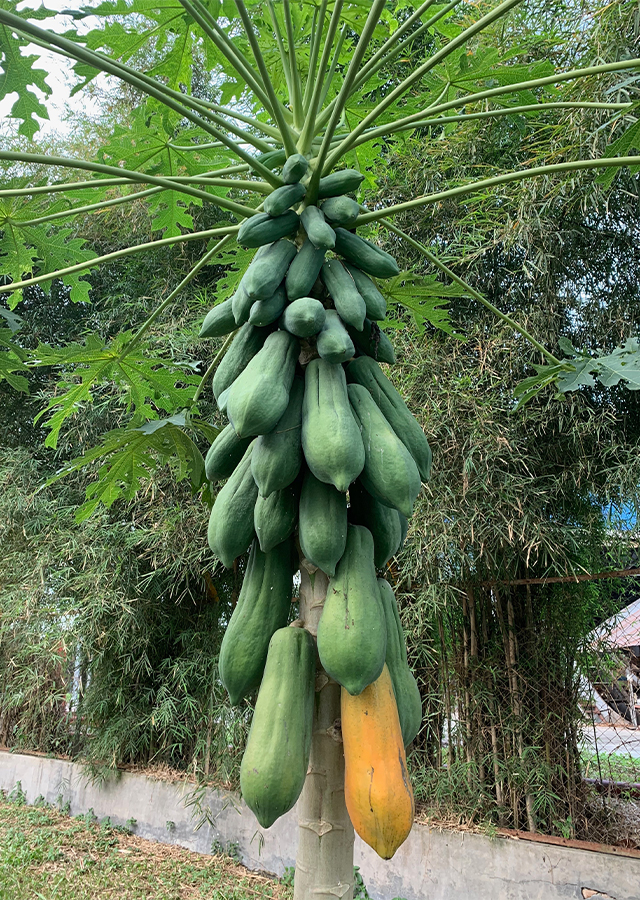
- Fruit round to oblong shaped, single, a berry, soft-fleshed, watery.
- Seeds somewhat round, blackish-brown, slightly wrinkled surface wrapped in a transparent membrane.
Cultivation
Propagated generatively (by seed) and vegetatively (in vitro culture).
Chemical Content
Alkaloids, saponins, phenols, flavonoids, amino acids, anthraquinone, steroids, carotenoids, polyphenols, terpenoids, palmitic acid, stearic acid, oleic acid, farnesyl cyanide.
Benefits
Treats pinworms, fever, stomach ache, malaria, diphtheria, burns, joint pain, reduces inflammation, aids digestion, promotes heart and skin health, prevents vision problems.
Simplisia
- Wash papaya leaves with clean running water.
- Dry by air-drying for approximately 3 days. Continue drying in an oven at 40 °C for 24 hours.
- Grind the leaves using a blender into powder.
- Store in an airtight container.
Local Names
Kates, Gandul (Java), Gedang (Sunda), Kapaya (Sulawesi), Papas (Ambon).
Traditional Recipes
The following recipes reflect traditional knowledge passed down through generations, not a substitute for professional medical diagnosis or advice. Consult a healthcare provider before use.
1. Malaria
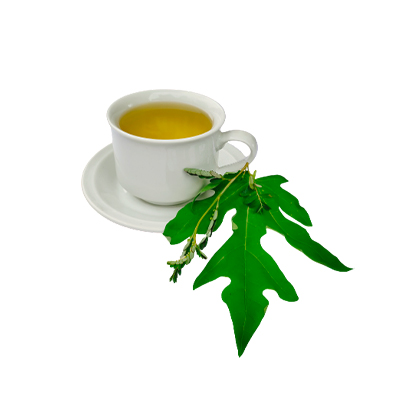
- Take 5 young papaya leaves, 5 chanca piedra plants, 110 ml water.
- Wash all ingredients thoroughly then boil for 10-15 minutes. Strain using a clean cloth then squeeze.
- Drink the concoction once a day, 100 ml. Do this for 14 days
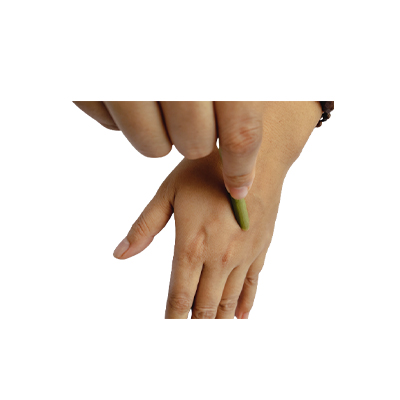
2. Burns
- Apply papaya sap to the wound to prevent blistering and reduce pain.
Reference Sources
- Kining ES, Falah N, Nurhidayat. 2016. TheIn Vitro Antibiofilm Activity of Water Leaf Extract of Papaya (Caricapapaya L.) against Pseudomonas aeruginosa. Current Biochemistry 2(3): 150-163.
- Balittro. Balai Penelitian Tanaman Rempah dan Obat.Pepaya. http://balittro.litbang.pertanian.go.id/?page_id=5459 20-11-2020
- Wardani FF dkk. 2019. Perbanyakan Pepaya (Carica papaya L.) 'Sukma' In Vitro dari Eksplan Tunas Pucuk sebagai Respon terhadap BA dan NAA. J. Agron. Indonesia, Agustus 2019, 47(2):203-209.
- Indah IAP, E Sulistyorini. Cancer Chemoprevention Research Center. Papaya. https://ccrc.farmasi.ugm.ac.id/?page_id=477 20-11-2020
- Permadi. I. W. A. 2012. Morfologitanaman papaya (Carica papaya L). https://www.slideshare.net/Wayanadi/morfologi-tumbuhan-pepaya. 20-11-2020
- Balai Pengkajian Teknologi Pertanian. BalaiPenelitiandanPengembanganPertanian. 2017. PetunjukTeknisBudidayaPepaya. Diakses padatanggal 6 September 2020 melalui http://nad.litbang.pertanian.go.id/ind/images/01-Edited-JuknisPepaya.pdf. 20-11-2020