Carissa carandas L.
Summary
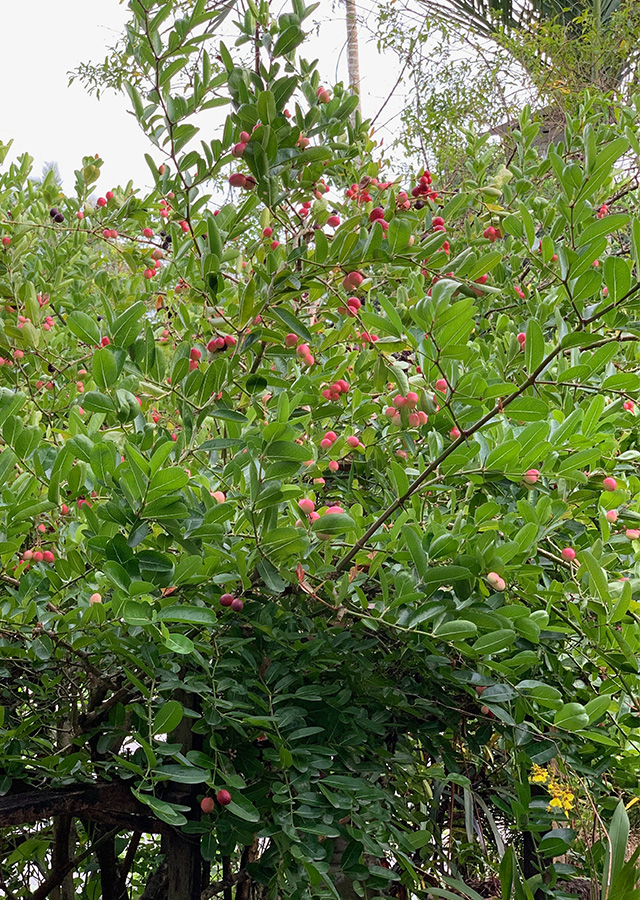
Karonda (Carissa carandas) is a shrub up to 5 meters tall of the Apocynaceae family, distributed from Afghanistan, India, and Sri Lanka to Southern China and the Malay Peninsula. In the Ayurvedic medicine system, its bark is used to treat skin diseases while its root is prepared for urinary tract disorders. Communities also use it to relieve fever, asthma, and intestinal worms.
Agroecology
Grows well up to an elevation of 1,800 m above sea level. This plant thrives in various soil types and is often found in yards. It favors average rainfall of 1,000-1,400 mm/year, a soil pH range of 6.5-8, and full sun. This plant is drought-tolerant and can adapt to high ambient temperatures.
Morphology
- Roots taproot.
- Stem thorny branches, slender or forked.
- Leaves ovate, 3-7 x 1.5-4 cm in size.
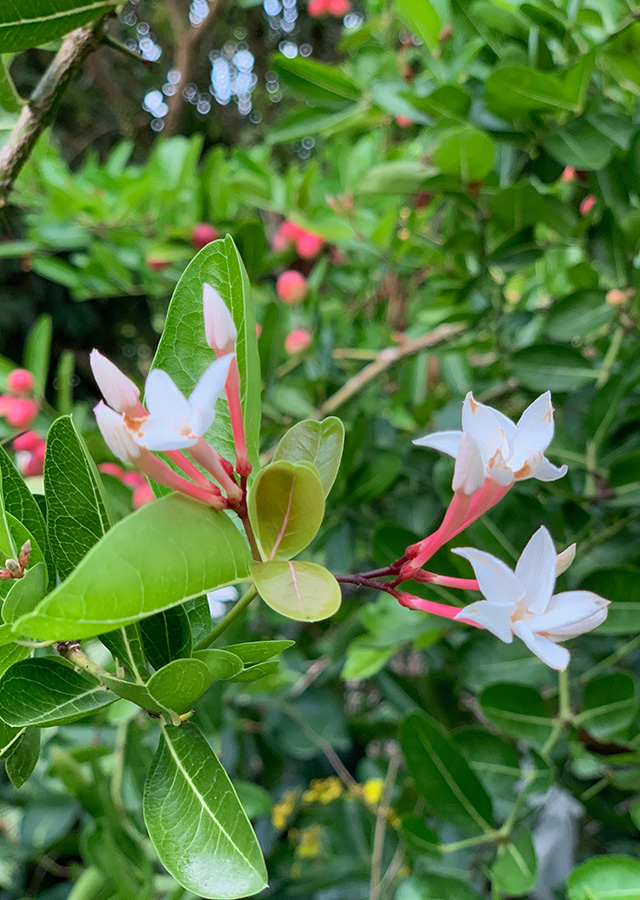
- Flowers fragrant, white petals, pink sepals.
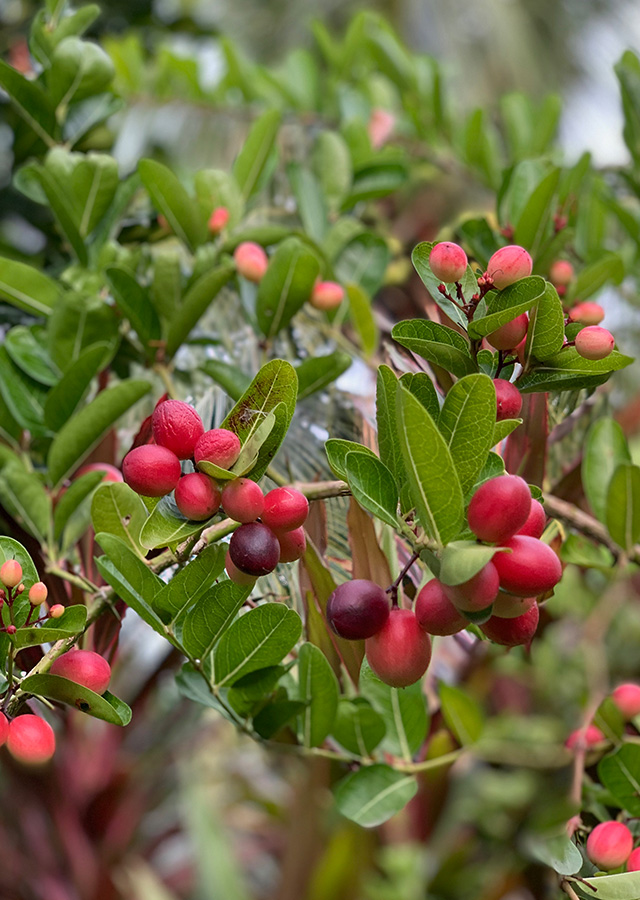
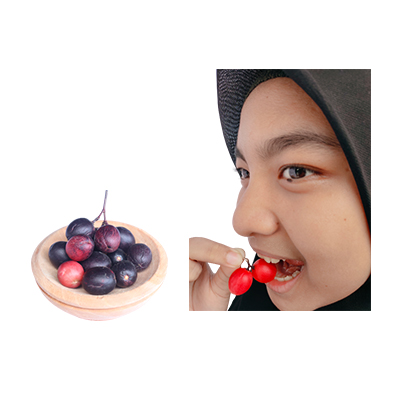
- Fruit an ellipsoid berry, 1.5-2.5 x 1-2 cm in size. A blackish-purple fruit indicates it is very ripe, with abundant latex and a sweet taste.
Cultivation
- Propagated vegetatively (stem cuttings, air layering) or generatively (by seed). Seeds come from ripe, blackish-purple fruit.
- Separate the seed from the flesh, then dry the seed in the sun. Once dry, plant the seed in fertile soil.
Chemical Content
Alkaloids, phenolic compounds, flavonoids, saponins, tannins, 2-acetyl phenol, lignans, carinol, sesquiterpenes (carissone, carindone), lupeol, β-sitosterol, 16 β-hydroxybetulinic acid, α-amyrin, glycosides, desmethylnoracronycine, triterpenoids, carisol, linalool, β-caryophyllene, carissic acid, ursolic acid, ascorbic acid.
Benefits
Treats canker sores, fever, asthma, intestinal worms, skin diseases, cough, gallbladder disorders; helps prevent diarrhea; treats earache.
Simplisia
Not yet available.
Local Names
Kerendang (Betawi), Samarinda (Java), Senggaritan.
Traditional Recipes
The following recipes reflect traditional knowledge passed down through generations, not a substitute for professional medical diagnosis or advice. Consult a healthcare provider before use.
1. Canker Sores
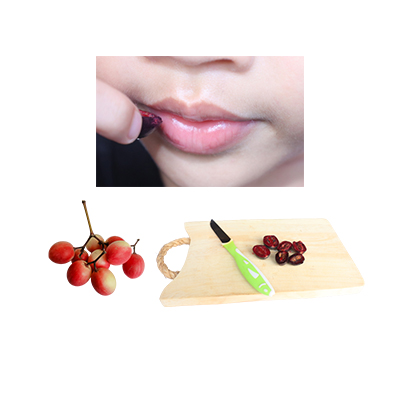
- Prepare fresh, ripe karonda fruit.
- Split the fruit and apply to the affected area.
- Repeat use several times until healed.
2. Gallbladder Disease
- Choose fresh karonda fruit, wash thoroughly, and drain.
- Eat 4 g of karonda fruit a day to help ease gallbladder pain.
Reference Sources
- Grow Plants.(No date). Karonda plant. https://www.growplants.org/growing/karonda. 02-11-2020.
- Stuartxchange. (2019). Philippine Medicinal Plants. Karanda. http://www.stuartxchange.org/Caranda. 03-08-2020.
- Fern, Ken. (2019). Useful Tropical Plants. Carissa carandas. http://tropical.theferns.info/viewtropical.php?id=Carissa+carandas. 03-08-2020.
- Virmani,R., Virmani,T., & Singh, C., et all. (2017). Hidden Potential of Natural Herb Carissa Carandas (Karonda). Research in Pharmacy and Health Sciences Vol 3(2): 294-302. https://www.researchgate.net/publication/315811584_Hidden_Potential_of_Natural_Herb_Carissa_Carandas_Karonda. 03-08-2020.
- Badan penelitian dan pengembangan kesehatan.1997. Inventaris tanaman obat indonesia (IV). depkes RI.
- Herbpathy.com. https://herbpathy.com/Uses-and-Benefits-of-Carissa-Carandas-Cid395615-08-2020
- Longdom.org. http://longdom.org/Tradisionaluses,pharmacologicalactionandphytochemicalanalysisofCarissacarandasLinn:areview 05--12-2020
- Jayakumar K, Muthuraman B. 2018. Traditional uses and nutrient status of Indian native plant fruit (Carissa carandas Linn.). World Scientific News 96:217-224.
- Kumar V, Tarpada P, Sadariya K, Goswami S. 2017. Comparative phytochemical and antioxidant activities of methanol and petroleum ether extract of Carissa Carandas leaves, fruit and seed. Vivechan International Journal of Research 8(2).
- Singh A, Uppal GK. 2015. A review on Carissa carandas – phytochemistry, ethno-pharmocology, and micr
- Badan penelitian dan pengembangan kesehatan.1997. Inventaris tanaman obat indonesia (IV). depkes RI.