Cascabela thevetia (L.) Lippold
Summary
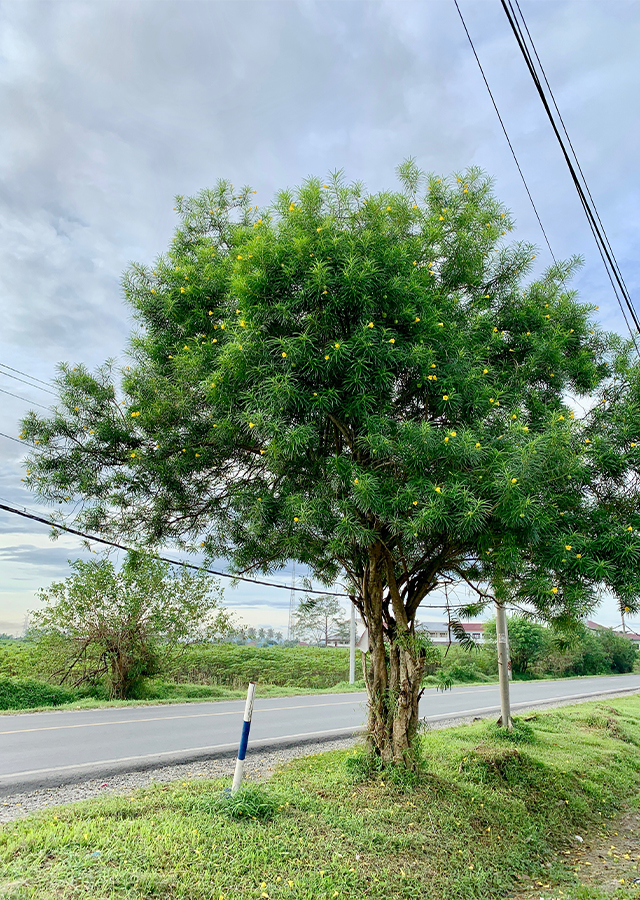
Ginje (Cascabela thevetia) is an upright shrub 3-8 meters tall of the Apocynaceae family, native to the Americas and spread to the Pacific and East Africa, commonly planted as a roadside ornamental. This plant has been used in traditional medicine in tropical America and Asia, though caution is needed as high doses can cause poisoning. Ginje is believed to be cardiotonic and to help relieve swelling.
Agroecology
Grows well in lowlands up to elevations of 900 m above sea level, in full sunlight, dry soil but not wind-tolerant. Prefers fertile, well-drained loamy soil.
Morphology
- Stem woody, ridged, jointed, round, grayish-green in color, with an unpleasant smell.
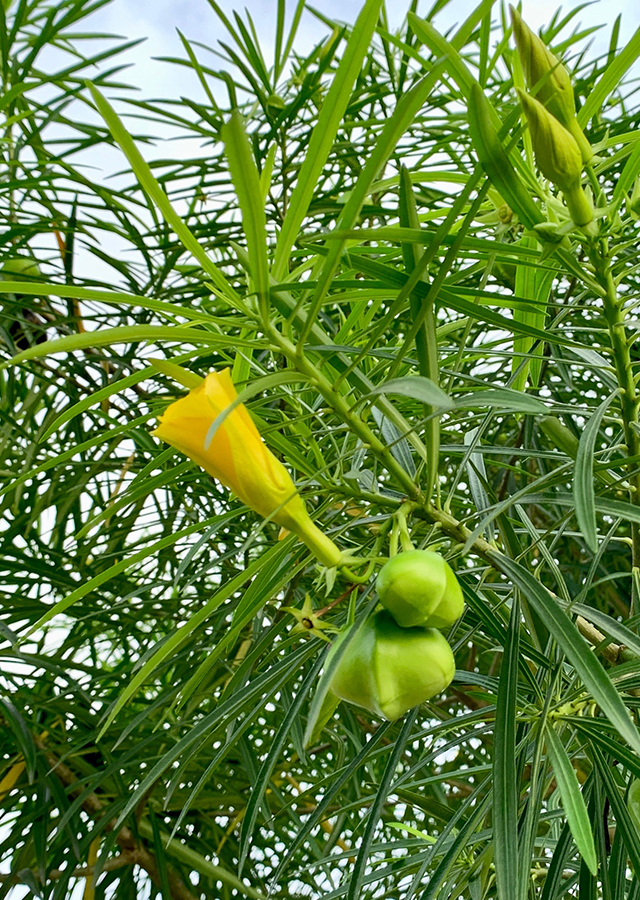
- Leaves line-lance-shaped, short petiole, pointed tip, glossy green, clustered at the tips of twigs.
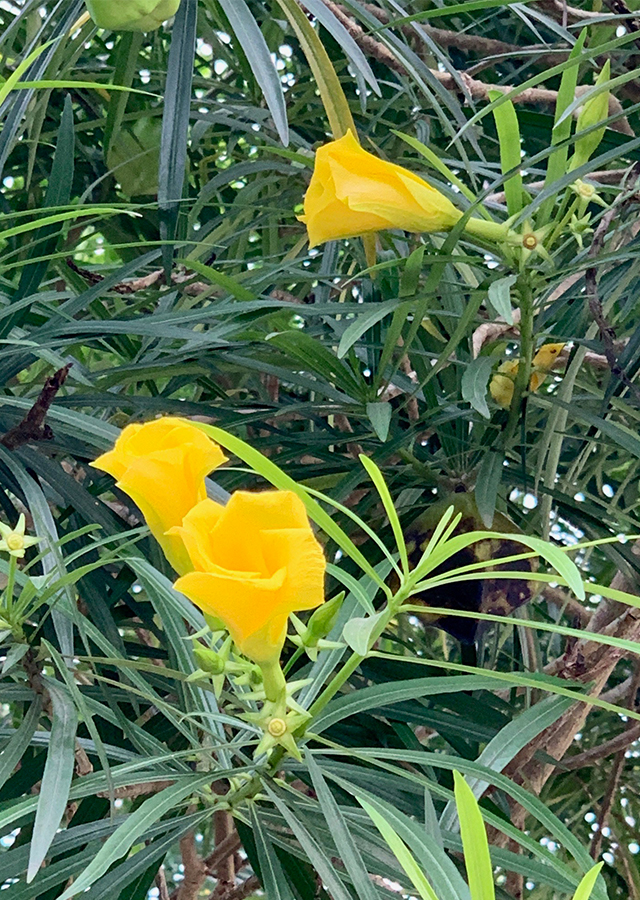
- Flowers trumpet-shaped, positioned opposite the leaves at the twig tips, yellow.
- Fruit a drupe, glossy green and turning black when ripe, containing latex, 5 cm in diameter.
- Seeds large, single, gray in color.
Cultivation
- Propagated by seed and stem cuttings.
- Seeds germinate quickly, visible after 3 months, 80% germination success. Flowers and fruits year-round in equatorial regions.
Chemical Content
Root: nerifolin, thevelene, neriperside. Bark: peruvoside, nerifolin, lupeol acetate, theviridoside. Seeds: thevetin, cerberoside, thevefolin, ruvoside, peruvoside, theveside, vertiaflavone.
Benefits
Strengthens the heart (cardiotonic), diuretic, heals swelling (antiswelling), vermifuge (anthelmintic), treats skin infections, remedy for fever in children.
Simplisia
- Take the stem and whole leaves of the ginje plant then wash thoroughly with water.
- Dry in the sun until dry, then store in a closed place.
Local Names
Ki hujan (Sunda), Nagasari (East Java).
Traditional Recipes
The following recipes reflect traditional knowledge passed down through generations, not a substitute for professional medical diagnosis or advice. Consult a healthcare provider before use.
1. Skin infection
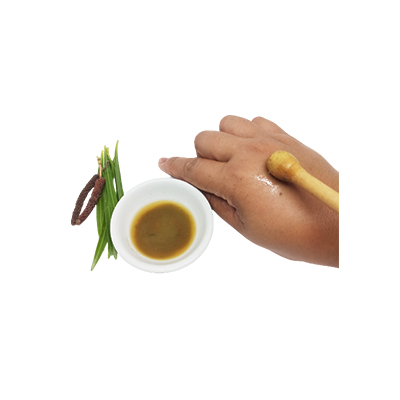
- Prepare 17 ginje leaves, 7 cabe jawa seeds.
- Finely pound all ingredients and add water as needed. Squeeze and strain.
- Apply the strained liquid to the infected skin 2-3 times a day.
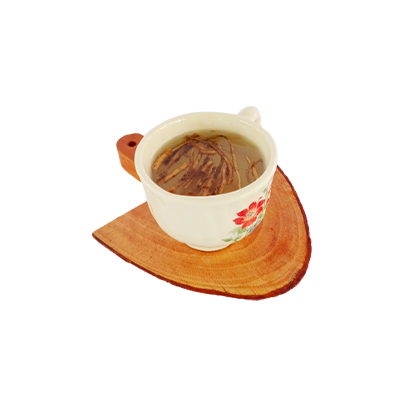
2. Fever in children
- Prepare 15 g root.
- Wash thoroughly.
- Steep in 1 glass of hot water, add 1 tsp honey.
- Stir evenly and let cool.
- Drink the concoction.
Reference Sources
- CABI. (2020). Invasive Species Compendium. Cascabela thevetia (yellow oleander). https://www.cabi.org/isc/datasheet/53608. 24-02-2021.
- Fern, Ken. (2014). Useful Tropical Plants. Thevetia peruviana. http://tropical.theferns.info/viewtropical.php?id=Thevetia%20peruviana. 24-02-2021.
- Schmelzer, G.H. (2020). Pl@nt Use. Thevetia peruviana (PROTA). https://uses.plantnet-project.org/en/Thevetia_peruviana_(PROTA) 24-02-2021.
- Academia. Kurdi Aserani. Buku Tanaman Herbal Indonesia. https://www.academia.edu/9476007/Buku_Tanaman_Herbal_Indonesia_Penulis_Aserani_Kurdi_S.Pd_. 08-07-2020
- Widyaningrum Herlina. 2019. Kitab Tanaman Obat Nusantara. Media Pressindo, Jakarta.
- Kementerian Pertanian RI BPTP Banten. Mengenal Tanaman Ginje. https://banten.litbang.pertanian.go.id/new/index.php/publikasi/folder/961-mengenal-tanaman-ginje. 26-01-2021.