Centella asiatica (L.) Urb.
Summary
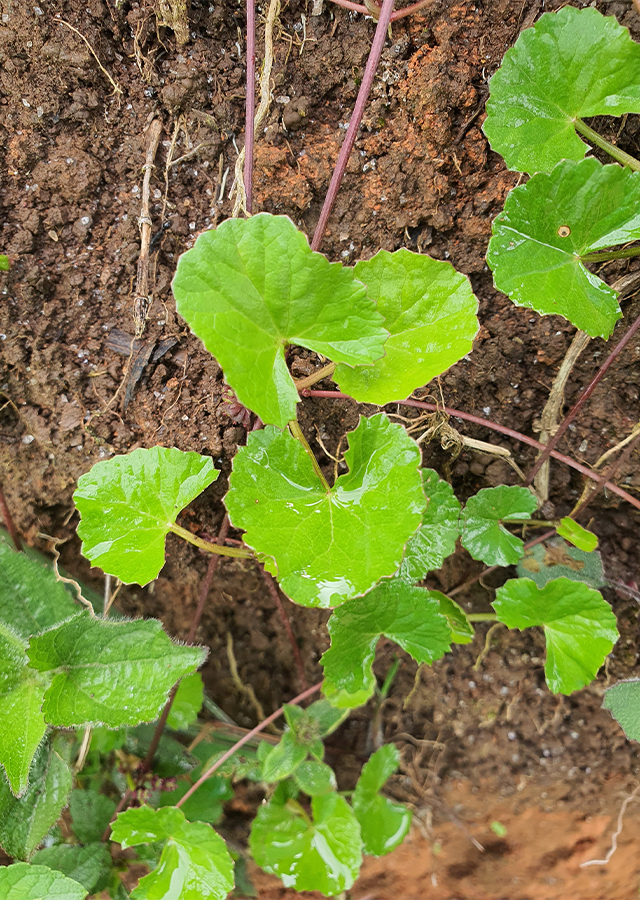
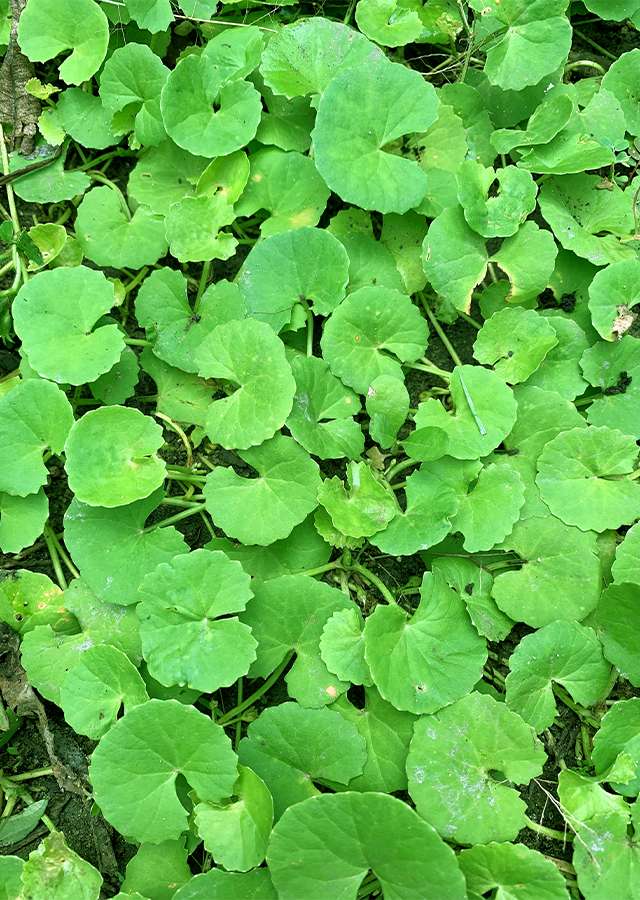
Pegagan (Centella asiatica) is a herb 10-20 cm tall of the Apiaceae family, widely distributed across tropical regions including Southeast Asia, with the greatest diversity in South Africa. In West Java, its leaves are a favorite fresh vegetable, while in Chinese medicine and Ayurveda pegagan has long been used. This plant is believed to speed up wound healing and improve memory.
Agroecology
A wild herb that grows in regions at elevations of 700-2,500 m above sea level. This plant is commonly found in plantations, fields, roadsides, and rice field embankments. Prefers somewhat moist soil, adequate light, and somewhat sheltered conditions.
Morphology
- Roots short at the nodes, soft jointed stolons.
- Stem trailing, many branches, each branch forms a new plant.
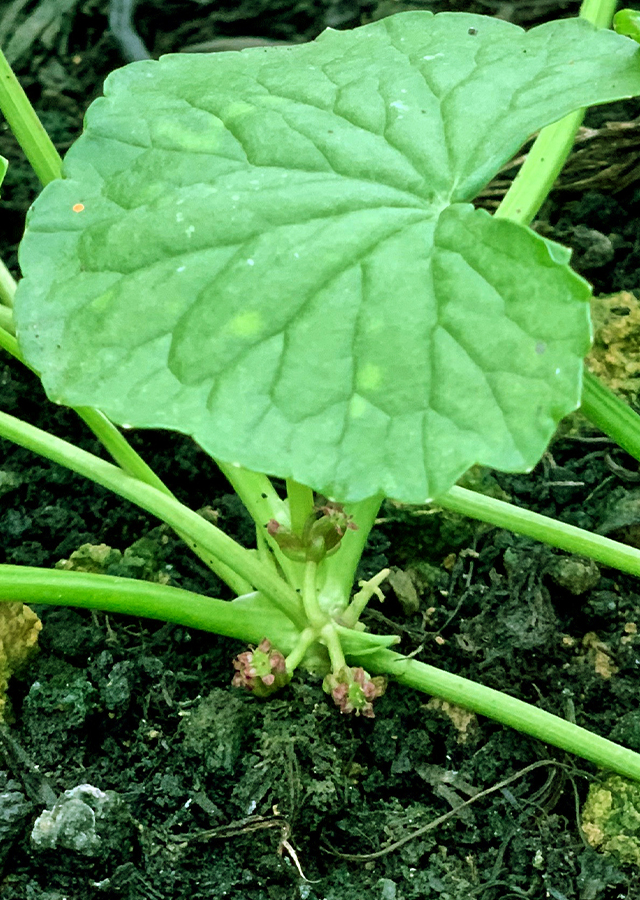
- Leaves rosette, kidney-shaped, serrated edges located around the stem.
- Flowers emerge at leaf axils and are arranged umbrella-like, greenish, pink or reddish in color.
- Fruit small, oblong/flat shaped and tastes bitter but has a fragrant smell.
Cultivation
Propagated vegetatively (stolons) and generatively (seed).
Chemical Content
Triterpenoids (asiaticoside, madecassoside, asiatic acid, madecassic acid), flavonoids, phytosterol, tannins, saponins, thankuniside, isothankuniside, brahmoside, brahminoside, brahmic acid, meso-inositol centellose, carotenoids, hydrocotylin, vellarine, free amino acids (alanine, serine, aminobutyrate, aspartate, glutamate, lysine, threonine), fatty acids (linoleic acids, linolenic, oleic, palmitic, stearic acids).
Benefits
Wound healer, treats inflammation, rheumatism, asthma, hemorrhoids, tuberculosis, leprosy, dysentery, fever, cough (dry, bloody), canker sores, high blood pressure, liver swelling, measles, boils, blood tonic, boosts immune system, appetite booster, cleanses blood, improves digestive disorders, Alzheimer's, relieves stress, promotes urination, vomiting blood, nosebleeds, addresses red and swollen eyes, worm remedy, treats jengkol bean poisoning.
Simplisia
- Prepare fresh leaves then wet-sort to separate from attached dirt. Wash with running water until clean.
- Dry by air-drying until evenly dry (3 days) or using a special oven for 2 days.
- Store in an airtight container.
Local Names
Peugaga (Aceh), Ampagaga (Batak), Jalukap (Banjar), Daun kaki kuda (Malay), Antanan (Sunda).
Traditional Recipes
The following recipes reflect traditional knowledge passed down through generations, not a substitute for professional medical diagnosis or advice. Consult a healthcare provider before use.
1. Reducing Symptoms of Depression
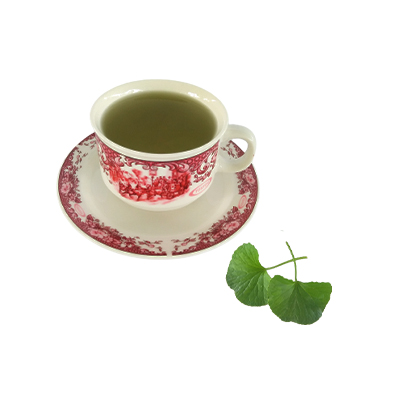
- Prepare 5 g fresh pegagan leaves, 500 ml water.
- Boil the leaves until it boils and the water is reduced to about 250 ml.
- Drink twice a day.
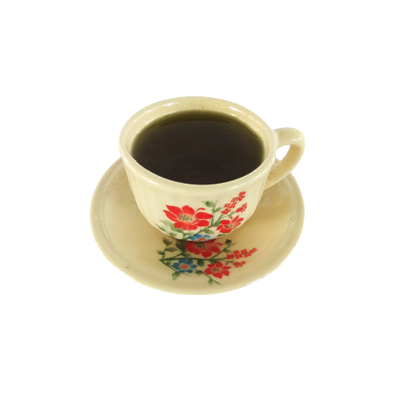
2. Treatment of Jengkol Bean Poisoning
- Boil 10-15 pegagan leaves with 3 glasses of water until it boils and the water is reduced to 1 1/2 glasses. Cool and strain.
- Drink the concoction once a day.
Reference Sources
- Tropical Plants Database, Ken Fern. tropical.theferns.info. Centella asiatica. http://tropical.theferns.info/viewtropical.php?id=Centella+asiatica 18-01-2021
- Gohil KJ, Patel JA, Gajjar AK. 2010. Pharmacological review on Centella asiatica: a potential herbal cure-all. Indian J. Pharm. Sci. 72(5): 546–556
- Sadhily H. 2016. Ensiklopedi Indonesia Vol.1. Ichtiar Baru-Van Hoeve, Jakarta.
- Januwati M, Muhammad H. 1992. Cara Budidaya Pegagan (Centella asiatica L.). Warta Tumbuhan Obat Indonesia 1.
- Prosea. 1999. Medicinal and Poisonous Plants 1. D Padua, Bunyapraphatsara LS, Lemmens RHMJ (eds.). Backhuys, Netherlands.
- Sutardi S. 2016. Bahan Aktif Tanaman Pegagan dan Khasiatnya Untuk Meningkatkan Sistem Imun Tubuh. J. Penel. Pengemb. Pert. 35(3): 121-130
- Kining ES, Falah N, Nurhidayat. 2016. TheIn Vitro Antibiofilm Activity of Water Leaf Extract of Papaya (Caricapapaya L.) against Pseudomonas aeruginosa. Current Biochemistry 2(3): 150-163.
- Balittro. Balai Penelitian Tanaman Rempah dan Obat.Pepaya. http://balittro.litbang.pertanian.go.id/?page_id=5459 20-11-2020
- Wardani FF dkk. 2019. Perbanyakan Pepaya (Carica papaya L.) 'Sukma' In Vitro dari Eksplan Tunas Pucuk sebagai Respon terhadap BA dan NAA. J. Agron. Indonesia, Agustus 2019, 47(2):203-209.
- Indah IAP, E Sulistyorini. Cancer Chemoprevention Research Center. Papaya. https://ccrc.farmasi.ugm.ac.id/?page_id=477 20-11-2020
- Permadi. I. W. A. 2012. Morfologitanaman papaya (Carica papaya L). https://www.slideshare.net/Wayanadi/morfologi-tumbuhan-pepaya. 20-11-2020
- Balai Pengkajian Teknologi Pertanian. BalaiPenelitiandanPengembanganPertanian. 2017. PetunjukTeknisBudidayaPepaya. Diakses padatanggal 6 September 2020 melalui http://nad.litbang.pertanian.go.id/ind/images/01-Edited-JuknisPepaya.pdf. 20-11-2020