Cerbera manghas L.
Summary
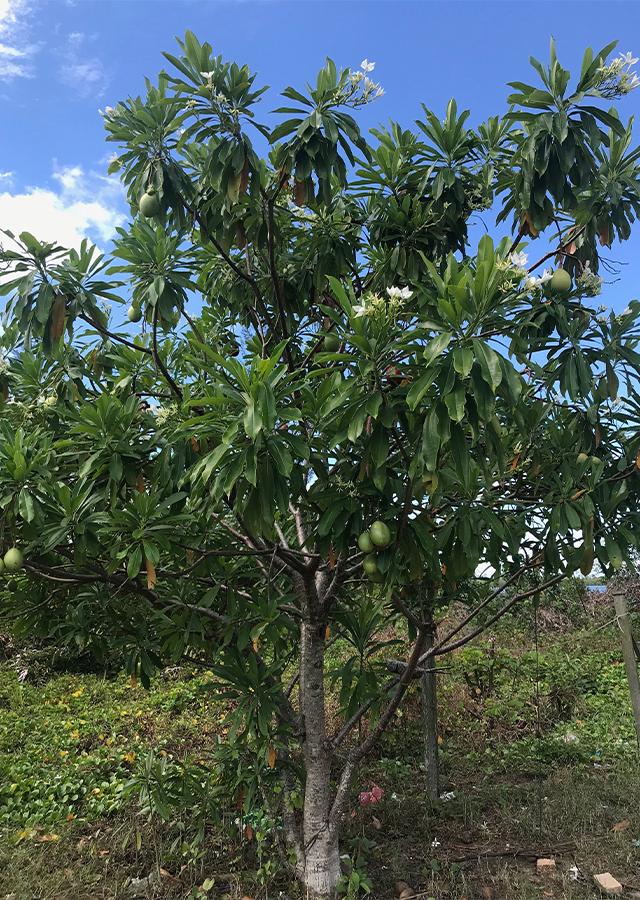
Bintaro (Cerbera manghas) is a tree up to 25 meters tall of the Apocynaceae family, native to the Indo-Pacific region, distributed in lowlands across Asia, Africa, and Australia. Its highly toxic seeds are externally used to make hair tonic and treat scabies, though extreme caution is required. Bintaro is also traditionally believed to help address diabetes and malaria.
Agroecology
Grows well in full sunlight, fertile, well-drained, moist soil. Often found along coastlines up to elevations of 400 m above sea level.
Morphology
- Root a taproot, brown in color.
- Stem round, woody, thick and rough bark, gray to dark brown in color, stem diameter 70 cm.
- Leaves single, oblong-shaped, pinnate venation with a tapering tip and base.
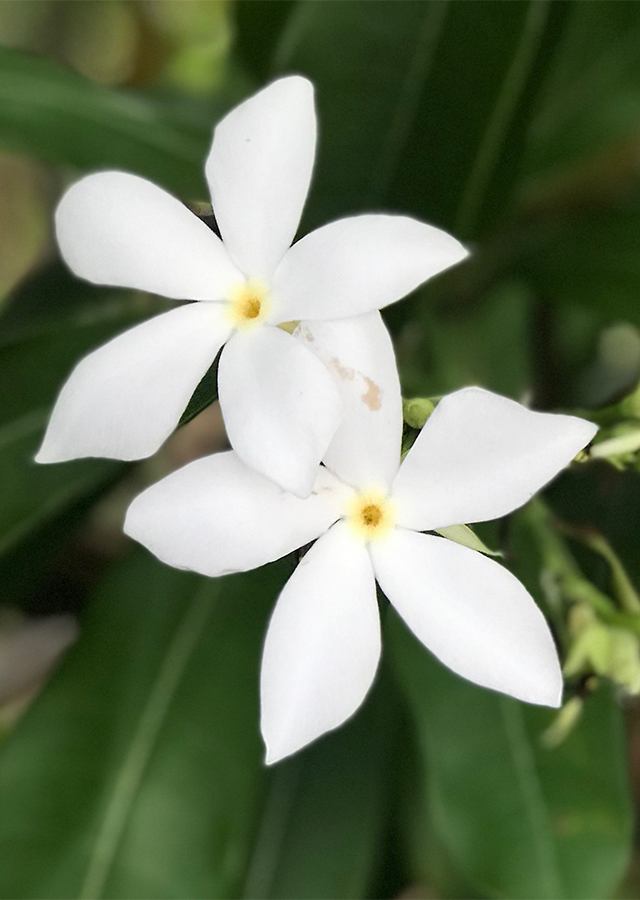
- Flowers white in color, producing a fragrant scent, trumpet-shaped, located at the tip of the stem.
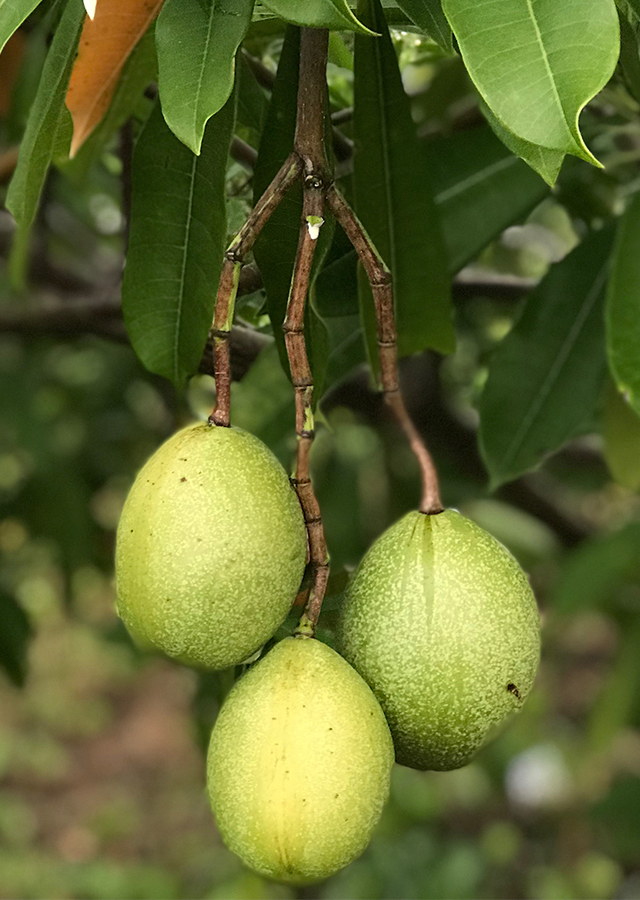
- Fruit resembles a mango shape, pale green when young and turning dark red when ripe, has a husk.
- Seeds flat, elongated, white in color.
Cultivation
Propagated generatively (seed) and vegetatively (stem cuttings).
Chemical Content
Alkaloid, flavonoid, saponin, tannin, triterpenoid, phenolic and glycoside, succinic acid, benzamide, loliolide, beta sitosterol, cerberin, neriifolin, cerleaside A, daucosterol,
Benefits
Treats diabetes, fever, malaria, digestive disorders, heart disorders, hemorrhoids, and ringworm.
Simplisia
- Harvest leaves then sort the material (selecting healthy material).
- Wash with clean water then air-dry/sun-dry until dry.
- Pack in plastic (vacuum), label and include the processing date.
- Store indoors (temperature 8-15°C).
Local Names
Madangkapo and Bintan (Sumatra), Bintaro (Java), Bilutasi (Nusa Tenggara), Bintan, Buta-buta badak, Goro-goro (Manado), Lambuto (Maluku).
Traditional Recipes
The following recipes reflect traditional knowledge passed down through generations, not a substitute for professional medical diagnosis or advice. Consult a healthcare provider before use.
1. As a laxative
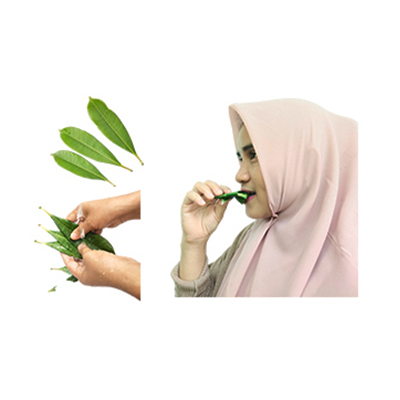
- Prepare 10 g fresh young bintaro leaves
- Wash thoroughly with running water then drain
- The leaves can be eaten directly as a side dish.
Reference Sources
- Fern, Ken. (2014). Useful tropical Plants. Cerbera manghas. http://tropical.theferns.info/viewtropical.php?id=Cerbera+manghas. 27-09-2020.
- Khanh, T.C., (2016). Cerbera manghas (PROSEA). https://uses.plantnet-project.org/en/Cerbera_manghas_(PROSEA). 27-09-2020.
- StuartXchange. (2016). Philippine Medicinal Plants. Baraibai-Cerbera manghas Linn.,SEA MANGO. http://www.stuartxchange.org/Baraibai.html. 27-09-2020.
- Referensi asosiasi herbalisnusantara (pusat pelatihan dan pengobatan herbal indonesia), download 699 ebook tanaman obat indonesia, herbalisnusantara.com 30-10-2020
- Scienedirect.com. Chemical constituents from the leaves of Cerbera manghas. https://www.sciencedirect.com/science/article/pii/S1995764510600466 26-01-2021