Cestrum aurantiacum Lindl.
Summary
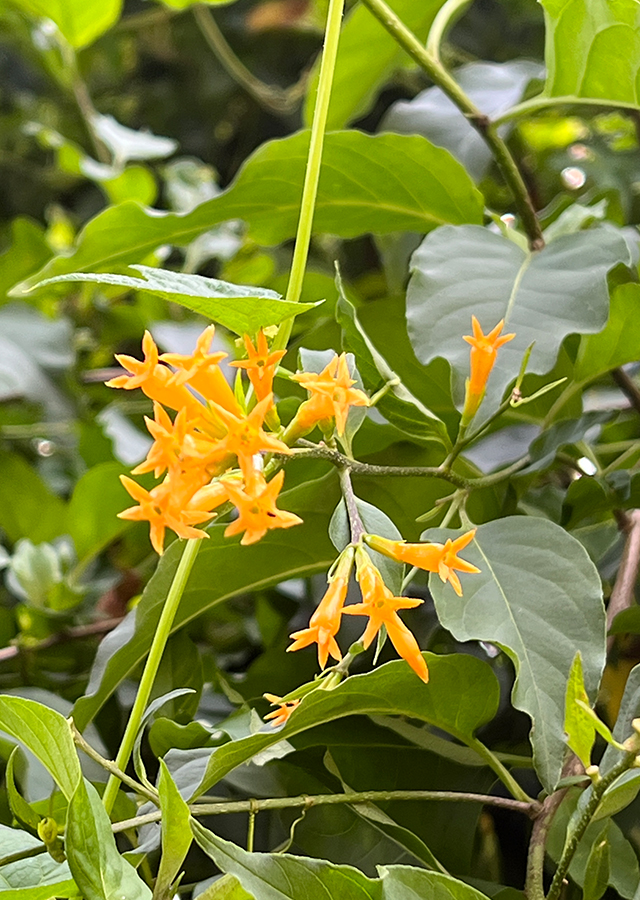
Ki jogo (Cestrum aurantiacum) is a shrub 1-6.5 meters tall from the Solanaceae family native to Tropical America, now widely cultivated in Africa, India, and Australia as an ornamental for its striking flower color. This plant is known to be toxic to livestock and potentially has the same effect on humans if ingested. Ki jogo is traditionally used to treat itchy skin.
Agroecology
Ki jogo is commonly found in abandoned gardens, roadsides, forests, mountains, and disturbed areas near towns, growing at elevations between 850-2,600 m asl. It prefers fertile, well-drained soil enriched with compost. It favors locations in full sun or bright shade, as shaded conditions inhibit flowering and produce leggy plants.
Morphology
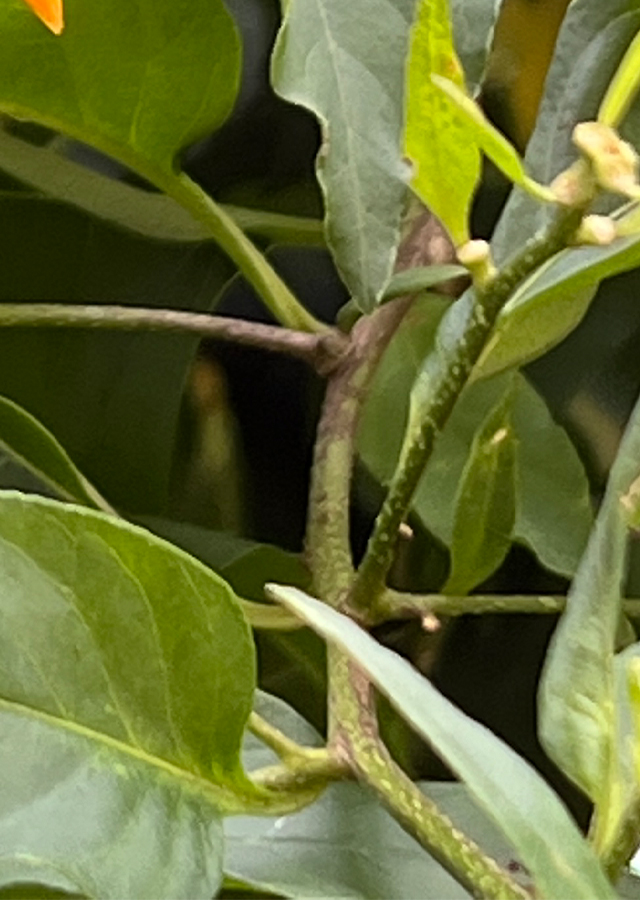
- Stem woody, much-branched, branches often lenticellate, sparsely hairy to hairless.
- Leaves alternate, pale to dark green with yellowish venation, ovate to lanceolate, base pointed, margin entire, tip acute to acuminate, both surfaces usually hairless, sometimes coriaceous (leathery).
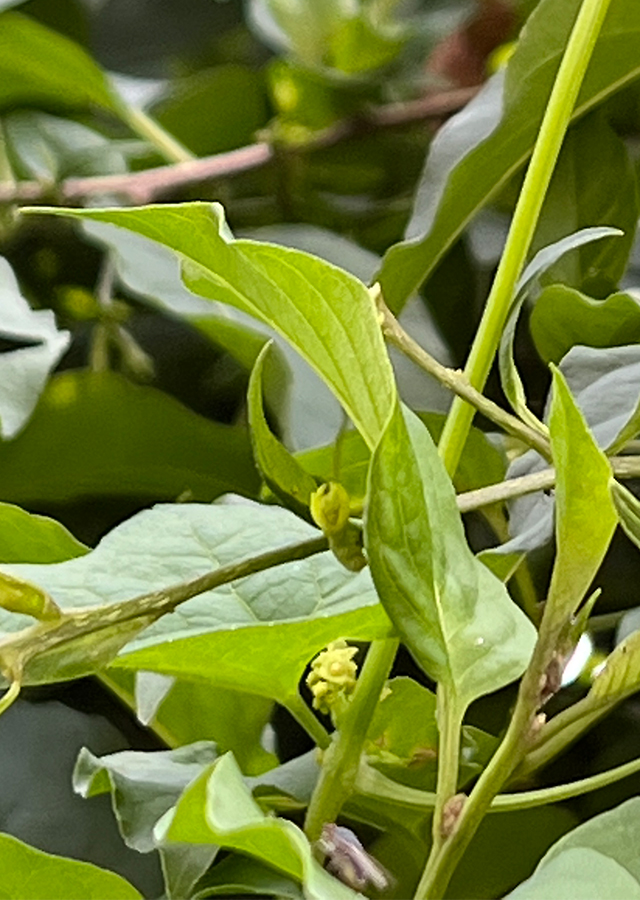
- Flowers with a pungent orange-like aroma, especially at night. Calyx narrowly tubular, hairless to sparsely pilose outside, lobes narrowly triangular becoming subulate (ligulate) above, margin tightly rolled with lobes extending down as five dark veins across the calyx, pointed. Corolla usually orange to bright yellow, sometimes yellowish red, tubular with 5-6 small round lobes, lobes widening to narrowly triangular, often apiculate, hairless outside, pilose internally. Anthers yellow to orange. Ovary brownish, ovoid. Inflorescences arranged in clusters at the branch tips (terminal clusters) and in leaf axils (axillary clusters) as racemes or panicles.
- Fruit a subsessile berry, white, cream, or yellow, ovoid, small.
- Seeds 1-5(-8) per berry, dark brown or blackish, ellipsoidal, prismatic, usually curved.
Cultivation
Propagation is done vegetatively (stem cuttings).
Chemical Content
Steroidal saponins, sterols, catechol tannins, flavonoids, fatty acids (myristic, palmitic, stearic, oleic, linoleic), β-amyrin, β-sitosterol
Benefits
Treats itchy skin and has antimicrobial activity.
Local Names
Informasi tidak ditemukan. Butuh penelusuran lebih lanjut.
Traditional Recipes
The following recipes reflect traditional knowledge passed down through generations, not a substitute for professional medical diagnosis or advice. Consult a healthcare provider before use.
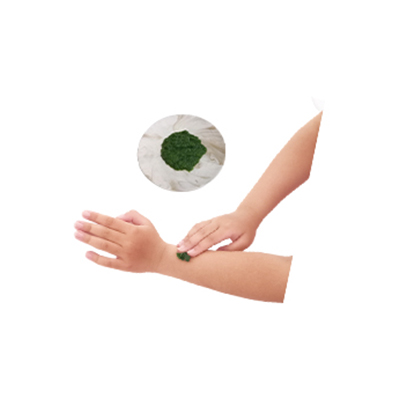
1. Itch remedy
- Prepare an adequate amount of fresh ki jogo leaves and wash until clean.
- Rub the leaves on the itchy skin.
Reference Sources
- Royal Botanic Gardens. Plant of the World Online: Cestrum aurantiacum Lindl. https://powo.science.kew.org/taxon/urn:lsid:ipni.org:names:814910-1. 11-03-2022.
- Setyawati,T., Narulita, S., Bahri I.P., Rahardjo,G.T., 2015. A Guide Book to Invasive Alien Plant Species in Indonesia. Research, Development and Innovation Agency. Ministry of Environment and Forestry.
- Flora Fauna Web. 2022. Cestrum aurantiacum Lindl. https://www.nparks.gov.sg/florafaunaweb/flora/3/6/3666. 11-03-2022.
- Makokha J. 2018. Invasion of Cestrum aurantiacum Lindl. in Kenya. Journal of Environmental Protection, 9: 671-690. DOI: 10.4236/jep.2018.96042.
- Fahrurozi I. 2014. Keanekaragaman Tumbuhan Obat di Taman Nasional Gunung Gede Pangrango dan di Hutan Terfragmetasi Kebun Raya Cibodas Serta Pemanfaatannya oleh Masyarakat Lokal. Skripsi. Universitas Islam Negeri Syarif Hidayatullah. Jakarta.