Cestrum nocturnum L.
Summary
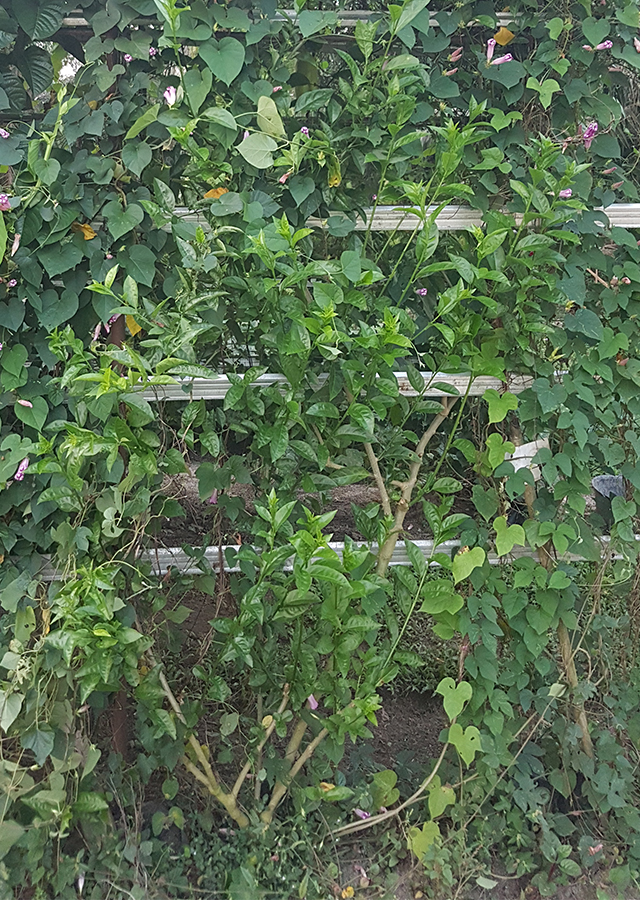
Arum dalu (Cestrum nocturnum) is a shrub up to 4 meters tall from the Solanaceae family native to the Antilles and Central America, now invasive across many Pacific regions. Its sweetly fragrant flowers bloom at night and are used in religious rituals as offerings to Shiva and Ganesha in Kathmandu. Arum dalu is traditionally used as an eczema remedy and helps heal burns.
Agroecology
Arum dalu is generally found at low to medium elevations. In Southeast Asia, this species is cultivated and locally naturalized from sea level up to an elevation of 1,600 m asl. In Nicaragua, this species grows at elevations between 40-1,000 m asl. Arum dalu thrives in moist or wet forests, including along riverbanks, secondary forests, dense lowland forests, thickets, and open areas, both natural and disturbed. Its growth prefers light sandy soil and can adapt to various soil types and conditions, but has low tolerance for salt and waterlogging. Grows well in full sun but can tolerate light shade.
Morphology
- Stem woody, light green, many-branched, spreading, sometimes arching. Young stems pilose, with simple, spreading, multicellular eglandular hairs, later becoming hairless.
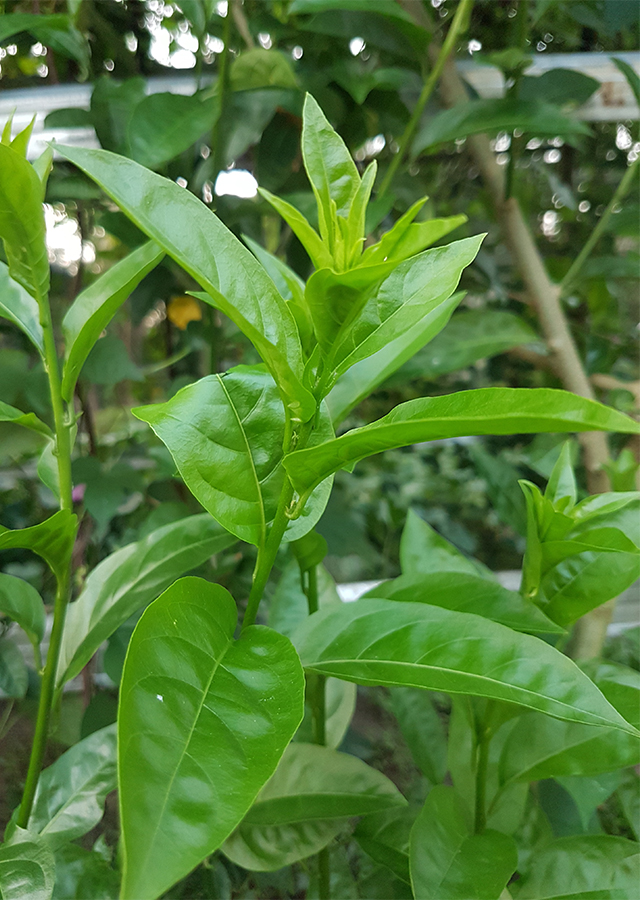
- Leaves simple, alternate, lanceolate-elliptic, surface glossy, tip acute to acuminate, base rounded or pointed, margin entire, light to dark green, both surfaces hairless.
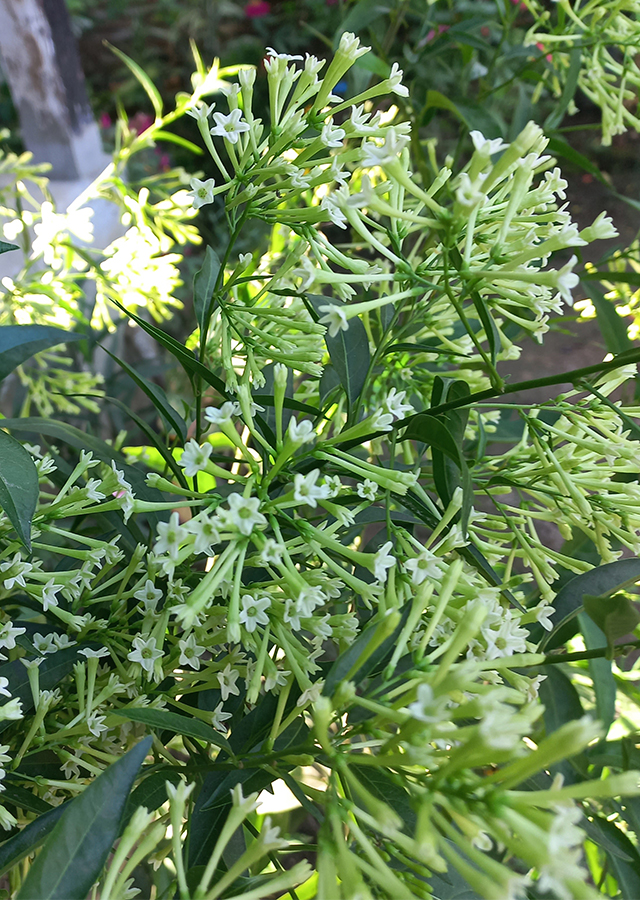
- Flowers bisexual and fragrant. Corolla greenish white to greenish yellow, tubular and slender, slightly widening toward the tip, hairless outside and inside, with 5 petals and narrowly triangular lobes, usually spreading after the flower blooms, very sweetly scented. Calyx campanulate (bell-shaped), upper 1/3 divided into triangular lobes, green. Stamens 5, anthers exserted, filaments attached to the corolla tube, free part at the top, with 2 teeth at the base of the free part, anthers brown. Ovary green, round or ovoid, hairless, disc greenish white. Inflorescence an axillary or terminal cyme, 3-8 cm long.
- Fruit a white berry, globose to ovoid, firm or juicy, 8-10 mm in diameter.
- Seeds 5-8 per fruit, ovoid, prismatic, outer face convex, inner face concave, reticulate, black.
Cultivation
Plant propagation is generative (seed) and vegetative (stem cuttings).
Chemical Content
Flavonoids, steroidal saponins (nocturnoside A, tigogenin, smilagenin, and yuccagenin), tannins, monoterpenes, sesquiterpenes, triterpenes, sterols, coumarins, cardiac glycosides, essential oil (ß-phellandrene, α-phellandrene, (E)-ß-ocimene, linalool), alkaloids (nicotine and nornicotine), ethyl citrate, phytol, 4-isobutylmorphine, n-hexadecanoic acid.
Benefits
Treats epilepsy, cataracts, wounds and swelling, malaria, diarrhea, addresses skin eruptions (as a lotion), smooths the skin, treats eczema, external application to help heal burns and swelling. Has antimicrobial, analgesic, antioxidant, and anti-inflammatory activity.
Simplisia
- Prepare an adequate amount of fresh arum dalu leaves, wash clean with running water then drain.
- Dry under direct sunlight for several days or with an oven at 40°C until the moisture content reaches 10%.
- Store the simplicia in plastic or a clean, airtight container.
Local Names
Harum dalu, Kembang mayang, Kembang Dayang.
Traditional Recipes
The following recipes reflect traditional knowledge passed down through generations, not a substitute for professional medical diagnosis or advice. Consult a healthcare provider before use.
1. Addresses skin eruptions
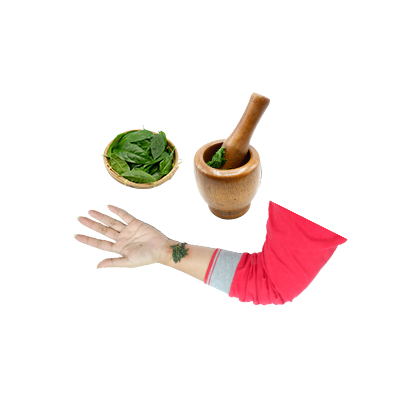
- Take an adequate amount of fresh arum dalu leaves and wash until clean.
- Boil the leaves until it boils.
- Grind until it becomes a paste.
- Apply the paste to the skin.
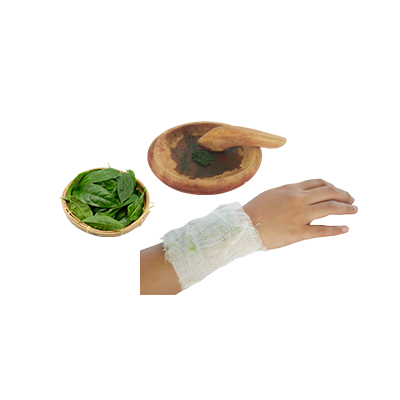
2. Heals burns and swelling
- Prepare an adequate amount of fresh arum dalu leaves and wash until clean.
- Grind until it becomes a paste.
- Apply the paste to the injured or swollen skin then wrap with gauze.
Reference Sources
- Royal Botanic Gardens. Plants of the World Online: Cestrum nocturnum L. https://powo.science.kew.org/taxon/urn:lsid:ipni.org:names:316386-2. 10-03-2022.
- Stuartxchange. 2019. Philippine Medicinal Plants: Dama de noche. http://www.stuartxchange.org/DamaDeNoche.html. 10-03-2022.
- Flora Fauna Web. 2022. Cestrum nocturnum L. https://www.nparks.gov.sg/florafaunaweb/flora/1/8/1802. 10-03-2022.
- CAB International. 2022. Invasive Species Compendium: Cestrum nocturnum (night jessamine). https://www.cabi.org/isc/datasheet/12031#tosummaryOfInvasiveness. 10-03-2022.
- PROSEA. 2018. Cestrum nocturnum (PROSEA). https://uses.plantnet-project.org/en/Cestrum_nocturnum_(PROSEA). 10-03-2022.
- Riyanti S., Ratnawati J., Fauziah R. 2013. UJI AKTIVITAS ANTIOKSIDAN EKSTRAK DAN FRAKSI DAUN KEMBANG DAYANG
(Cestrum nocturnum L.). Volume 6, No. 2.