Chromolaena odorata (L.) R.M. King & H. Rob.
Summary
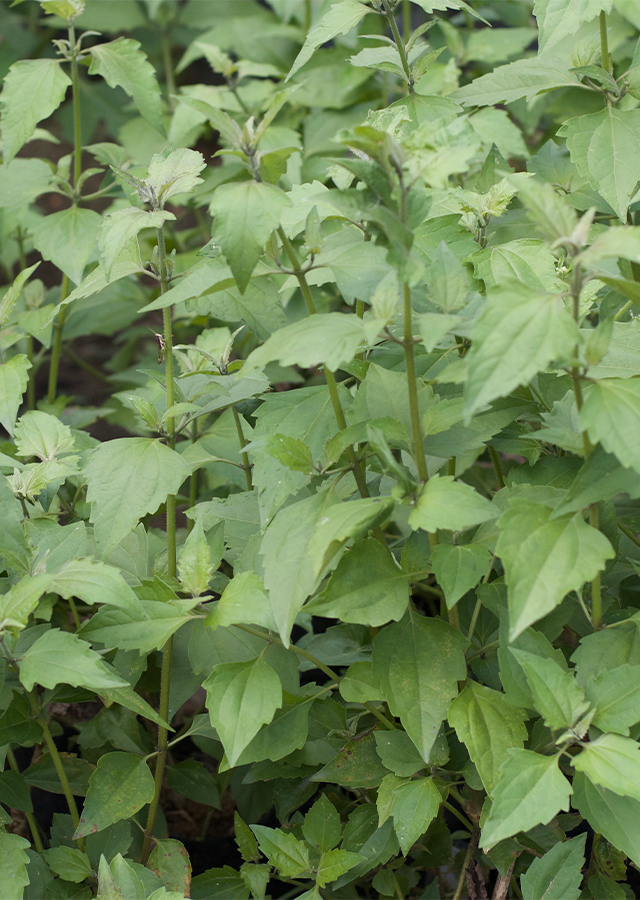
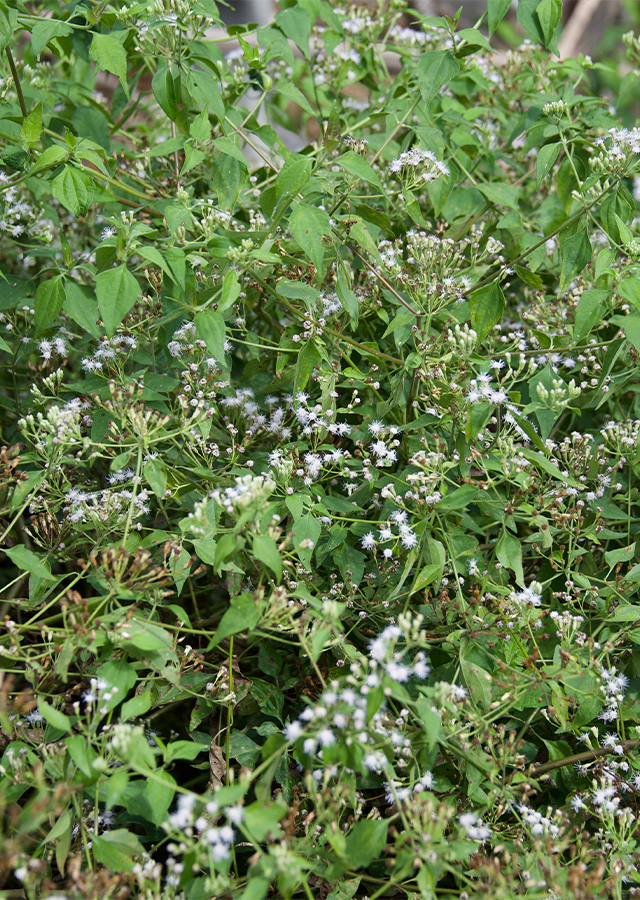
Kirinyuh (Chromolaena odorata) is a flowering shrub up to 5 meters tall of the Asteraceae family, native to North America and the Caribbean, now often considered an invasive weed that grows very rapidly. Despite this, the plant is harvested from the wild in Indonesia for traditional medicine as well as an active ingredient in herbicides. Kirinyuh is believed to help address diabetes, gout, and burns.
Agroecology
Grows at elevations of 1,000-2,800 m above sea level. In Indonesia, this plant is widely found in lowlands up to 500 m above sea level, around house yards, agricultural land including coconut and rubber plantations to grazing land.
Morphology
- Root a branched taproot.
- Stem round-shaped, upright, woody, hairy stem surface.
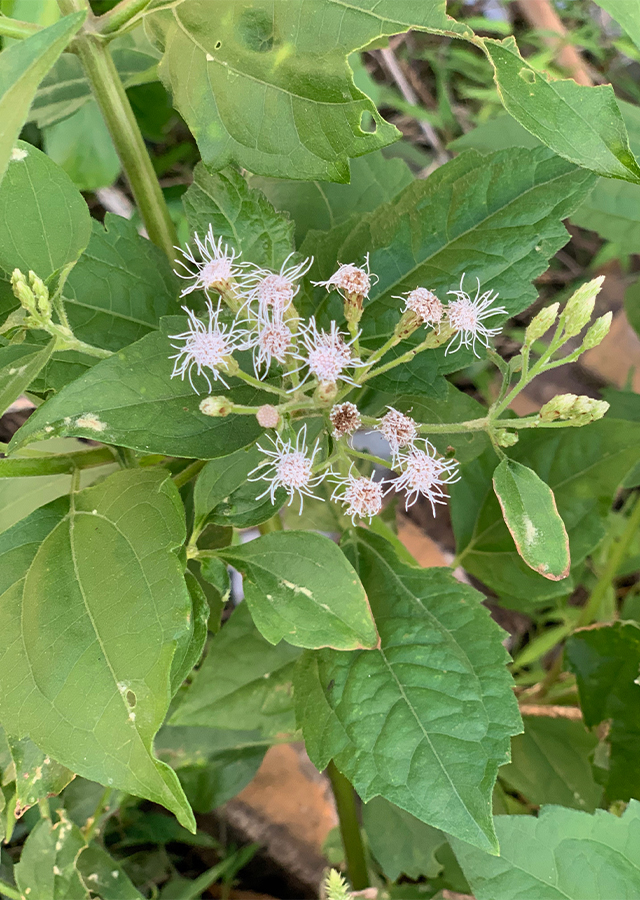
- Leaves single, opposite, green, smooth surface, oval-shaped leaf, wider at the base, increasingly tapering toward the tip and serrated leaf edges.
- Flowers compound, emerging at branch tips. Each flower cluster consists of 20-35 flowers, bluish flower color when young, becoming brown with age.
Cultivation
Propagated generatively (seed) and vegetatively (stem cuttings).
Chemical Content
Tannin, phenol, alkaloid, flavonoid, saponin, steroid, essential oil (α-pinene, cadinene, limonene, β-caryophyllene and cadinol isomer camphor).
Benefits
Remedy for prostate, diabetes, cervical cancer, gout, cholesterol and heart, addresses leech bites, burns, soft tissue wounds, skin infections, cough, malaria, has analgesic, anti-inflammatory, antipyretic activity.
Simplisia
- Prepare fresh kirinyuh leaves then wash thoroughly and drain.
- Air-dry the leaves for approximately 5 days.
- Once dry, store the simplisia in an airtight plastic/container at room temperature.
Local Names
Lenga-lenga (North Sumatra), Darismin (Babanjaran), Kopasada (Makassar).
Traditional Recipes
The following recipes reflect traditional knowledge passed down through generations, not a substitute for professional medical diagnosis or advice. Consult a healthcare provider before use.
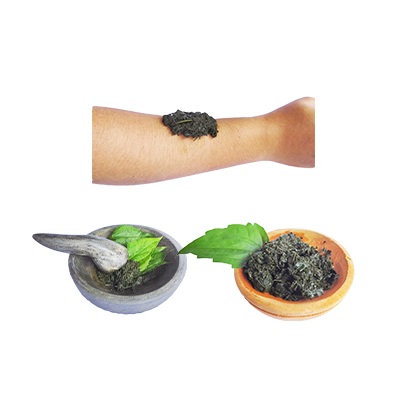
1. Treating wounds
- Mash young kirinyuh leaves as needed into a paste.
- Apply to the wounded part of the body.
Reference Sources
- Akinmoladun AC, Ibukun EO, Dan-Ologe IA. 2007. Phytochemical constituents and antioxidant properties of extracts from the leaves of Chromolaena odorata. Sci. Res. and Essay 2(6): 191-194
- Owoyele BV, Oguntoye SO, Dare K, Ogunbiyi BA, Aruboula EA, Soladoye AO. 2008. Analgesic, anti-inflammatory and antipyretic activities from flavonoid fractions of Chromolaena odorata. J. Med. Plants Res. 2(():219-225
- Sara S. 2018. Uji efek antibakteri ekstrak etanol daun kirinyuh (Chromoleana odorata L.) terhadap pertumbuhan bakteri Staphylococcus epidermis. Institut Kesehatan Helvetia
- Sari VI, Hafif RA, Soesatrijo J. 2017. Ekstrak Gulma Kirinyuh (Chromolaena Odorata) Sebagai Bioherbisida Pra Tumbuh untuk Pengendalian Gulma di Perkebunan Kelapa Sawit. Jurnal Citra Widya Edukasi 9(1): 71-79
- Motaleb Mohammad Abdul. 2013. Commonly Used Medicinal Herbs and Shrubs by Traditional Herbal Practitioners. International Union for Conservation of Nature and Natural Resources
- Researchgate. https://www.researchgate.net/publication/41391732_Chemical_Composition_and_Bioactivity_of_the_Essential_Oil_of_Chromolaena_odorata_from_Nigeria 03-03-2021.