Cinnamomum burmanni (Nees & T.Nees) Blume
Summary
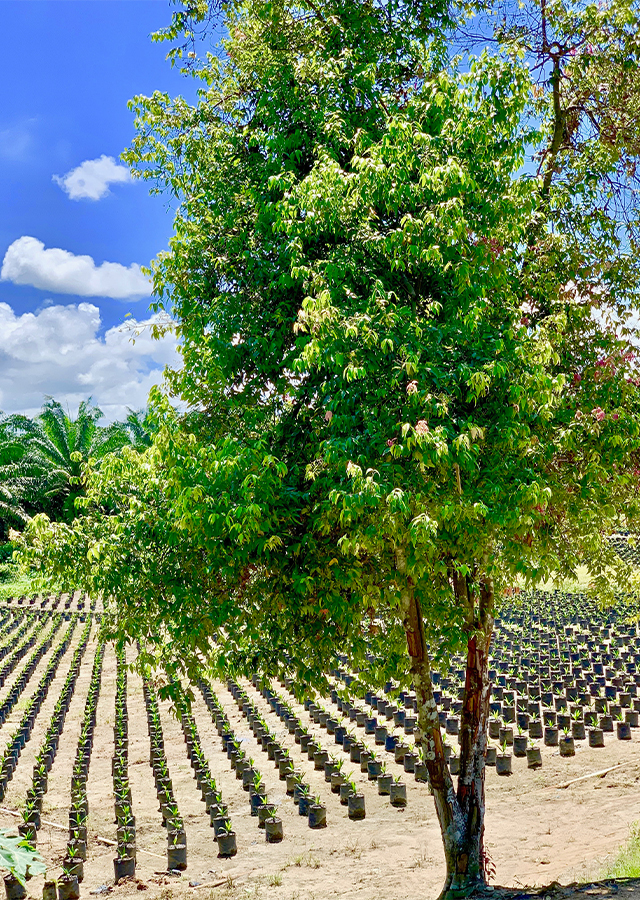
Cinnamon (Cinnamomum burmanni) is a tree up to 20 meters tall of the Lauraceae family, a plant native to Indonesia distributed from Southeast Asia to Australia. Its distinctively aromatic bark is a world-famous spice and beverage flavoring, as well as building material and firewood. Traditionally, cinnamon is also believed to help control blood sugar levels and relieve canker sores.
Agroecology
Grows ideally in regions at elevations of 500-1,500 m above sea level. This plant requires abundant rainfall year-round, ranging between 2,000-2,500 mm/year, sunlight of 40-70%, soil pH of 5.0-6.5. Favors andosol soil, sandy clay texture, and loose soil.
Morphology
- Trunk produces a pale yellow or whitish sap, bark is dark gray with a distinctive smell, wood is light reddish-brown.
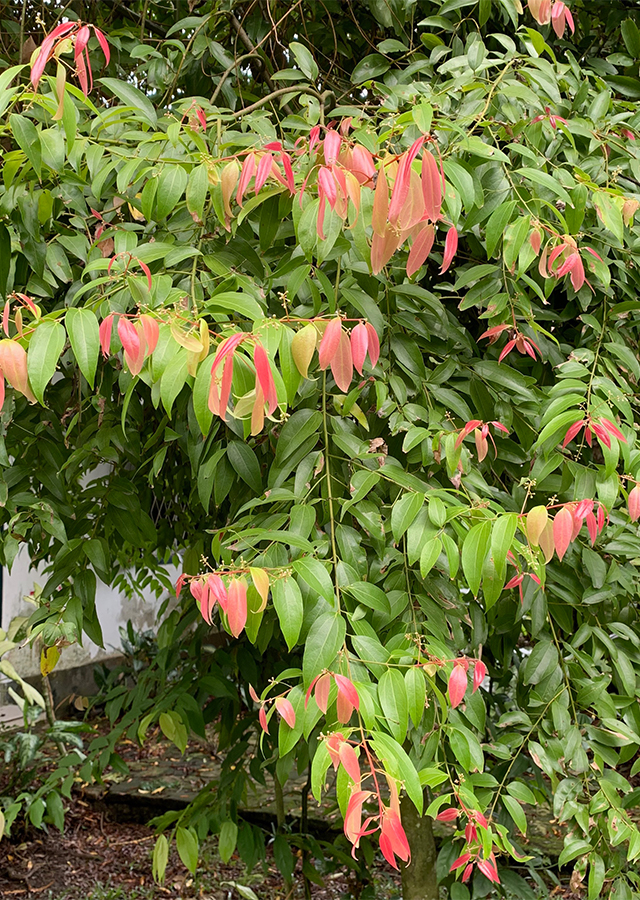
- Leaves simple, stiff like leather, alternately arranged, with 3 curved veins.
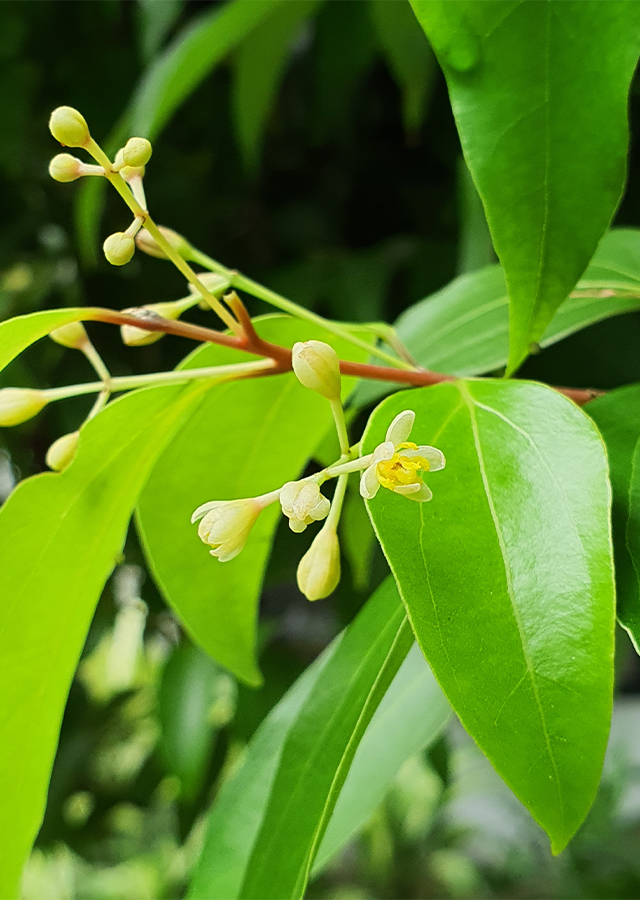
- Flowers perfect (bisexual), yellow, small in size. Sepals number 6 in two whorls. Stamens number 12, arranged in four groups.
- Fruit oblong-round shaped, young fruit dark green and mature fruit dark purple, containing one seed.
Cultivation
- Propagated generatively (by seed) and vegetatively (by cuttings).
- Monoculture planting spacing of 1.5 m x 1.5 m, intercropping 3 m x 3m.
Chemical Content
Bark: tannins, cinnamaldehyde, benzaldehyde, cuminaldehyde, phenol, eugenol. Whole plant: cinnamyl alcohol, coumarin, cinnamic acid, cinnamaldehyde, anthocyanins, essential oil.
Benefits
Antidiabetic; aids weight loss; eases menstrual cramps; boosts immunity and brain function; treats toothache, canker sores, diarrhea; helps prevent cancer.
Simplisia
- Peel the cinnamon bark in a circular motion. Wet-sort (separating debris and foreign material).
- Sun-dry until completely dry so it can be stored for a long time
- Grind using a blender and store in a closed container.
Local Names
Holim, Modang siak-siak (Batak), Madang kulit manih (Minang), Huru mentek (Java), Kiamis (Sunda), Kanyengar (Kangean), Cingar (Bali).
Traditional Recipes
The following recipes reflect traditional knowledge passed down through generations, not a substitute for professional medical diagnosis or advice. Consult a healthcare provider before use.
1. Canker Sores
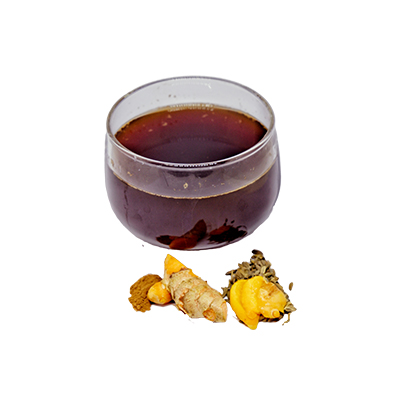
- Take 15 g ground cinnamon, 15 g fennel, 10 g turmeric (sliced thinly).
- Boil all ingredients in 4 cups of water until boiling and reduced to 2 cups, let cool.
- Drink twice a day, 1 cup each time.
- Continue treatment for 7 days.
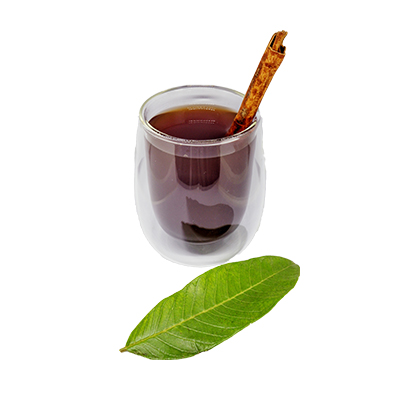
2. Diarrhea
- Take 5 g cinnamon and 5 guava leaves.
- Boil all ingredients in 600 ml water until boiling and reduced to 300 ml.
- Drink twice a day in equal amounts.
Reference Sources
- Widyaningrum Herlina. 2019. Kitab Tanaman Obat Nusantara. Media Pressindo, Jakarta.
- Ncbi.(2012). Pharmaceutical applications and phytochemical profile of Cinnamomum burmannii. https://www.ncbi.nlm.nih.gov/pmc/articles/PMC3459454/ 15-04-2021
- Fern, Ken. (2019). Useful Tropical Plants. Cinnamomum burmannii. http://tropical.theferns.info/viewtropical.php?id=Cinnamomum+burmannii. 15-04-2021
- Hariana Arief.2013. https://books.google.co.id/books?id=bp-0CAAAQBAJ&pg=PA29&dq=arief+hariana+kayu+manis+sariawan&hl=id&sa=X&ved=2ahUKEwijuY2gseHuAhXFVisKHQqWBjcQ6AEwAHoECAUQAg#v=onepage&q=arief%20hariana%20kayu%20manis%20sariawan&f=false 07-05-2020