Cissampelos pareira L.
Summary
Patha (Cissampelos pareira) is a vine up to 2-5 meters tall of the Menispermaceae family, native to India and distributed as far as East Africa and America. This plant is popular in local Ayurvedic medicine and is also used to make jelly in Asia. Patha is traditionally believed to help heal wounds, fractures, and address stomach cramps.
Agroecology
This plant can grow in places up to elevations of 2,300 m above sea level. Commonly found in rainforests, coastal thicket forests, deciduous thicket forests, secondary vegetation, and near rock outcrops, which can also survive in open land and plantations.
Morphology
- Stem round, flexible, yellowish-green.
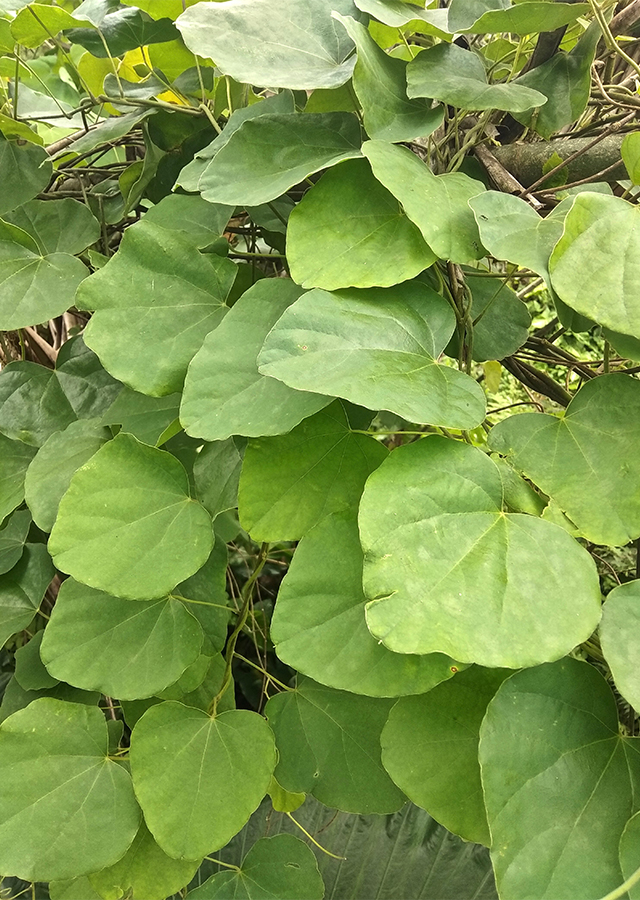
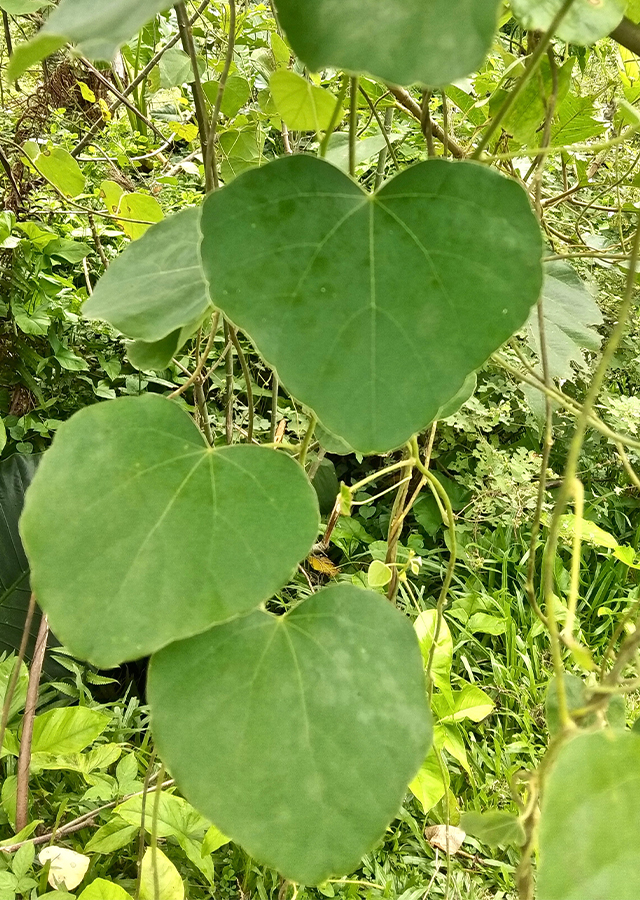
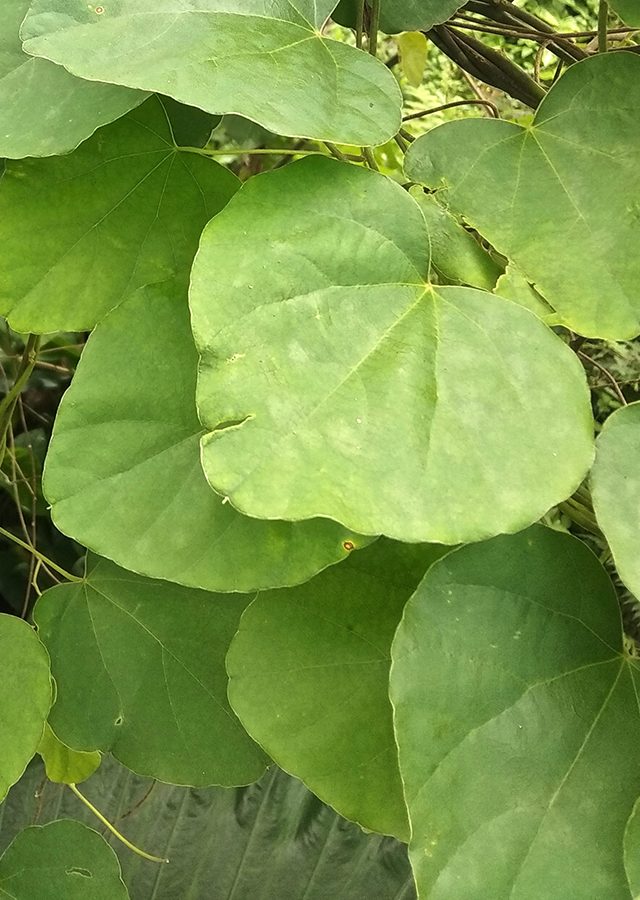
- Leaves orbicular-shaped, base round or truncated into a heart shape, blunt lobed apex, 7-14 cm in diameter. Membranous surface, roughly hairy, veined, green in color.
- Flowers greenish or yellowish, cup-shaped corolla, small, has 4 hairy sepals, obovate, oblong.
- Fruit red, short-haired, subglobose, has an endocarp (fruit flesh).
- Seeds horseshoe-shaped.
Cultivation
Propagated generatively (seed) and vegetatively (cuttings).
Chemical Content
Alkaloid compounds (berberine), hayatin, hayatinin, hayatidin, menismine, methalonic acid, cissamine, cycleanine, quercitol, curine, cissamine, pelosine, tetrandrine.
Benefits
Cleanses and heals wounds and boils, diuretic (urine promoter), treats broken bones and snake bite poisoning, addresses stomach cramps and uterine bleeding and post-childbirth pain, prevents miscarriage, treats dyspepsia, diarrhea, dysentery, fever, cough, asthma, swelling and eye pain, remedy for epilepsy.
Simplisia
- Prepare patha bark. Wash thoroughly with running water.
- Arrange the bark on a tray, cover with a dark-colored cloth. Dry in the sun for several days until dry.
- Once dry, grind with a blender into powder.
- Store in a clean, airtight container.
Local Names
Mayang kapor, Gasing-gasing, Pareira, Daun beludru
Traditional Recipes
The following recipes reflect traditional knowledge passed down through generations, not a substitute for professional medical diagnosis or advice. Consult a healthcare provider before use.
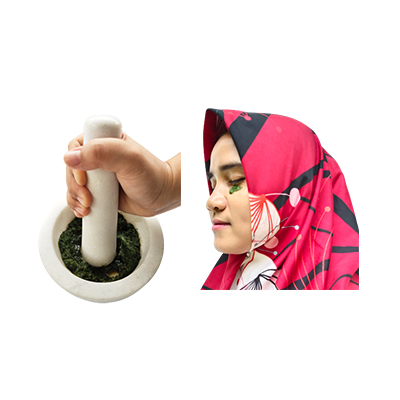
1. Swelling and eye pain
- Prepare the whole patha plant as needed.
- Wash thoroughly then pound until fine.
- Apply to the aching eye.
2. Concoction for wounds
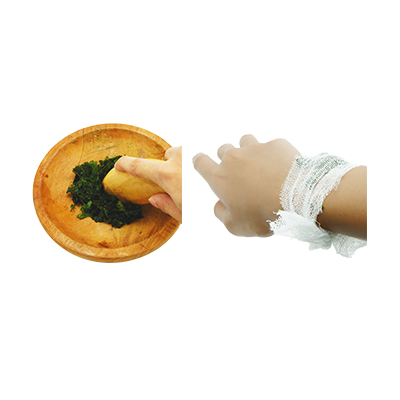
- Wash 2-5 fresh patha leaves thoroughly and pound until fine.
- Place on the wound and bandage with a clean cloth, change the bandage daily.
Reference Sources
- Asia Medicinalplants. https://www.asia-medicinalplants.info/cissampelos-pareira-l/ 28-05-2020
- https://www.healthbenefitstimes.com/pareira/ akses 28 mei 2020
- Tropical Plants Database, Ken Fern. tropical.theferns.info. Cissampelos pareira . http://tropical.theferns.info/viewtropical.php?id=Cissampelos+pareira 31-01-2021
- Globinmed. http://Globinmed.com/CissampelospareiraLinn. 01-02-2021
- HealthBenefitsTimes. https://www.healthbenefitstimes.com/pareira/ akses 28 mei 2020