Citrus hystrix DC.
Summary
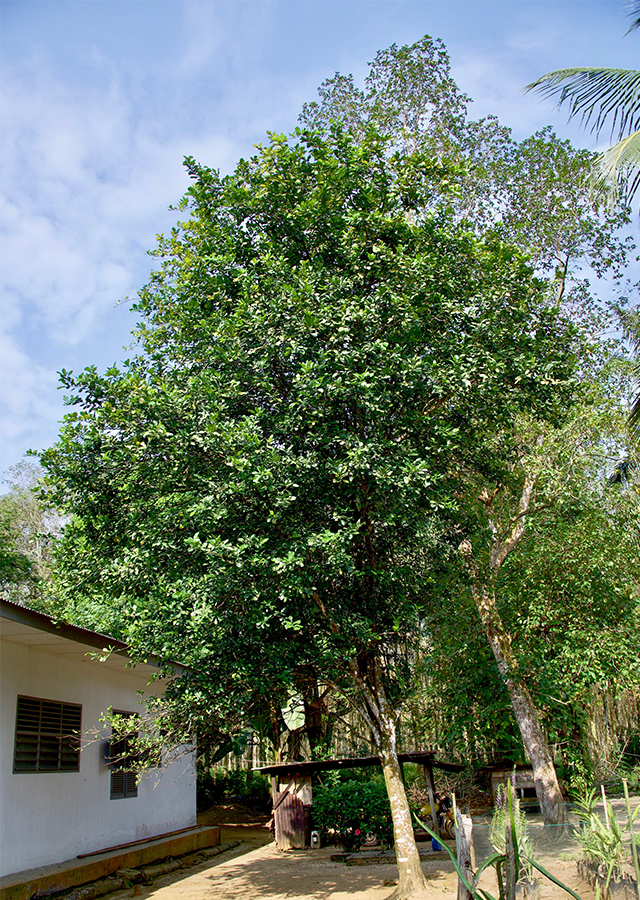
Kaffir lime (Citrus hystrix) is a tree 2-12 meters tall of the Rutaceae family, native to the Indo-Malaya region and now widely cultivated as far as the United States and Africa. Its sharply aromatic leaves and fruit peel are commonly used to neutralize the fishy smell in meat and fish dishes throughout Southeast Asia. Its juice is also commonly used as a hair rinse and is traditionally believed to moisturize skin and relieve colds.
Agroecology
Grows in land at elevations of 1-1,400 m above sea level. Ideal growth favors loamy to sandy loam soil with adequate humus, good water and air circulation, a soil pH of 5, and full sun.
Morphology
- Roots taproot.
- Trunk cylindrical, crooked or angular, dark green, branching low. Branches dense, twigs thorny, small, and sharply angled. Canopy irregular.
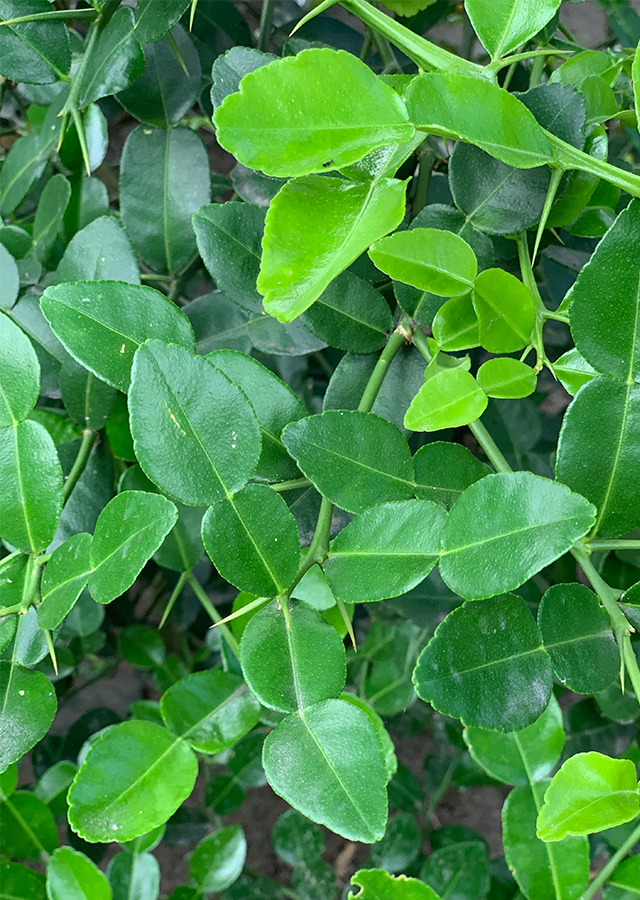
- Leaves ovate, blunt tip, single petiole, appearing as two leaflets stacked vertically due to the extreme pinching of the margin, thick, smooth surface. Yellowish-green, with a very fresh aroma.
- Flowers star-shaped, reddish-white or yellowish-white.
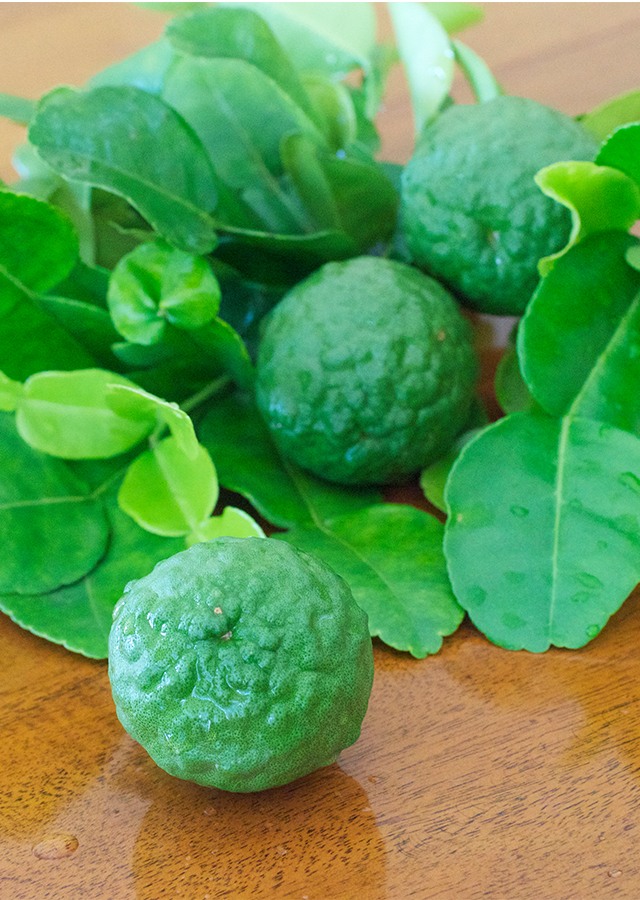
- Fruit variable in size, round, rough thick peel, sharply fragrant.
Cultivation
Propagated generatively (by seed) or vegetatively (by air layering, top grafting).
Chemical Content
Sabinene, β-pinene, limonene, α-pinene, camphene, myrcene, terpinen-4-ol, α-terpineol, linalool, terpinolene, citronellal, β-citronellol, citronellyl acetate, flavonoids, coumarins (bergapten), essential oil.
Benefits
Relieves influenza; smooths and moisturizes skin; used in postpartum maternal care; prevents dandruff; antibacterial, antifungal, antioxidant; treats insect bites; maintains dental health; treats dyspepsia (digestive disorders), headache, and intestinal worms in children.
Simplisia
- Wash kaffir lime leaves and fruit thoroughly, then cut into pieces.
- Air-dry the small cut leaves and fruit for 1 month.
- Grind into a powder. Store in a clean, airtight container.
Local Names
Unte mukur, Pangir (Batak), Lemau purut, Lemau sarakan (Lampung), Lemao puruik (Minangkabau).
Traditional Recipes
The following recipes reflect traditional knowledge passed down through generations, not a substitute for professional medical diagnosis or advice. Consult a healthcare provider before use.
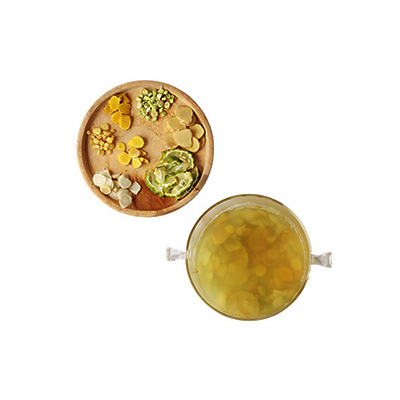
1. Postpartum Oukup Steam Bath (Karo Tradition)
- Prepare 250 g (5 pcs) kaffir lime, 80 g lempuyang ginger, 50 g bangle ginger, 30 g black turmeric, 20 g temu guci, 80 g citronella grass, 60 g dringo, 5 L water.
- Dry the lempuyang, bangle, black turmeric, temu guci, citronella grass, and dringo. Slice the kaffir lime (unpeeled). Boil all ingredients covered until the aroma is released, then turn off the heat.
- The mother sits on a chair with an opening in the middle. Steam is applied in an enclosed setting (place the pot beneath the chair), and the mother covers herself from below the chair to her head with a cloth (like a sauna).
- Do this regularly for 30 minutes a day to maintain the mother's stamina and give her body a pleasant fragrance.
Reference Sources
- CABI. (2019). Invasive Species Compendium. Citrus hystrix (mauritius bitter orange). https://www.cabi.org/isc/datasheet/13444. 11-08-2020.
- Fern, Ken, (2014). Useful Tropical Plants. Citrus hystrix. http://tropical.theferns.info/viewtropical.php?id=Citrus+hystrix. 11-08-2020.
- StuartXchange. (2016). Philippine Medicinal Plants. Kabuya. http://www.stuartxchange.org/Kabuyaw.html. 11-08-2020.
- Pl@nt Use. (2020). Citrus hystrix (PROSEA. https://uses.plantnet-project.org/en/Citrus_hystrix_(PROSEA). 11-08-2020
- Oukup Pasca Melahirkan (khas Karo) Grup 1 (Ibu Erick Obaza Barus, Ruth Maranatha Tarigan, Sei Liput, 2020)