Citrus japonica Thunb.
Summary
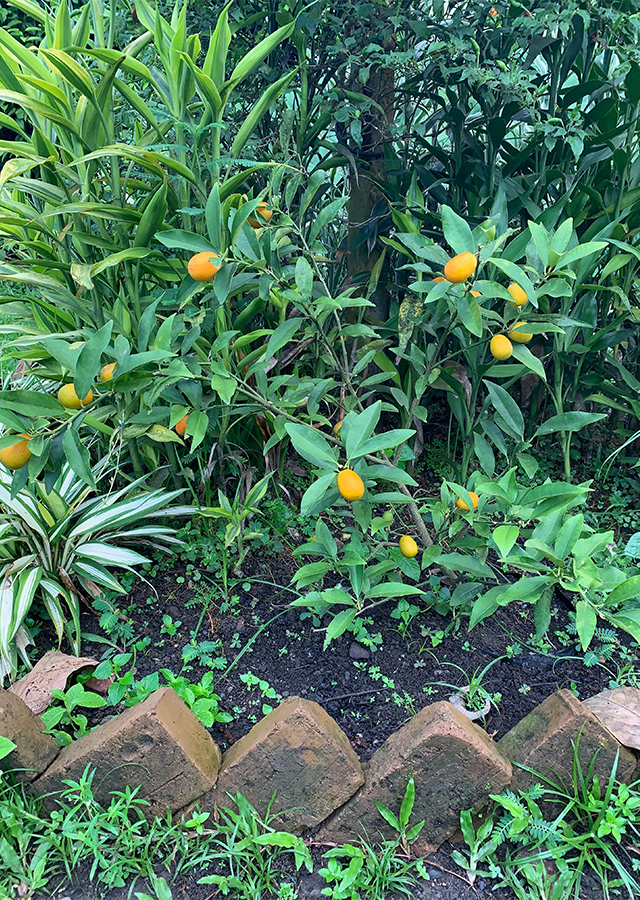
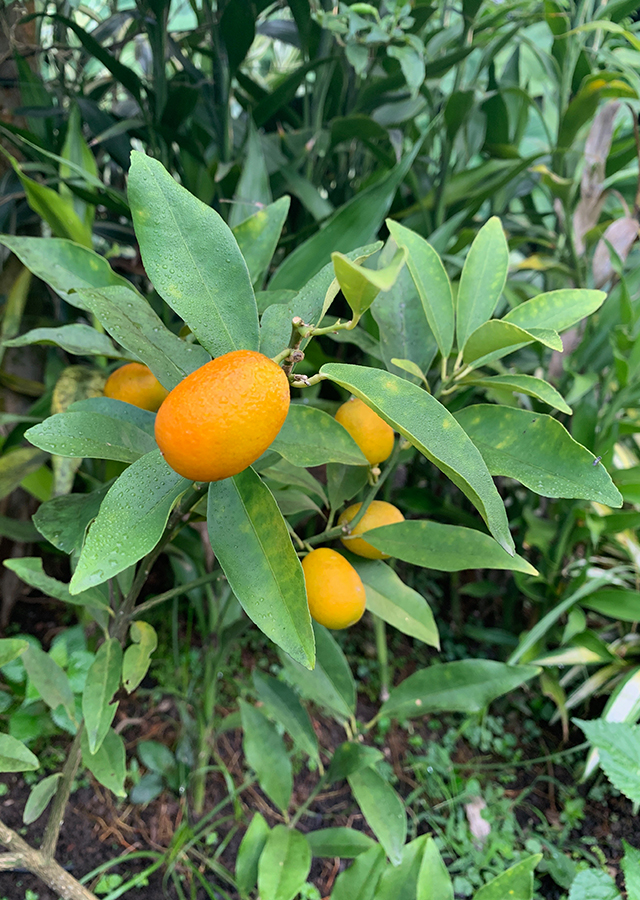
Kumquat (Citrus japonica) is a shrub or small tree up to 5 meters tall from the Rutaceae family, popular in China since the 12th century, and introduced to Europe in 1846 by collector Robert Fortune. Its tiny fruit, including the peel, can be eaten whole for a sweet-sour flavor combination. In China, the kumquat is a symbol of wealth and good fortune commonly displayed during Chinese New Year.
Agroecology
Kumquat is native to the subtropical climate of southeastern China. This plant is not very cold-hardy. New growth is much more vulnerable to cold and can be severely damaged at temperatures around 0°C. Kumquats are hardier than various other cultivated citrus species (such as oranges and lemons) because they stop growing when temperatures drop below 13°C. However, for the best results, it is best to grow them in a climate with warm to hot summers and temperatures no lower than 4-10°C. This is because the fruit is sweeter when it ripens in warm conditions. Prefers fairly heavy loamy soil with plenty of compost and sand added and a very sunny position. Prefers a pH of 5 to 6. The plant is not tolerant of waterlogging.
Morphology
- Roots taproot.
- Stem heavily branched, spines variable, up to 5 cm on young growth but only a few mm on flowering shoots.
- Leaves 1-foliolate or sometimes mixed with simple leaves; petiole 6-9 mm, narrowly winged; blade elliptic to obovate-elliptic, 4-6 × 1.5-3 cm, base rounded to broadly cuneate, margin dentate near the apex or rarely entire, apex rounded and rarely mucronate.
- Flowers solitary or fascicled, subsessile. Calyx 4-5-lobed, 5 mm or less. Stamens 20, filaments coherent into 4 or 5 bundles. Ovary as long as the style, 3 or 4-loculed, with 3 or 4 ovules per locule.
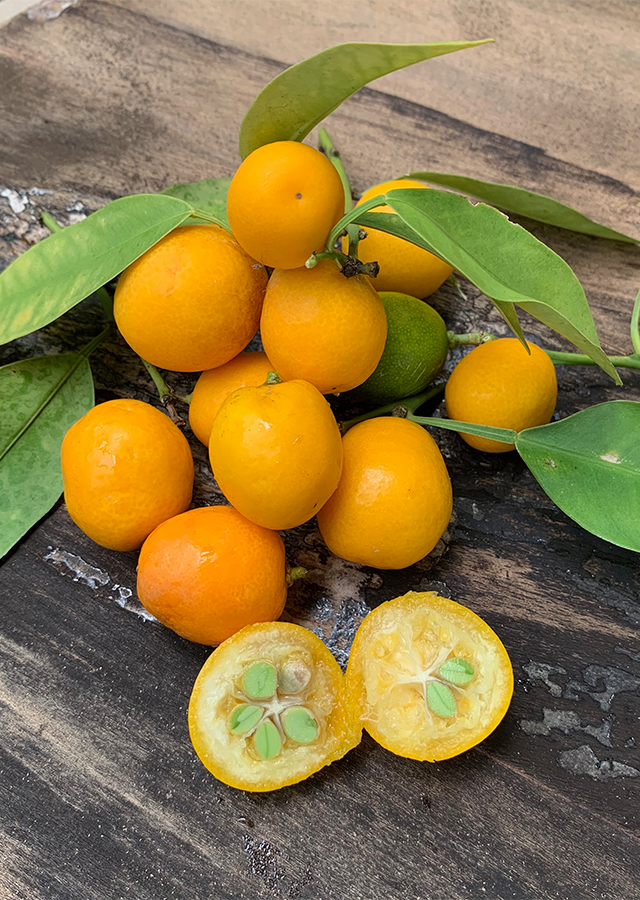
- Fruit bright orange to red, round to somewhat flattened, 9-10 mm in diameter, smooth, 3 or 4-seeded. Pericarp sweet and edible, sarcocarp sour.
- Seeds ovate shaped, apex mucronate, seed coat smooth, embryos sometimes at least numerous, cotyledons green.
Cultivation
- Propagation is done generatively (seed). Soak kumquat seeds in clean water (room temperature, 20-26°C) for 2 hours to break seed dormancy (waking the seed and speeding germination). Next, sow in a spot exposed to direct sunlight, then plant out. Kumquat seeds germinate after 7-21 days. First harvest begins after 1-2.5 years.
- Vegetative propagation of kumquat is done by grafting using rootstock from other Citrus species.
Chemical Content
Essential oil (containing four monoterpenes namely limonene, α-myrcene, α-pinene and sabinene; and two sesquiterpenes namely d-germacrene and bicyclogermacrene), phenolic acids (p-hydroxybenzoic acid, vanillic acid, protocatechuic acid, chlorogenic acid, sinapic acid, gallic acid, ferulic acid, caffeic acid), flavonoids (apigenin 7-glucoside).
Benefits
Lowers blood cholesterol, treats colds, cough and other respiratory tract inflammation, treats sore throat, prevents heart disease and cancer, boosts the immune system, has antioxidant, anti-inflammatory, antimicrobial, antitussive, and expectorant activity.
Simplisia
- Prepare fresh kumquat peel then wash until clean and drain.
- Slice the peel to make it easier to dry.
- Sun-dry directly for several days or use an oven at 40°C until the moisture content reaches 10%.
- Once dry, store the simplicia in a clean, airtight plastic or container
Local Names
Informasi tidak ditemukan. Butuh penelusuran lebih lanjut.
Traditional Recipes
The following recipes reflect traditional knowledge passed down through generations, not a substitute for professional medical diagnosis or advice. Consult a healthcare provider before use.
1. Sore throat
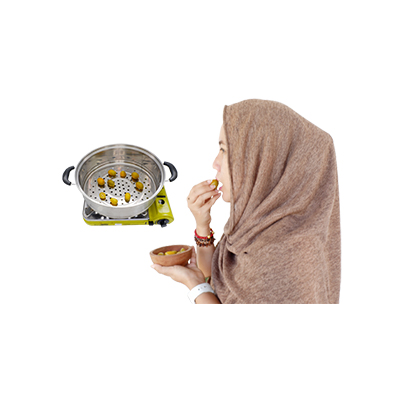
- Take an adequate amount of fresh kumquat fruit and wash until clean.
- Boil the fruit until soft.
- Eat the flesh to relieve sore throat; said to be very good for babies.
Reference Sources
- Royal Botanic Gardens. 2017. Plants of the World Online: Citrus japonica Thunb.. https://powo.science.kew.org/taxon/urn:lsid:ipni.org:names:771939-18-12-2021. 8-12-2021.
- Useful Temperate Plants Database. 2021. Citrus japonica. http://temperate.theferns.info/plant/Citrus+japonica. 8-12-2021.
- Flora Fauna Web. 2021. Citrus japonica cv.. https://www.nparks.gov.sg/florafaunaweb/flora/6/0/6087. 8-12-2021.
- Flora of China. Citrus japonica Thunberg. http://www.efloras.org/florataxon.aspx?flora_id=2&taxon_id=242313265. 8-12-2021.
- Amrah Nouri & Ali Shafaghatlonbar. 2015. Chemical constituentsand antioxidant activity of essential oil and organic extract from the peel and kernelparts of Citrus japonica Thunb. (kumquat) from Iran, Natural Product Research, DOI:10.1080/14786419.2015.1101692. 8-12-2021.
- Mahmoud A. Al‑Saman, Asmaa Abdella, Khaled E, Mazrou, Ahmed A., Tayel Sibel Irmak. Antimicrobial and antioxidant activities of different extracts of the peel of kumquat (Citrus japonica Thunb). https://www.researchgate.net/publication/335001993_Antimicrobial_and_antioxidant_activities_of_different_extracts_of_kumquat_Citrus_japonica_var_margarita_fruit. 8-12-2021.
- Alyson Powell Key. 2019. Health Benefits of Kumquats. https://www.webmd.com/food-recipes/kumquats-health-benefits.. 8-12-2021.
- Heathline. 2021. What Are Kumquats Good for and How Do You Eat Them?. https://www.healthline.com/nutrition/kumquat#immune. 8-12-2021.