Citrus medica L.
Summary
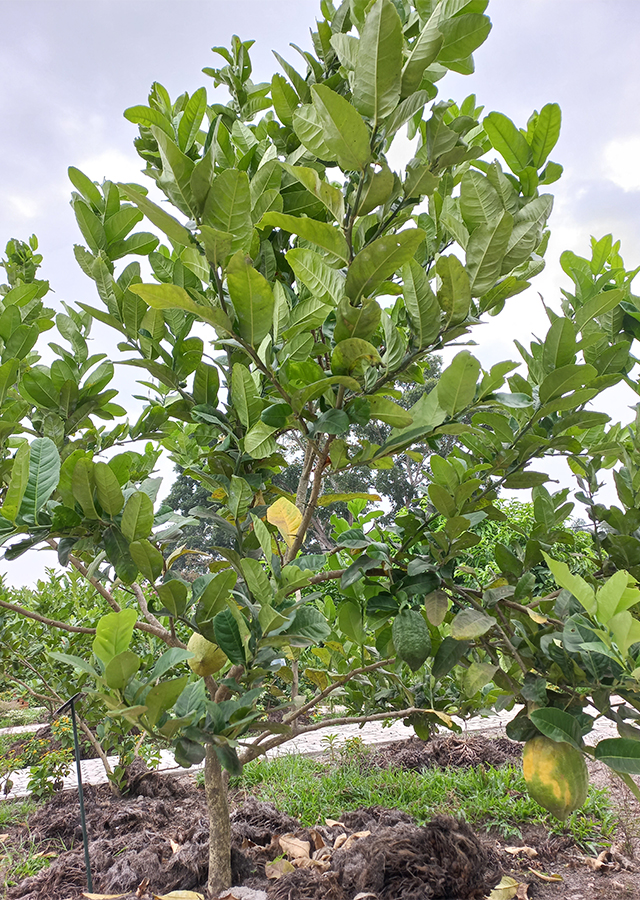
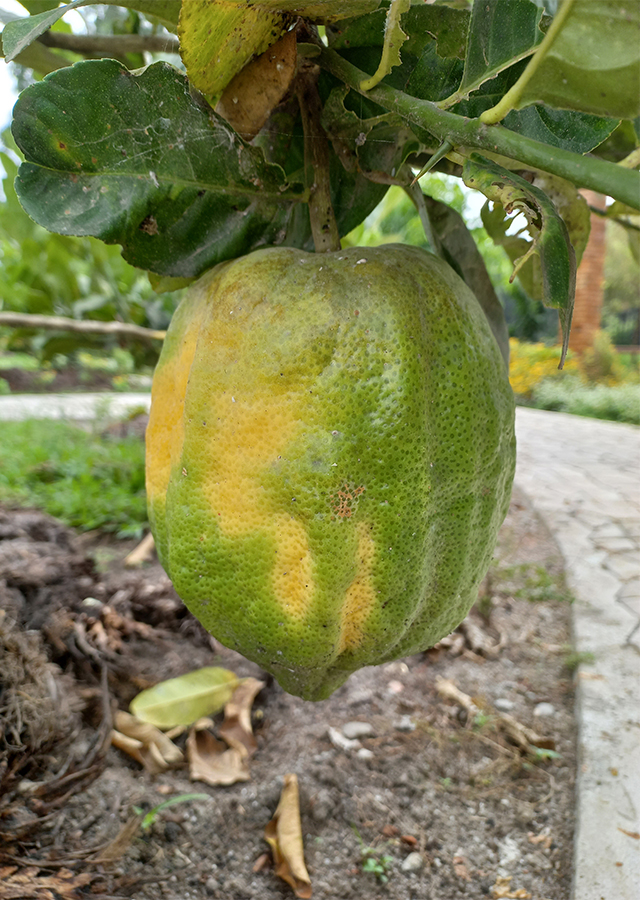
Jeruk pepaya or jerpaya (Citrus medica) is a shrub or small tree up to 4 meters tall from the Rutaceae family native to Southeast Asia, named for its papaya-like fruit shape. Its thick rind is processed into candied sukade, well known since Dutch colonial times. Since Roman times, jeruk pepaya essential oil has been used as perfume and a moth repellent.
Agroecology
Three main climates suitable for jeruk pepaya production are: tropical climate, subtropical with winter rain (such as in the Mediterranean), and semitropical with summer rainfall. In tropical regions, this citrus grows very well at elevations below 1,300 m asl. This plant requires deep, well-drained loamy soil, but moisture-retentive, in full sun, with a soil pH degree in the range of 6.5-7, but tolerating 5.5-8. The optimal temperature for cultivation ranges between 15-27°C, with the coldest month averaging at least 15°C. Growth generally stops below 13°C and above 35°C. This plant is very sensitive to frost and severe heat as well as drought.
Morphology
- Roots taproot.
- Stem brown, with thorny branches.
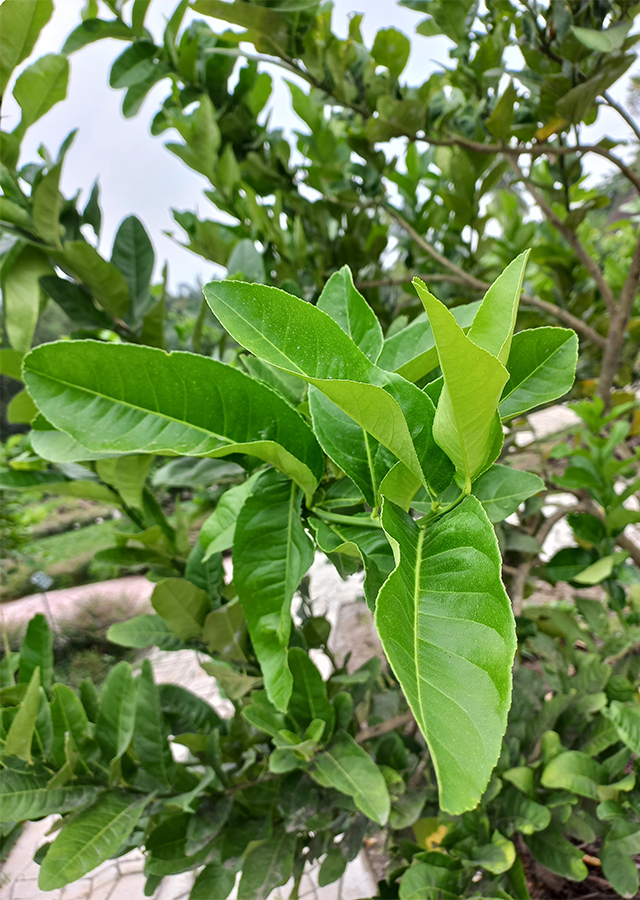
- Leaves oblong shaped, very aromatic when crushed, green, veins pinnate, margin crenate.
- Flowers white, the tip yellow, fragrant, stamens numerous, stigma yellow.
- Fruit large, shaped like a papaya, oblong, light green when young and turning yellow when ripe, sour tasting, with a very thick rind, porous and rough surfaced. Flesh dense, sparse, and white, with little juice and sour taste. At the tip there is a protruding part like a large navel.
Cultivation
- Propagation is generative (seed) and vegetative (cuttings, air-layering, or grafting).
- Seed germination usually occurs within 2-3 weeks at 13°C.
- Leaf cuttings are usually taken from branches 2-4 years old.
Chemical Content
Hesperidin, essential oil (D-limonene, 1,4-cyclohexadiene, nerol, β-myrcene, 2-β-pinene, α-pinene, 1,3,7-octatriene, citral, Z-citral).
Benefits
Treats respiratory problems (such as asthma), cough or sore throat, colds, canker sores, arthritis, headaches, stomach ache, back pain, malaria, intestinal parasites and certain psychological disorders (madness, evil spirit possession), reduces fever. Has antioxidant and antimicrobial activity.
Local Names
Limau Bintakng (Kalimantan), Jeruk kates (Java), Lemo pattasi, Lemo pattapi (Bugis), Jerpaya, Jeruk sukade, Jeruk citroen.
Traditional Recipes
The following recipes reflect traditional knowledge passed down through generations, not a substitute for professional medical diagnosis or advice. Consult a healthcare provider before use.
1. Cough
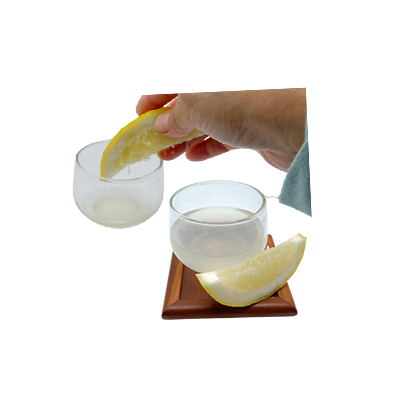
- Prepare an adequate amount of jeruk pepaya fruit, slice and take the juice.
- Drink the juice to relieve cough.
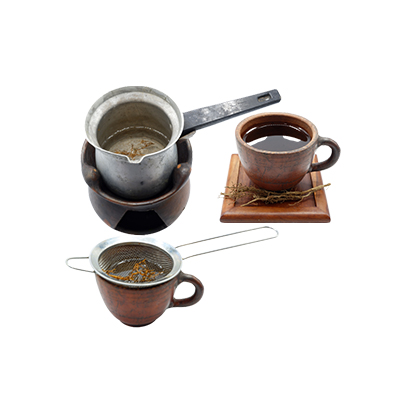
2. Treats respiratory problems and back pain
- Prepare an adequate amount of jeruk pepaya root and wash until clean.
- Boil until it boils.
- Let it cool to warm/cold.
- Strain then drink.
Reference Sources
- The Plant List. 2013. Citrus medica L. http://www.theplantlist.org/tpl1.1/record/kew-2724208. 18-12-2021.
- Marsius. 2015. Analisis Komponen Kimia Minyak Atsiri Kulit Buah Jeruk Pepaya (Citrus medica L. var proper) dengan GC-MS dan Uji Antioksidan Menggunakan Metode DPPH. Skripsi. Universitas Sumatera Utara. Medan.
- Useful Tropical Plants Database. 2021. Citrus medica. http://tropical.theferns.info/viewtropical.php?id=Citrus+medica. 18-12-2021.
- Runtunuwu A. E. 2013. STUDI ETNOEKOLOGI PEMANFAATAN TUMBUHAN OBAT OLEH MASYARAKAT SUKU DAYAK TUNJUNG LINGGANG DI KABUPATEN KUTAI BARAT PROVINSI KALIMANTAN TIMUR. Skripsi. Universitas Sanata Dharma. Yogyakarta.