Citrus × taitensis Risso
Summary
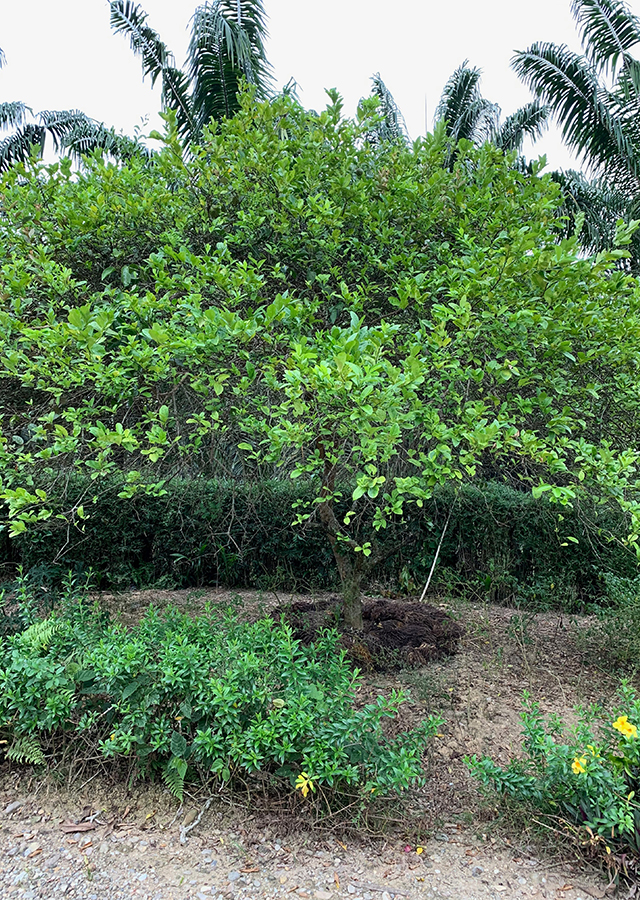
Jeruk jungga (Citrus x taitensis) is a shrub or small tree about 6 meters tall from the Rutaceae family, a natural cross between mandarin orange and lime from Northeast India. Its fruit is the main ingredient of 'dekke naniura,' a traditional Batak Toba dish, and it is very popular among the people of North Sumatra. Jeruk jungga is rich in vitamin C and traditionally used in Ayurveda for arthritis.
Agroecology
Jeruk jungga can be found growing along riverbanks, at the edges of rainforests, and often persists around former habitats. Citrus plants can generally be cultivated at elevations of 1-1,200 m asl. Good soil for citrus plants is loamy to sandy loam soil with a clay fraction of 7-27%, silt 25-50%, and sand <50%, with adequate humus and good water and air management. Suitable for planting in Andosol and Latosol soils, with soil pH ranging between 5.5-6.5 and an optimum pH of 6. This plant requires 5-9 wet months (rainy season), needed for flower and fruit development so the soil stays moist. In Indonesia, citrus plants require sufficient water especially in July-August. Optimal growth also requires temperatures between 25-30°C, though some can grow normally at 20 and 38°C with optimum humidity around 70-80%. This plant also prefers locations in full sun.
Morphology
- Roots a taproot.
- Stem hairless. Thorns stiff, stout, and paired.
- Leaves strongly lemon-scented when rubbed, unifoliolate, alternate, blade elliptic, hairless, glossy, tip blunt or tapering, base cuneate, margin more or less entirely finely or coarsely toothed, green, petiole 5-15 mm long, slightly winged, joined at the tip with the blade.
- Flowers solitary or in small flowering clusters, sweetly scented, white, sometimes with a pink blush, with 4-5 petals each about 10 mm long.
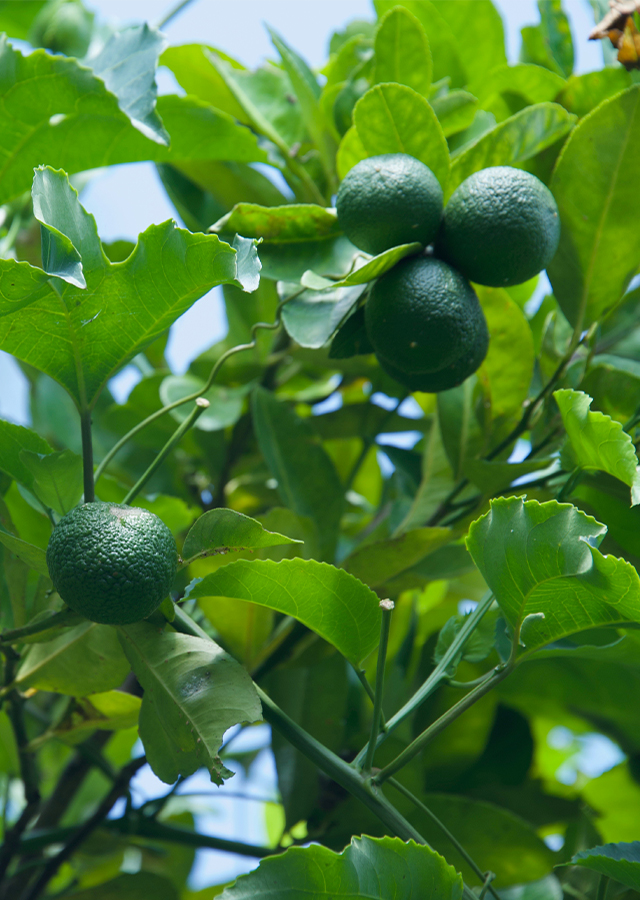
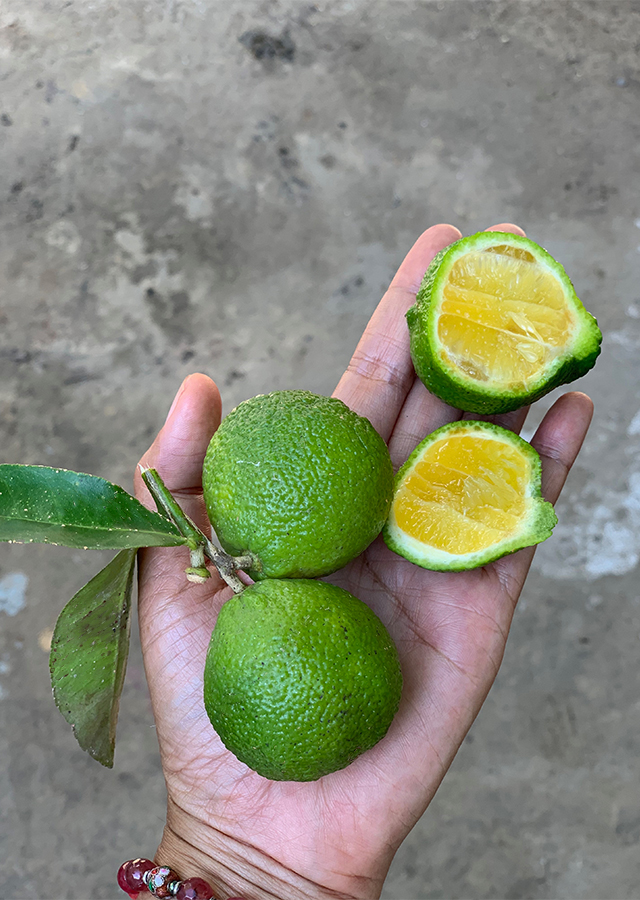
- Fruit a hesperidium ranging from 5-10 cm long, ovoid, oblong to globose, with a nipple-like formation at the fruit tip, and rough, irregular, or warty skin. Fruit rind 2-3 cm thick, aromatic, and enclosing multicarpellate segments or locules (nearly 9-10). Each locule encloses abundant juice sacs and contains 3-5 seeds. Fruit rind dark green when unripe and yellow when ripe, flesh pale yellow, taste sour and sweet. At the center of the fruit there is a thick thread-like structure holding the carpels together forming a column.
Cultivation
- Propagation can be done generatively (seed) or vegetatively (budding).
- The budding process involves incising the rootstock bark, cutting the bud eye, attaching the bud eye to the rootstock incision, and tying the budded graft. The budded graft is placed in a shaded location to avoid direct sunlight. After 3-4 weeks, the binding is released. Success is marked by the emergence of a green shoot bud.
Chemical Content
Essential oil (γ-terpinene, toluene, β-ocimene, 1-methyl-2-(1-methylethyl)-benzene, limonene, β-pinene, germacrene, α-thujene, 2,3,5-trimethyl-1,3,6-heptatriene).
Benefits
Helps address arthritis and digestive disorders, addresses dandruff. Has antioxidant, antibacterial, antitumor, antifungal, and anti-inflammatory activity.
Simplisia
- Prepare jeruk jungga leaves then wash until clean.
- After washing, drain.
- Dry under direct sunlight for several days or with an oven at 40°C until the moisture content reaches 10%.
- Store the simplicia in plastic or a clean, airtight container.
Local Names
Jeruk sundai, Asam sundai, Limau sundai, Asam jungga, Utte jungga.
Traditional Recipes
The following recipes reflect traditional knowledge passed down through generations, not a substitute for professional medical diagnosis or advice. Consult a healthcare provider before use.

1. Dandruff
- Prepare 1 jeruk jungga fruit.
- Cut the fruit into 2 parts, rub on the dandruffy scalp.
- Do this once a day at night before bed.
2. Addresses digestive disorders
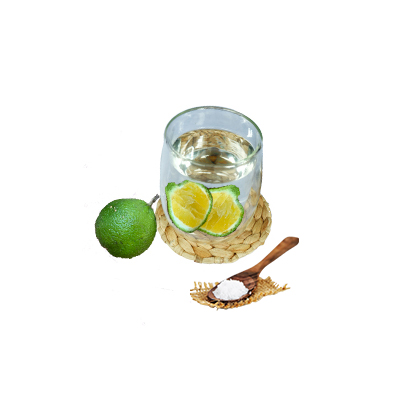
- Prepare 1 jeruk jungga fruit and 1 glass of hot water.
- Cut the fruit then steep with hot water.
- Let it cool to warm then add a little sugar and salt.
- Drink to address digestive disorders.
- It is best to drink while warm.
Reference Sources
- Royal Botanic Gardens. Plant of the World Online: Citrus × taitensis Risso. https://powo.science.kew.org/taxon/urn:lsid:ipni.org:names:772070-1. 16-03-2022.
- Chaudhari S. Y. et al. 2014. Pharmacognostical evaluation of Citrus jambhiri Lush. fruit. Ancient Science of Life 34(2): 96–99. doi: 10.4103/0257-7941.153469. https://www.ncbi.nlm.nih.gov/pmc/articles/PMC4389400/. 16-03-2022.
- PlantNET. New South Wales Flora Online: Citrus x taitensis Risso. https://plantnet.rbgsyd.nsw.gov.au/cgi-bin/NSWfl.pl?page=nswfl&lvl=sp&name=Citrus~x+taitensis. 16-03-2022.
- Helmina Br. Sembiring. 2018. Aktivitas Antibakteri dan Antioksidan Minyak Atsiri Daun Asam Jungga (Citrus jambhiri Lush). Chimica et Natura Acta, 6(1): 19-24.