Clerodendrum bungei Steud.
Summary
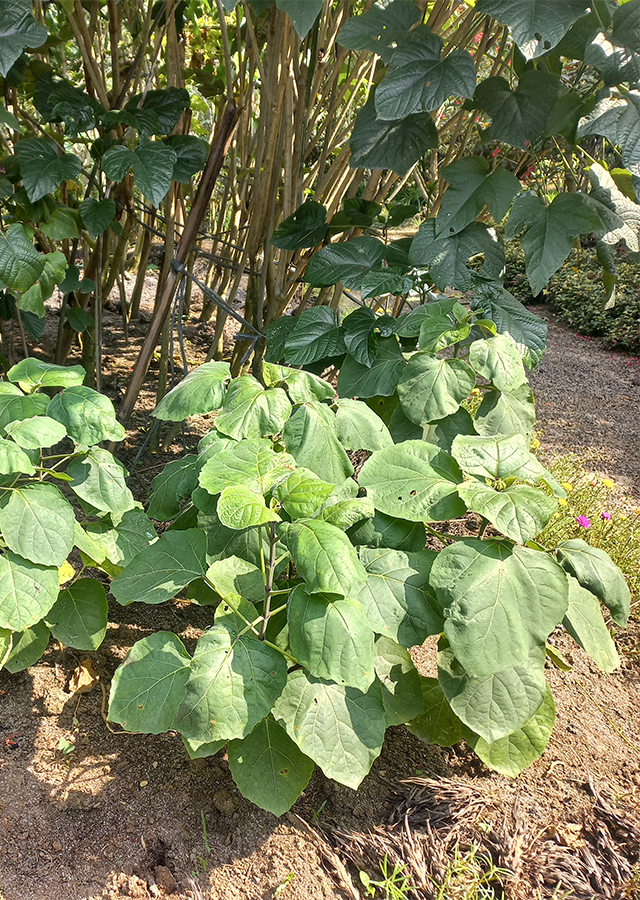
Clerodendrum bungei or sumpaka is a flowering shrub native to tropical and subtropical Asia, extending from China to northern India, which later spread to Latin America as well. In its native land, this plant is traditionally used to relieve pain and address skin problems, while its fragrant flowers make it an ornamental as well as a nectar source for butterflies.
Agroecology
In its native region in China, C. bungei can be found growing in wastelands, shaded and moist hillsides and roadsides, as well as mixed forests on mountain slopes and along roadsides, with a reported elevation range of 1,100-2,500 m asl. In Bolivia, this species is found in forests in the Andean region. C. bungei prefers fertile, humus-rich, moist, well-drained soil but is tolerant of most soil types, light (sandy), medium (loamy), and heavy (clay) soils with acidic, neutral, and alkaline pH. This species can tolerate a minimum temperature of 15°F (-9°C), full sun and partial shade, and is fairly drought-tolerant. However, it has low salt tolerance. In addition, C. bungei requires a position sheltered from cold, dry wind.
Morphology
- Stem round, green or brown, rarely branched or unbranched, with prominent lenticels.
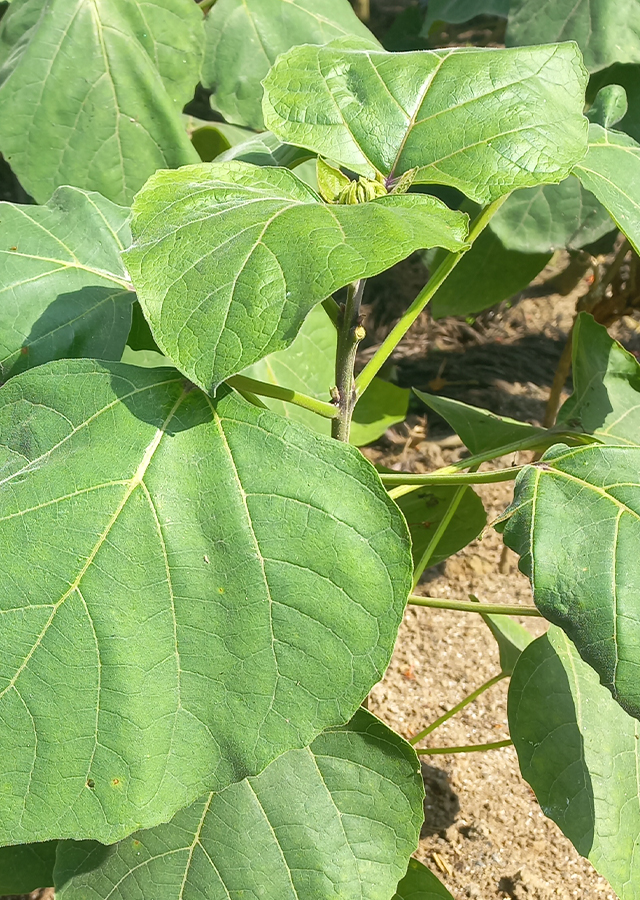
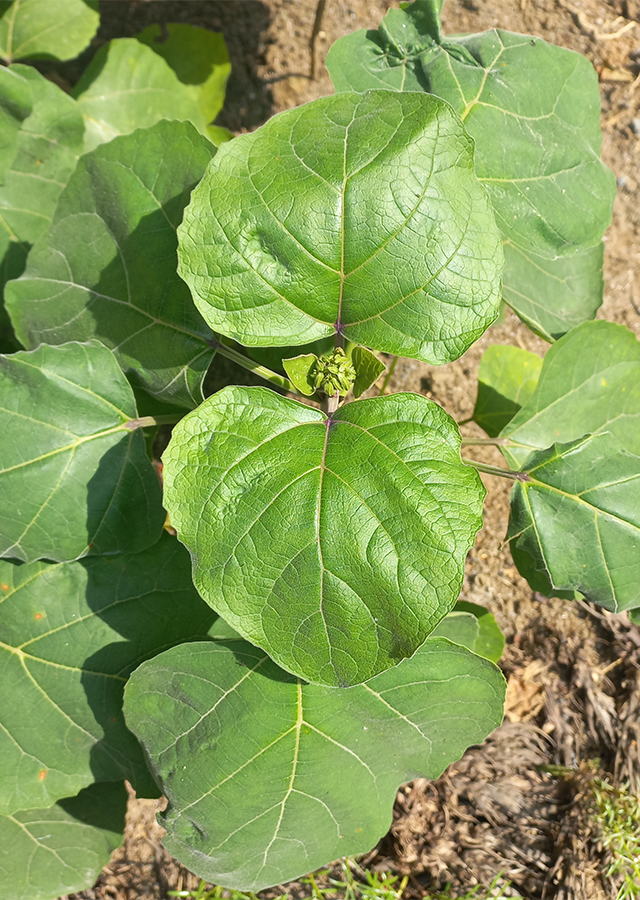
- Leaves oval to ovate (about 20-30 cm long), thin, opposite arrangement, with a toothed margin, base pointed, truncate or heart-shaped (cordate), tip acuminate to acute, veins 4-6 pairs, dark green on the upper surface and light green on the lower surface. Lower (abaxial) surface sparsely puberulent to somewhat hairless, upper (adaxial) surface sparsely puberulent, petiolate. Petiole dark brown, yellowish brown, or purplish puberulent when young, hairless. Has a foul odor when crushed.
- Flowers hermaphroditic (having both male and female organs), fragrant. Flowers borne in a single inflorescence. Bracts lanceolate to ovate-lanceolate and deciduous. Calyx campanulate, tubular, puberulent, 5-lobed. Corolla pink, red, or purple, slenderly tubular, lobes obovate. Inflorescence a terminal round corymb, dense, flat cymes.
- Fruit a drupe, bluish black, subglobose shaped.
Cultivation
- Propagation is generative using seed. Best sown as soon as ripe. Germination usually occurs within 20-60 days at 20°C.
- Vegetative propagation through stem cuttings and root suckers.
Chemical Content
5-O-ethylcleroindicin D, bungein A, clerodenoside A, trichotomoside, glycosmisic acid, 4'-O-methylscutellarein, neroplomacrol, butylitaconic acid, hexylitaconic acid, p-hydroxybenzoic acid.
Benefits
Addresses pain, infections, and skin problems. Applied externally as anodyne, anthelmintic, anti-inflammatory, carminative.
Local Names
Informasi tidak ditemukan. Butuh penelusuran lebih lanjut.
Traditional Recipes
The following recipes reflect traditional knowledge passed down through generations, not a substitute for professional medical diagnosis or advice. Consult a healthcare provider before use.
1. Addresses skin infection
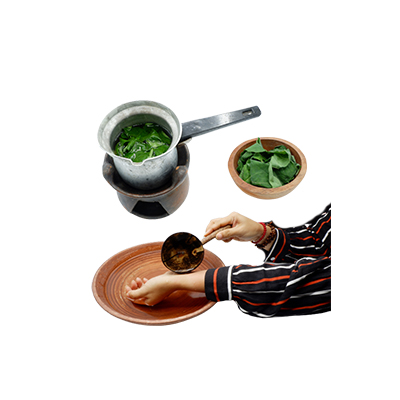
- Take an adequate amount of sumpaka leaves and wash until clean.
- Boil the leaves until it boils.
- Let it cool to warm/cold.
- Use the boiled water to wash the infected skin.
Reference Sources
- Royal Botanic garden. Plants of the World Online: Clerodendrum bungei Steud. https://powo.science.kew.org/taxon/urn:lsid:ipni.org:names:861960-1. 23-04-2022.
- Tropical Plants Database, Ken Fern. 2021. Clerodendrum bungei. http://tropical.theferns.info/viewtropical.php?id=Clerodendrum+bungei. 23-04-2022.
- CAB International. 2022. Invasive Species Compendium: Clerodendrum bungei (rose glorybower). https://www.cabi.org/isc/datasheet/113370#toPictures. 23-04-2022.
- Flora Fauna Web. 2022. Clerodendrum bungei. https://www.nparks.gov.sg/florafaunaweb/flora/1/8/1818. 23-04-2022.
- EOL. Rose Glorybower, Clerodendrum bungei Steud. https://eol.org/pages/579762/articles. 23-04-2022.
- Gui-Jie Zhang, Lu-Mei DAi, Bin Zhang, Yong-Li Zhang. 2017. Studies on chemical constituents of Clerodendrum bungei. China Journal of Chinese Materia Medica, 42(24): 4788-4793. DOI:10.19540/j.cnki.cjcmm.2017.0214. https://www.researchgate.net/publication/323238802_Studies_on_chemical_constituents_of_Clerodendrum_bungei. 23-04-2022.
- Hui Yang, Ai-Jun Hou, Shuang-Xi Mei, Han-Dong Sun, Chun-Tao Che. 2002. Constituents of Clerodendrum bungei. Journal of Asian Natural Product Research, 4(3):165-9. doi: 10.1080/1028602021000000053. https://pubmed.ncbi.nlm.nih.gov/12118502/. 23-04-2022.