Clerodendrum japonicum (Thunb.) Sweet
Summary
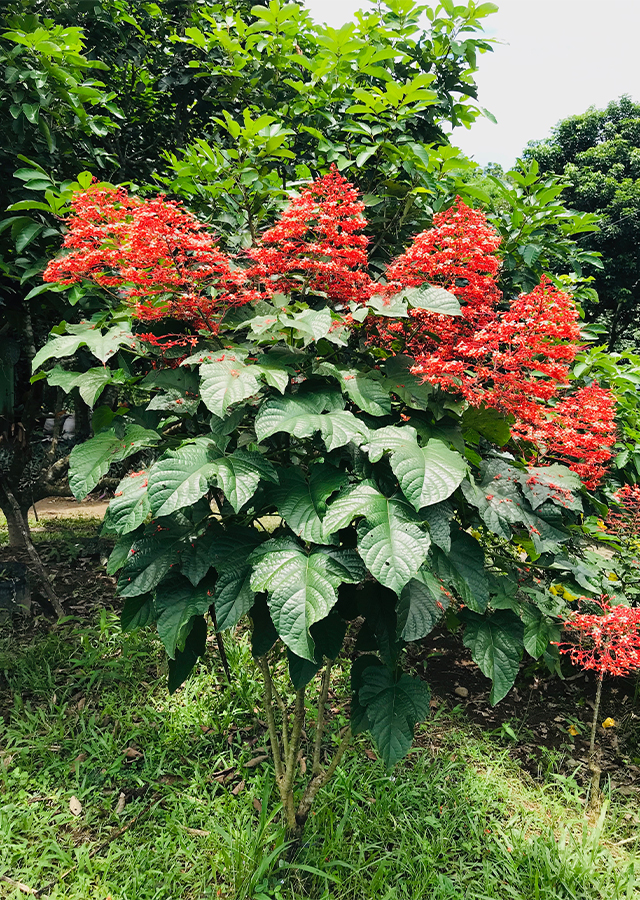
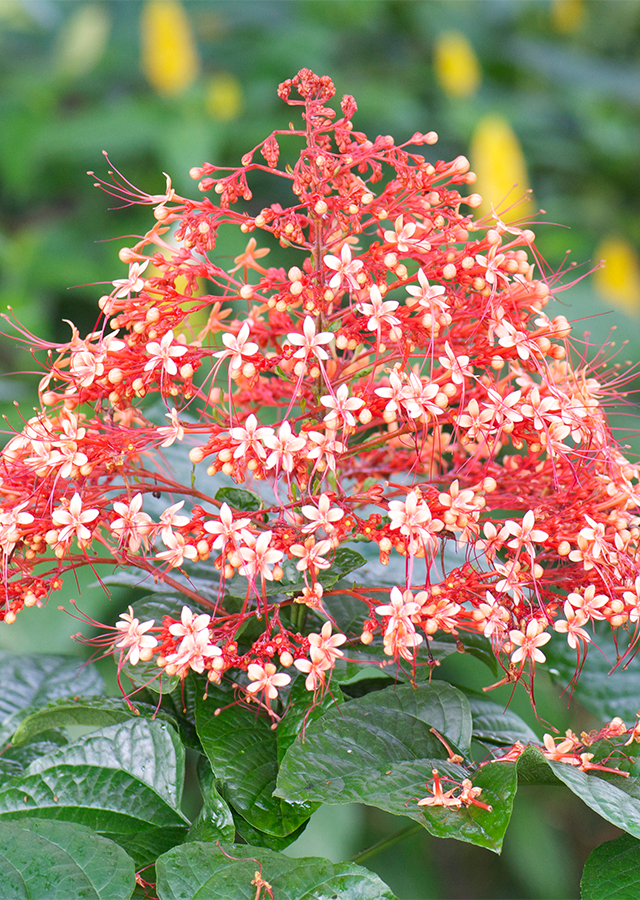
The pagoda flower (Clerodendrum japonicum) is a shrub 1-3 meters tall of the Lamiaceae family, native to China and now widely distributed as an ornamental in gardens and yards. Its name is inspired by its towering, tiered flower arrangement resembling a pagoda building. Behind its beauty, this plant is traditionally used to relieve gout, bloody hemorrhoids, and insomnia.
Agroecology
Grows well near water sources, with adequate sunlight and regular rainfall in areas at elevations of 100-1,300 m above sea level. It requires moist, humus-rich, well-drained soil.
Morphology
- Roots taproot, reddish-brown with geotropic properties (growing downward into the soil).
- Stem erect, round, slightly branched, blackish-white, with many fine hairs.
- Leaves simple, alternate, heart-shaped, pointed margin tips, notched base, curved veins, rough surface.
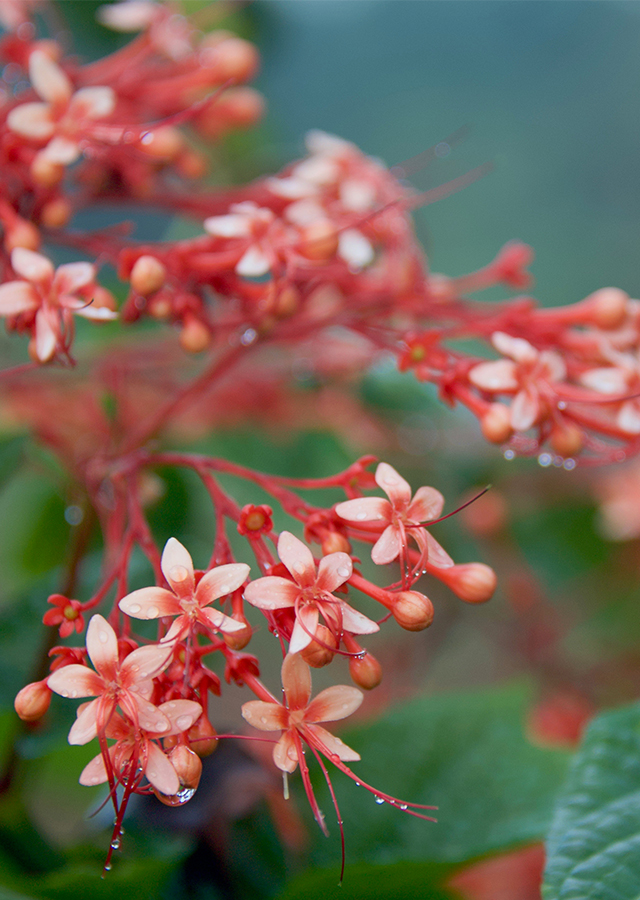
- Flowers compound, red, umbrella-shaped, located at the stem tip, cylindrical stalk. Calyx funnel-shaped.
- Fruit round.
- Seeds ovate, netted surface, white.
Cultivation
- Propagated generatively by seed.
- Vegetatively by air layering, stem cuttings 6-8 cm long, and offshoot separation.
Chemical Content
Alkaloids, flavonoids, steroids, terpenoids, tanning agents, saponins, polyphenols, syringaresinol, medioresinol, martinoside, cytochalasin, dehydrovomifoliol, butylitaconic acid, loliolide.
Benefits
Treats gout, bloody hemorrhoids, wounds; acts as a diuretic; heals swelling; anti-inflammatory; dissolves blood clots; addresses insomnia.
Simplisia
Information not yet available.
Local Names
Tumbak raja (Bali), Singgugu (Sunda), Srigunggu (Java), Trinjau handak (Lampung), Punggur tosek (Madura).
Traditional Recipes
The following recipes reflect traditional knowledge passed down through generations, not a substitute for professional medical diagnosis or advice. Consult a healthcare provider before use.
1. Hemorrhoids
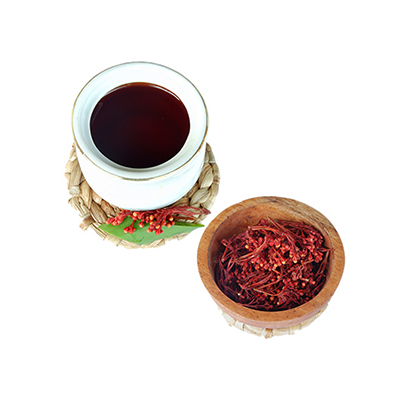
- Prepare 15-20 g pagoda flower and 60 g aloe vera flesh.
- Boil the pagoda flower and aloe vera in 2 cups of water until boiling and reduced to 1 cup, then strain.
- Drink twice a day, ½ cup each time.
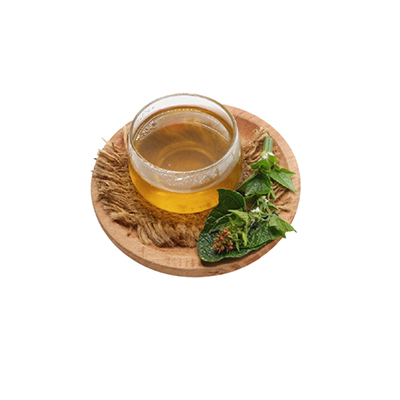
2. Addressing Inflammation
- Wash and boil ± 15 g of fresh pagoda leaves in 3 cups of water until boiling for 15 minutes, let cool, and strain.
- Drink the strained liquid twice a day, morning and evening, in equal amounts.
Reference Sources
- Monaco Nature Encyclopedia. (No date). Clerodendrum japonicum. https://www.monaconatureencyclopedia.com/clerodendrum-japonicum-2/?lang=en#:~:text=Common%20names%3A%20Japanese%20glory%20bower,The%20Clerodendrum%20japonicum%20(Thunb.) 31.08.2020
- Stuartxchange. (2012). Philippines Medicinal Plants. Biniuang. http://www.stuartxchange.com/Biniuang 31.08.2020
- TIAN Jun;SUN Han一Dong. (1995). Chemical constituents from Clerodendrum japonicum. ACTA BOTANICA YUNNANICA. CNKI Jounal. 1995-01. http://en.cnki.com.cn/Article_en/CJFDTotal-YOKE501.018.htm 01.09.2020
- Fern, Ken. (2019). Useful Tropical Plants. Clerodendrum japonicum (Thunb.) Sweet. http://tropical.theferns.info/viewtropical.php?id=Clerodendrum+japonicum 31.08.2020
- Formularium Ramuan Etnomedisin Obat Asli Indonesia Volume II. 2012. Direktorat Obat Asli Indonesia Badan Pengawas Obat dan Makanan RI
- Kurdi A. 2010. Tanaman herbal Indonesia. Badan Litbang Depkes
- Researchgate. Chemical constituents from Clerodendrum japonicum. http://researchgate.netg/ChemicalconstituentsfromClerodendrumjaponicum, 18-01-2021