Cnidoscolus aconitifolius (Mill.) I.M.Johnst.
Summary
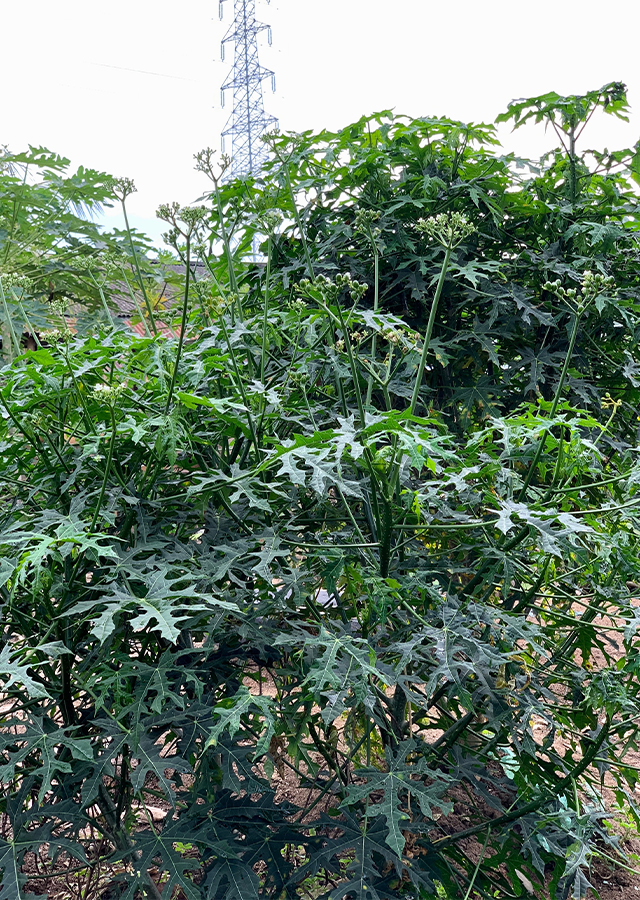
Pepaya jepang (Cnidoscolus aconitifolius) is a shrub up to 5 meters tall of the Euphorbiaceae family, originating from the Yucatan Peninsula, Mexico, and consumed by the Maya people since pre-Columbian times. Its leaves are now widely cultivated as a highly nutritious vegetable in Indonesia. For women, pepaya jepang leaves are traditionally believed to relieve menstrual pain and prevent anemia.
Agroecology
A tropical plant that can be found in areas at elevations up to 1,300 m above sea level. Grows well in areas with an average annual daytime temperature between 20-32 °C, rainfall of 1,000-2,000 mm/year, and also grows well in various soil types with a soil pH ranging from 5.5-6.5.
Morphology
- Stem strong, jointed, shoots emerge at the leaf-stem axil, white sap.
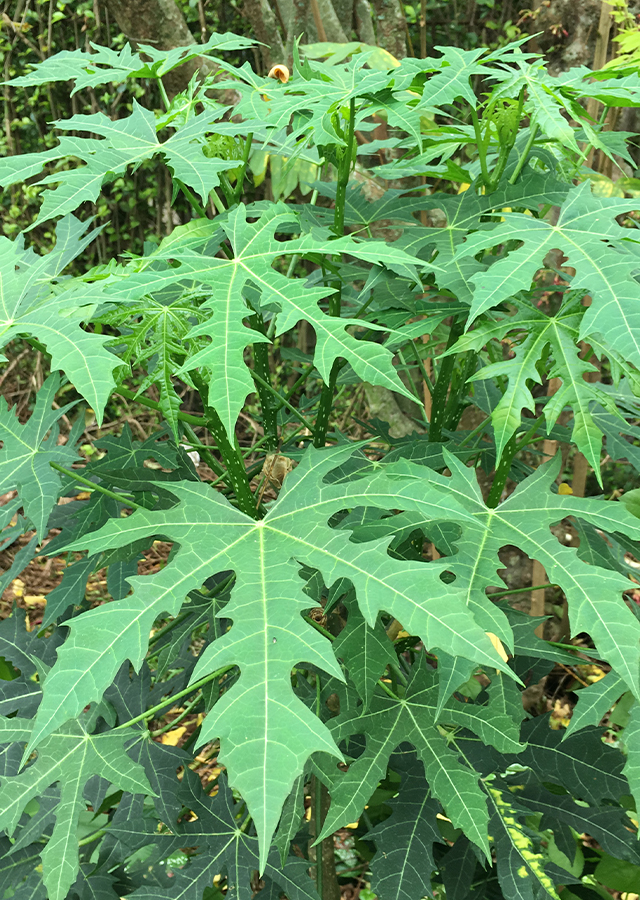
- Leaves resemble papaya leaves, green in color, serrated forming finger-like lobes about 5 cm wide. Leaf taste is not grassy, not bitter, not stiff, watery, and soft, and hairless. Milk-like sap.
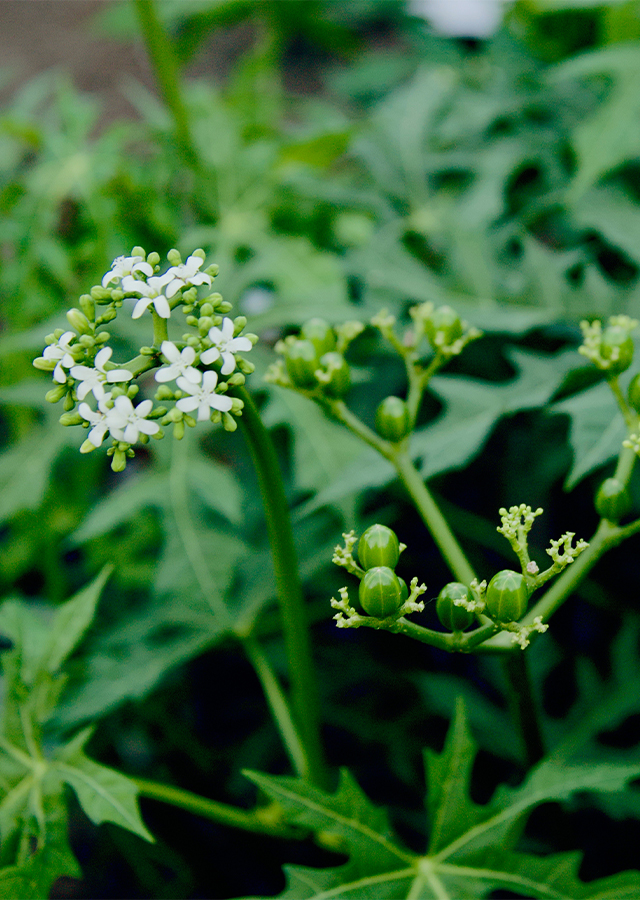
- Flowers have white petals, 5 in number. Dioecious, male and female flowers separate.
- Seeds sized 6-8 mm, without a stalk.
Cultivation
Propagated generatively (by seed) and vegetatively (stem cuttings).
Chemical Content
Cyanogenic glycosides, flavonoids (kaempferol, quercetin glycosides), tannins, saponins, alkaloids, stearic acid, palmitic acid, linoleic acid esters.
Benefits
Boosts blood and prevents anemia, increases muscle strength and endurance, strengthens bone health, aids digestion, protects eye health, prevents diabetes, addresses acne, controls blood pressure, addresses insomnia, and scorpion stings.
Simplisia
- Pick leaves that are neither too old nor too young, namely number 2 to number 7 from the tip, then wash thoroughly with running water.
- Cut into small pieces then dry by air-drying at room temperature until dry.
- Once dry, put into an airtight container.
Local Names
Daun kates jepang (Java).
Traditional Recipes
The following recipes reflect traditional knowledge passed down through generations, not a substitute for professional medical diagnosis or advice. Consult a healthcare provider before use.
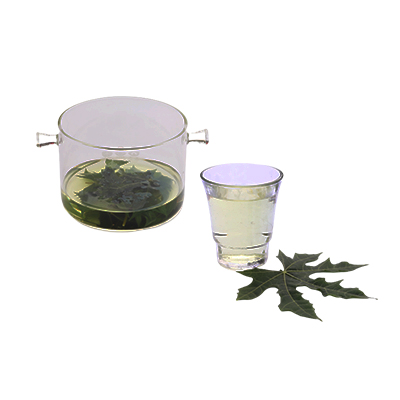
1. Controlling Blood Pressure
- Take 5 papaya leaves, wash thoroughly.
- Boil with 500 ml water for 20 minutes until the remaining water is 3/4 of it.
- Drink once a day.
Reference Sources
- Adeniran OI, Olajide OO, Igwemmar NC, Orishadipe AT. 2013. Phytochemical constituents, antimicrobial and antioxidant potentials of tree spinach [Cnidoscolus aconitifolius (Miller) I. M. Johnston]. J. Med. Plants Res. 7(19): 1317-1322.
- Awoyinka OO, Balogun IO, Ogunnowo AA. 2007. Phytochemical screening and in vitro bioactivity of Cnidoscolus aconitifolius (Euphorbiaceae). J. Med. Plant. Res. 1(3): 063-065.
- Chaya High Nutrition Perennial. 2013. Cambodia HARVEST. Technical Bulletin 92. Kamboja.
- Garcia K, Aaron, Servin C, Jorge, Guzman. 2017. Maldonado, shalvador phenolic profile and antioxidant capacity of Cnidoscolus Chayamansa and Cnidoscolus Aconitifolius : a review journal of medicinal plants research 11(45)
- Prota. 2018. Cnidoscolus aconitifolius. https://uses.plantnet-project.org/en/Cnidoscolus_aconitifolius_(PROTA) 10-12- 2019.
- Prianto Yoga Tri 2019, manfaat daun pepaya jepang dan rebusan daun pepaya jepang untuk kesehatan wanita. https://www.dream.co.id/fresh/manfaat-daun-pepaya-jepang-dan-air-rebusan-daun-pepaya-untuk-kesehatan-wanita-191220b.html 28-05-2020