Coffea liberica var. dewevrei (De Wild. & T.Durand) Lebrun
Summary
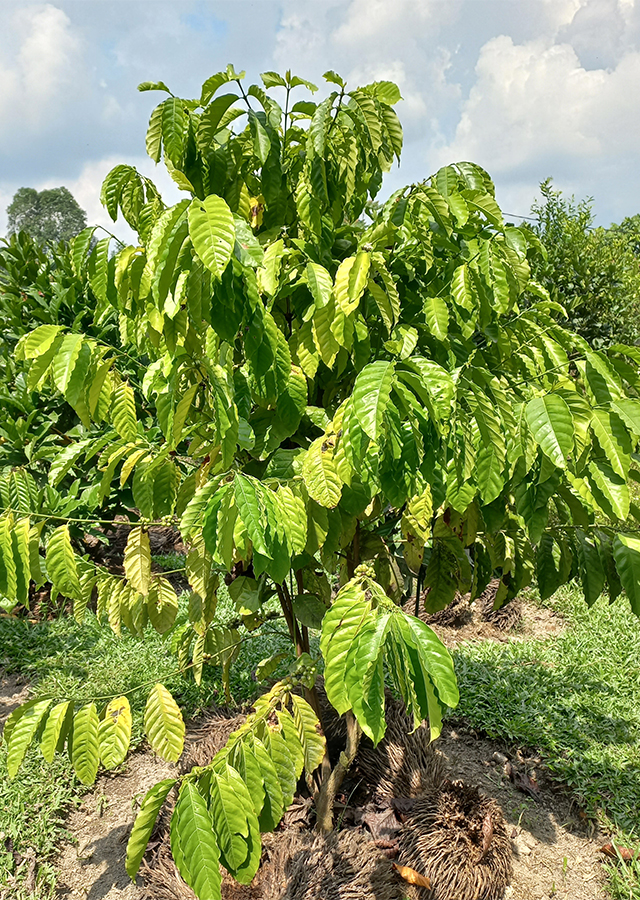
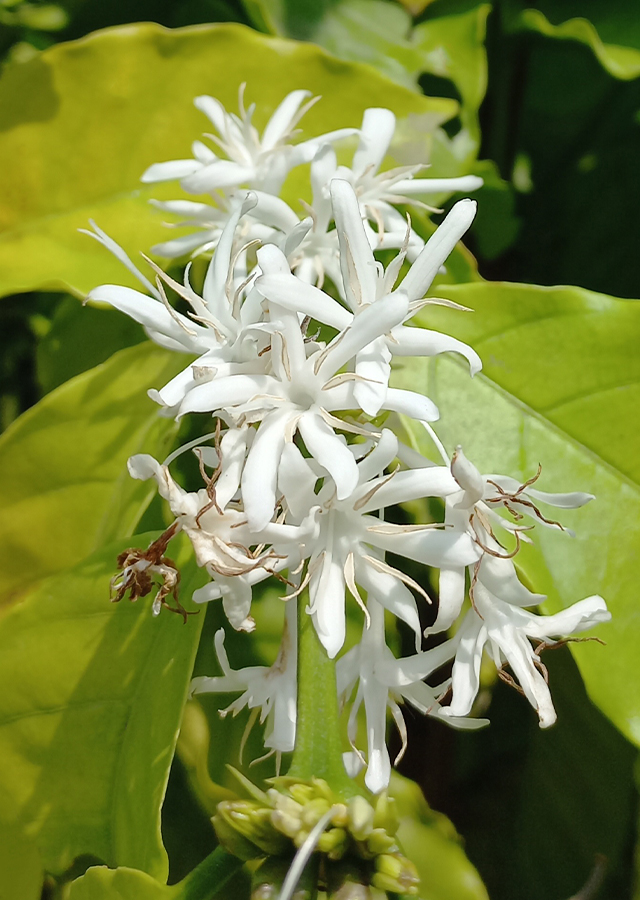
Excelsa coffee (Coffea liberica var. dewevrei) is a shrub up to 5 meters tall from the Rubiaceae family discovered by French botanist August Chevalier in 1905 around the Chari River, West Africa. In Indonesia, excelsa coffee is cultivated on a limited scale in West Tanjung Jabung, Jambi, and can be harvested within 3.5 years. Its taste is milder than true liberica coffee, and it is traditionally used as a fever reducer and stimulant tonic.
Agroecology
Excelsa coffee is a type of coffee that ideally grows at elevations of 0 to 750 m asl. The suitable climate is a tropical climate with moderate rainfall. If grown in areas with high rainfall, productivity will decrease because growth will focus on wood. Excelsa coffee requires one to two months with rainfall less than 50 mm to flower, and is drought-resistant. This plant can grow in peat soil with a high acidity level and is disease-resistant
Morphology
- Stem of the excelsa coffee tree has primary branches varying in number, around 3 to 12 branches. However, the average number of branches per plant is 8. Primary branches are a determining factor in fruit productivity. More primary branches have the potential to produce more fruit.
- Leaves of the excelsa plant are 15.2 to 24 cm long and 17.3 to 24 cm wide. The leaves are rounded with a blunt tip and tapering base. The leaf margin appears flat but is wavy when viewed from the surface.
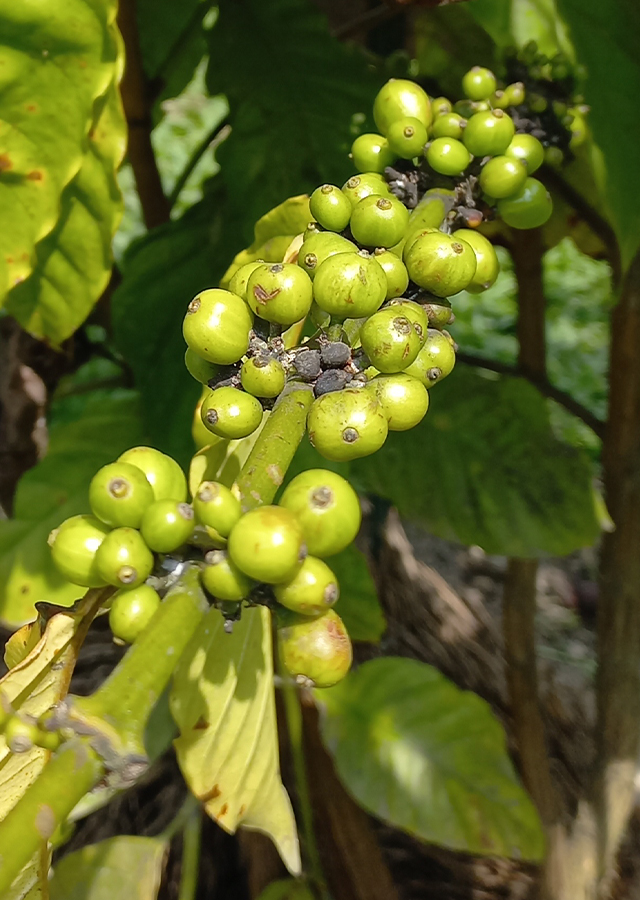
- Fruit measures 2.9 to 3.5 cm with a diameter of 1.9 to 2.1 cm. The excelsa plant produces fruit in clusters, each called a dompol. Each cluster generally contains 4 to 17 coffee cherries. On one plant branch there are generally 10 clusters spaced 2.2 to 4.7 cm apart.
- Seeds found in the coffee fruit measure 2.1 to 2.3 cm with a diameter of 1.6 to 1.8 cm.
Cultivation
Propagation of excelsa coffee is done generatively using seed.
Chemical Content
Caffeine, chlorogenic acid, phenolics.
Benefits
A fever-reducing remedy, as a stimulant and tonic.
Simplisia
- Prepare excelsa coffee fruit and separate the red-colored fruit from the green-colored fruit.
- Sun-dry directly for several days or use an oven at 40°C until the moisture content reaches 10%.
- Once dry, peel the fruit skin then take the seeds.
- Store the coffee beans in a clean, airtight container.
Local Names
Kopi Nangka
Traditional Recipes
The following recipes reflect traditional knowledge passed down through generations, not a substitute for professional medical diagnosis or advice. Consult a healthcare provider before use.
1. Fever
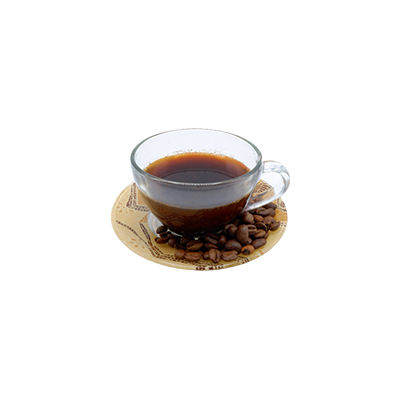
- Take an adequate amount of ground excelsa coffee beans.
- Boil the ground coffee.
- Let it cool to warm/cold.
- Strain then drink.
Reference Sources
- Royal Botanic Gardens. 2017. Plants of the Word Online: Coffea liberica var. dewevrei (De Wild. & T.Durand) Lebrun. https://powo.science.kew.org/taxon/urn:lsid:ipni.org:names:77189827-1. 24-11-2021.
- Useful Tropical Plants Database. 2021. Coffea liberica. http://tropical.theferns.info/viewtropical.php?id=Coffea+liberica. 24-11-2021.
- Rimba Kita. 2019. Kopi Excelsa – Klasifikasi, Morfologi, Habitat & Budidaya. https://rimbakita.com/kopi-excelsa/. 24-11-2021.
- Umberto Quattraocchi, F.L.S. 2012. CRC World Dictionary of Medicinal and Poisonous Plants. Common name, Scientific Name, Eponyms, Synonyms and etymology. CRC Press Taylor & Francis Group, LLC. United States. https://www.google.co.id/books/edition/CRC_World_Dictionary_of_Medicinal_and_Po/-37OBQAAQBAJ?hl=id&gbpv=1&dq=vigna+unguiculata+subsp.+unguiculata&pg=PA3908&printsec=frontcover. 24-11-2021.