Coix lacryma-jobi L.
Summary
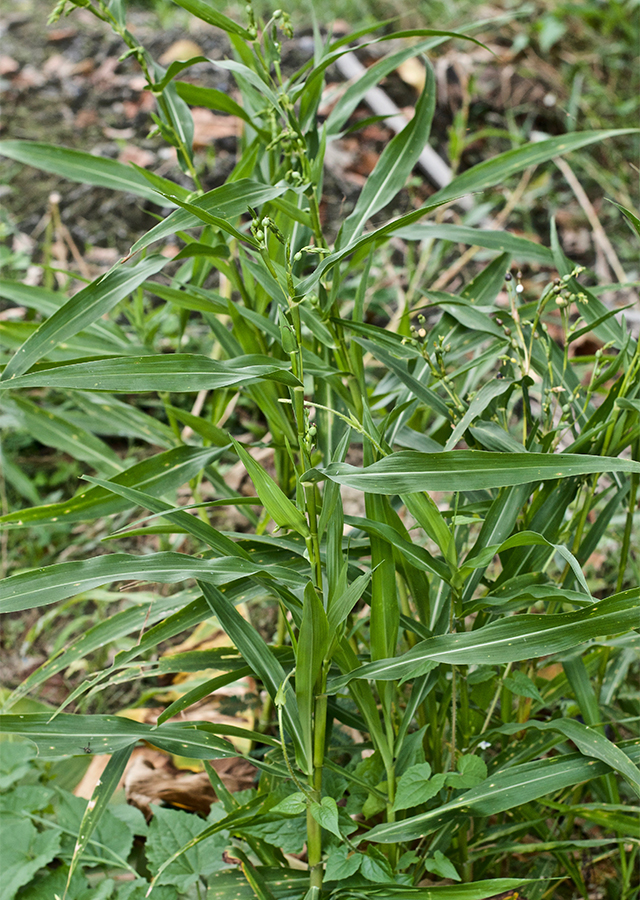
Job's tears (Coix lacryma-jobi) is a herb, sometimes growing as an annual, 1-3 meters tall, of the Poaceae family, native to East Asia and now widely distributed around the world. Its cultivated seeds are commonly cooked into porridge, while the wild variety's hard seeds are used as beads for traditional necklaces. For generations, Job's tears has also been believed to strengthen the spleen and boost the body's immunity.
Agroecology
Grows well at elevations of 500-700 m above sea level, pH 4.5-8.4, rainfall of 600-4,300 mm/year, average temperature of 10-28 °C. Favors open, moist soil, high in nutrients, direct sunlight, and adequate water availability.
Morphology
- Roots coarse and difficult to pull out.
- Stem erect, round, grooved, hairy, greenish-brown.
- Leaves alternate, ribbon-shaped, pointed tip, base wrapping the stem, smooth margins, rough surface, with the main vein visibly prominent on the leaf's underside.
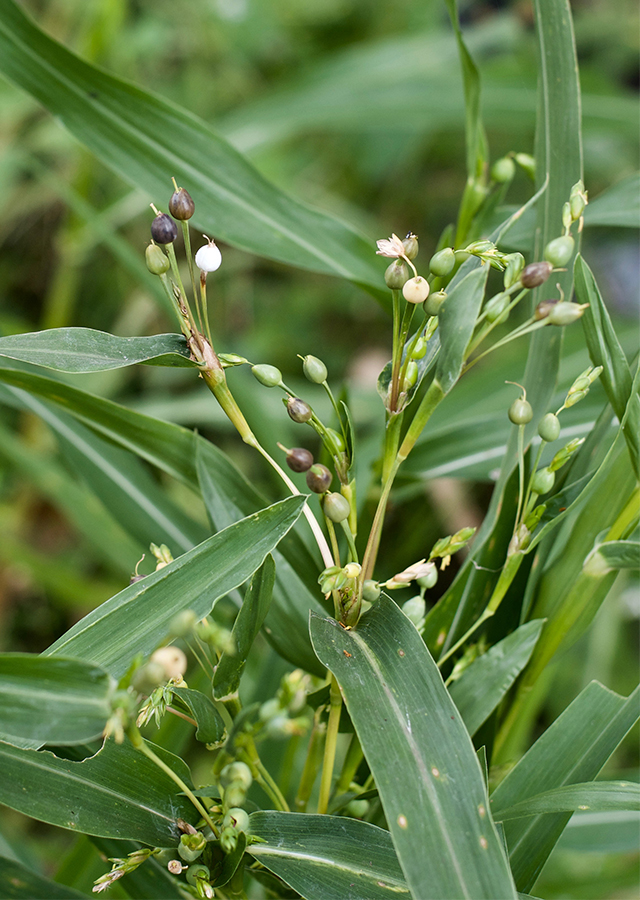
- Flowers emerge from the leaf axils, branched panicle, producing spikelets.
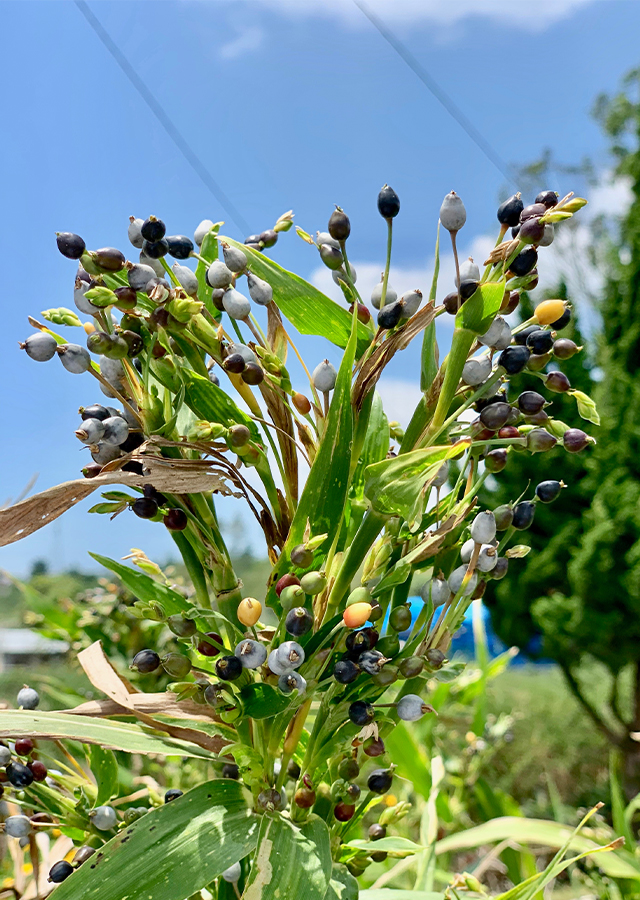
- Fruit a drupe, oblong-round, certain varieties (ma-yuen) white/blue-purple, and hard-shelled when mature.
Cultivation
- Propagated generatively (by seed) and vegetatively by separating root branches. Seeds come from mature seeds.
- Planting to harvest takes about 120 days.
Chemical Content
Alkaloids, saponins, glycosides, flavonoids, phenols, tannins, steroids, coixenolides, tocopherol, tocotrienol, dodecanoic acid, tetradecanoic acid, and dihydroxypropylester.
Benefits
Strengthens the spleen; acts as a diuretic; boosts immunity; draws out pus and heals boils; treats cervical cancer, breast lumps, stomach disorders; anti-inflammatory, antitoxin; lowers cholesterol; treats diabetes, colon cancer, and gallstones.
Simplisia
- Prepare mature Job's tears seeds, then wash thoroughly under running water. Sun-dry the seeds until dry, or until the moisture content is below 10%.
- Peel the dried seeds by pounding.
- Store in a clean, airtight container.
Local Names
Singkoru batu (Toba), Anjalae batu (Minangkabau), Hanjeli (West Java), Jali batu (Malay), Komangge (Sumba), Jagung jail kasekore (Halmahera).
Traditional Recipes
The following recipes reflect traditional knowledge passed down through generations, not a substitute for professional medical diagnosis or advice. Consult a healthcare provider before use.
1. Cervical Cancer, Breast Lumps, and Stomach Disorders
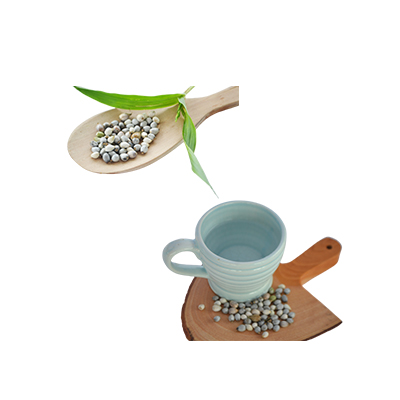
- Take 25 g of Job's tears seeds, 750 ml water.
- Boil the dried Job's tears seeds until boiling and the water is reduced to 250 ml.
- Let cool and strain the mixture. Drink all at once. Drink twice a day.
Reference Sources
- Lim, T.K. (2012). Edible Medicinal And Non Medicinal Plants - Fruits Vol. 5: 243-261. Springer Dordrecht Heidelberg New York London.
- Ling, K.H., Kian, C.T., & Hoon, T.C. (2009). A Guide To Medicinal Plants. Page: 53-54.
- Stuartxchange. (2020). Philippine Medicinal Plants. Katigbi. http://www.stuartxchange.org/Katigbi. 14-12-2020.
- Fern, Ken. (2019). Useful Tropical Plants. Coix lacryma-jobi. http://tropical.theferns.info/viewtropical.php?id=Coix+lacryma-jobi. 14-12-2020.
- Faiha Andari, Saraswati Lastika. 2019. Sehat dan Bugar dengan Obat Herbal (Pengobatan Kanker Serviks, Kelenjar Payudara, dan Gangguan Lambung). Briliant, Yogyakarta.