Coleus amboinicus Lour.
Summary
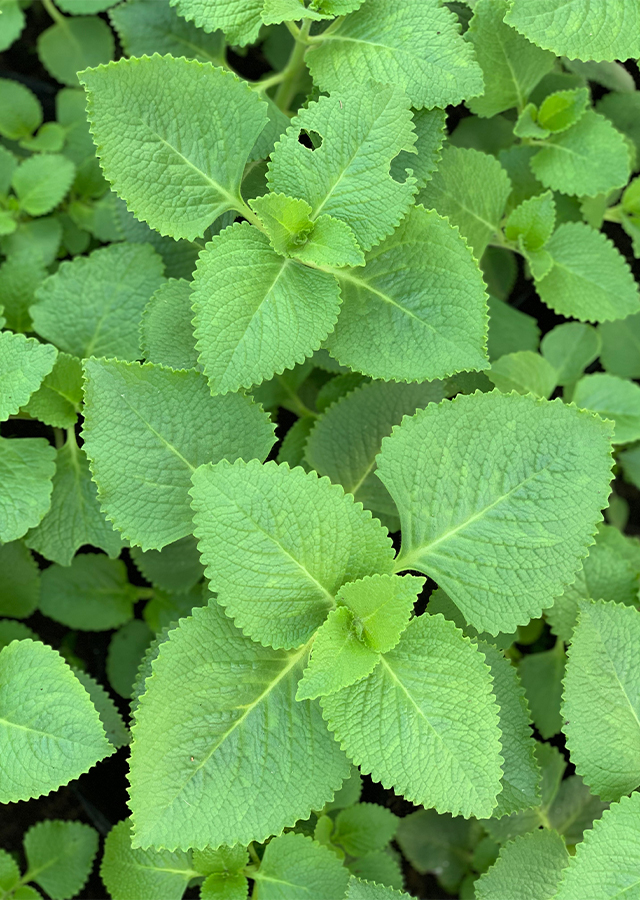
Daun jintan (Coleus amboinicus) is a herb up to 1 meter tall of the Lamiaceae family, originating from South and East Africa, distributed from Kwazulu-Natal to Kenya and Tanzania. Its thick, distinctively aromatic leaves are rich in potassium and antioxidant compounds, commonly eaten raw or processed. Traditionally, daun jintan is also believed to relieve fever, cough, and digestive disorders.
Agroecology
This plant grows well in tropical and subtropical regions at elevations up to 1,500 m above sea level, daily temperature around 22-28 °C, annual rainfall around 2,000-2,600 mm/year. Prefers conditions with full sunlight or shade, with soil pH around 6-6.5.
Morphology
- Stem jointed and round shaped.
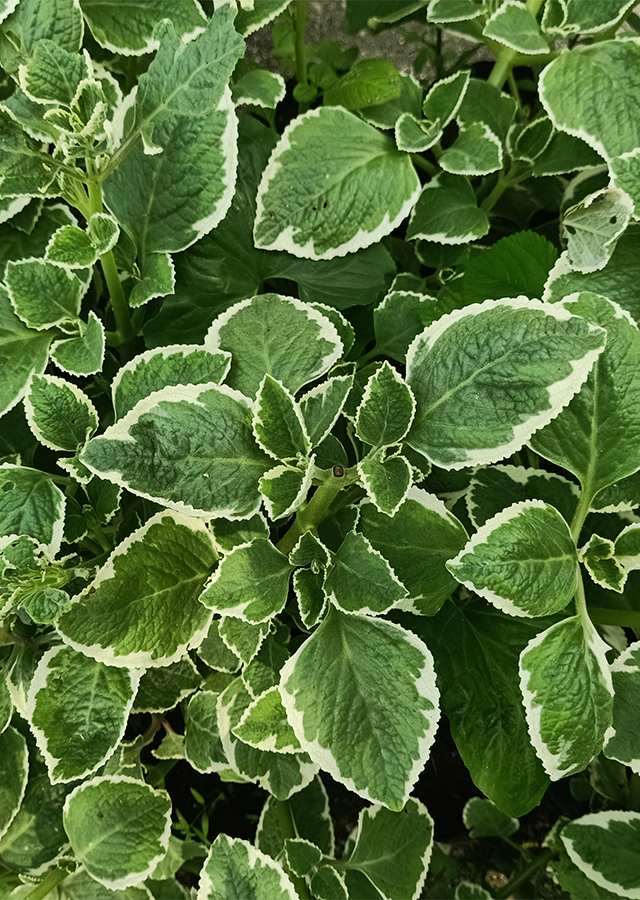
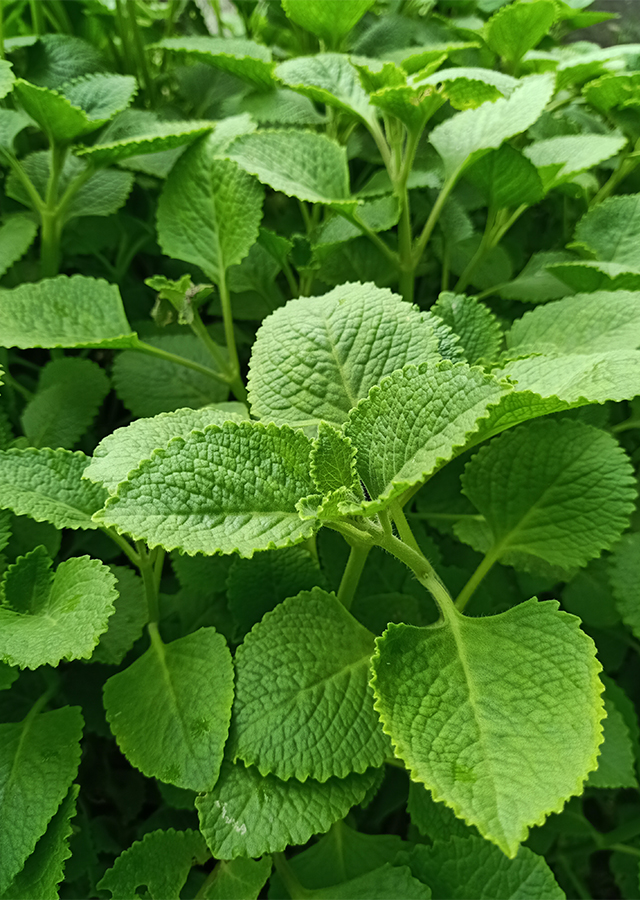
- Leaves single, fleshy, egg-shaped, tapering tip and base with serrated edges except at the base. Pinnate venation, thickly hairy surface, light green in color.
- Flowers compound spike-shaped, 20 cm long, emerging from the branch tip, bowl-shaped calyx, purple in color, and the leaf axil bluish-purple. Flowers do not appear in certain regions.
- Seeds hard, flat, and light brown in color.
Cultivation
Propagated generatively (by seed) and vegetatively (stem cuttings 15-20 cm long or 2 nodes).
Chemical Content
Compounds carvacrol, thymol, α-humulene, undecanal, γ-terpinene, p-cymene, α-terpineol, β-selinene, caryophyllene oxide, flavonoids, phenol, luteolin, salvigenin, taxifolin, crategolic.
Benefits
Fever remedy, treats inflammation, reduces cough, relieves canker sores, addresses bloating, reduces pain, antiseptic, treats digestive problems (dyspepsia, diarrhea, and colds), antitumor.
Simplisia
- Pick fresh leaves. Clean off attached dirt then wash with running water, drain. Chop the leaves.
- Dry the leaves in direct sunlight ± 5 days on a base.
- Put the dried leaves into an airtight container, label and date the production.
Local Names
Sukan (Malay), Aceran (Sunda), Godong kucing and Godong kambing (Java), Majha nereng (Madura), Iwak (Bali), Golong (Flores).
Traditional Recipes
The following recipes reflect traditional knowledge passed down through generations, not a substitute for professional medical diagnosis or advice. Consult a healthcare provider before use.
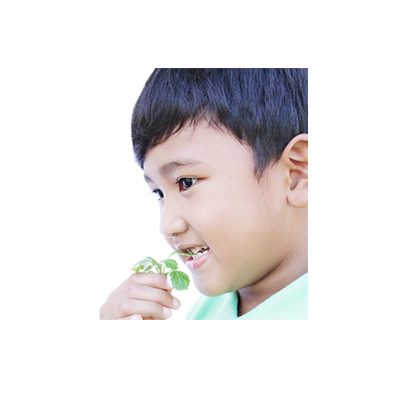
1. Canker Sores
- Prepare 7 fresh daun jintan leaves.
- Wash the leaves then chew slowly then suck out the extract, discard the residue.
Reference Sources
- Arumugam G, Swamy MK, Sinniah UR. 2016. Plectranthus amboinicus (Lour.) Spreng: botanical, phytochemical, pharmacological and nutritional significance. Molecules 21: 369-394.
- Asiimwe S, Karlsson AKB, Azeem M, Mugisha KM, Namutebi A, Gakunga NJ. 2014. Chemical composition and toxicological evaluation of the aqueous leaf extracts of Plectranthus amboinicus Lour. Spreng. I.J.P.S.I. 3(2): 19-27.
- Bhatt P, Joseph GS, Negi PS, Varadaraj MC. 2013. Chemical composition and nutraceutical potential of Indian Borage (Plectranthus amboinicus) stem extract. Journal of Chemistry.
- Bibitbunga.com. 2019. Bibit Bunga Tanaman Jinten. https://bibitbunga.com/product/tanaman-jinten/ 19-12- 2019
- Faunadanflora. 2018. Cara Menanam Daun Jintan di Rumah dan Manfaat Daun Jintan Bagi Kesehatan Lengkap.
- Redaksi Agromedia. 2008. Buku Pintar Tanaman Obat: 431 jenis tanaman penggempur aneka penyakit. PT Agromedia Pustaka, Jakarta.
- Wongsowijoyo, Suyadi. 2019. Sekilas Budidaya Tanaman Tropis Manfaat Bunganya Bagi Kesehatan. Yogyakarta: Gosyen Publishing
- The Plant List. A working List of All Plant spesies. Plectranthus amboinicus (Lour.) Spreng. http://www.theplantlist.org/tpl/record/kew-157885 20-01-2021