Coleus rotundifolius (Poir.) A.Chev. & Perrot
Summary
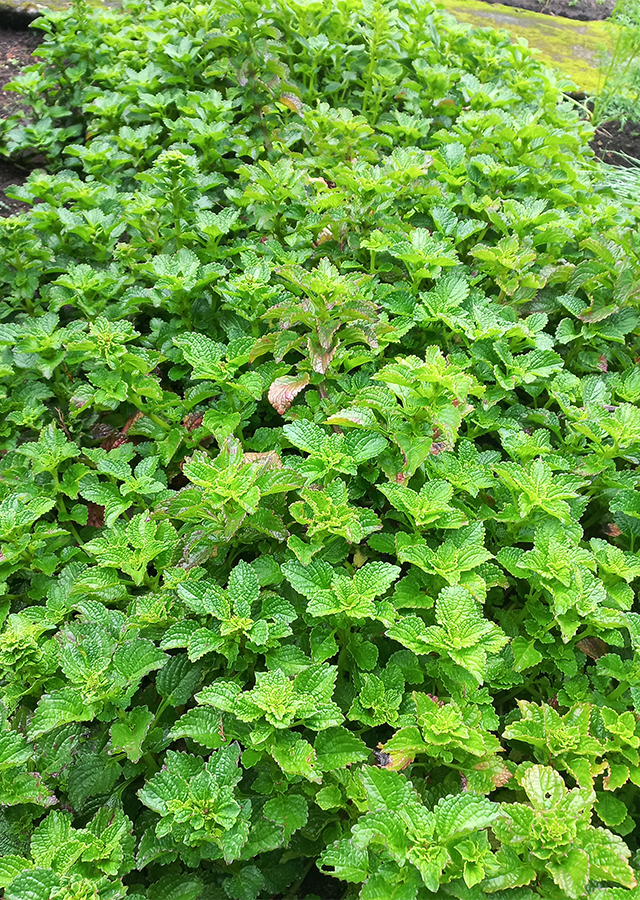
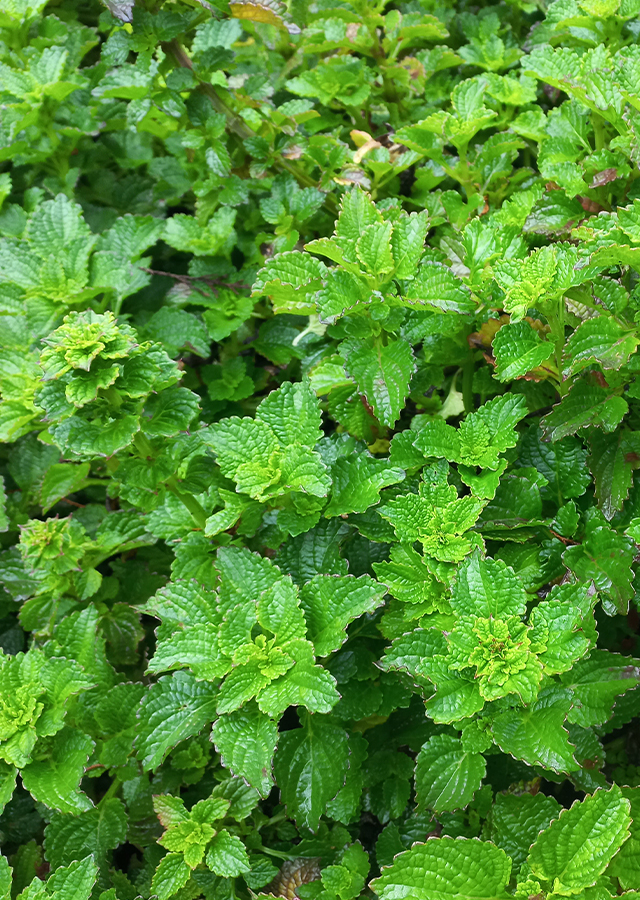
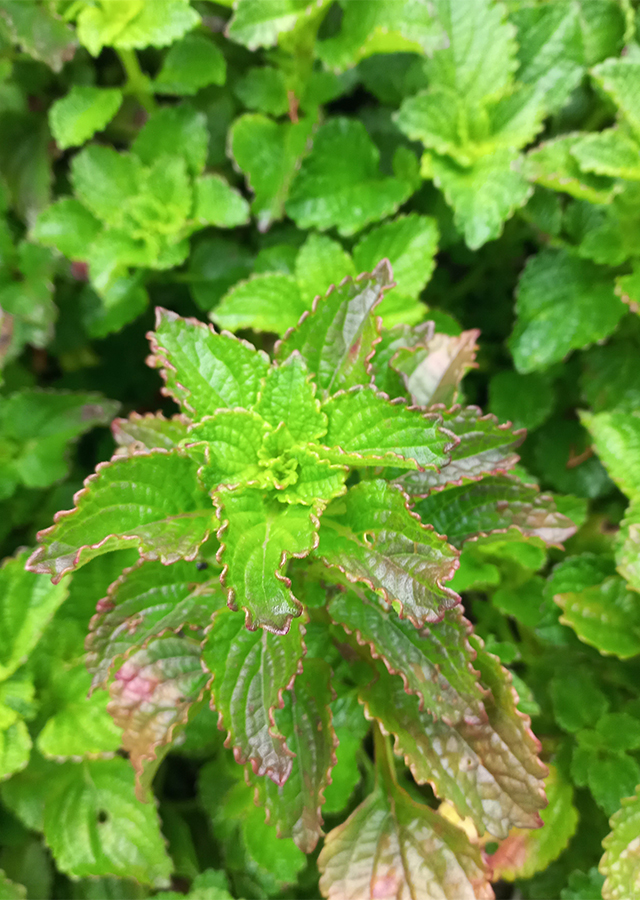
Hausa potato (Coleus rotundifolius) is a herb up to 1 meter tall from the Lamiaceae family native to tropical Africa, cultivated in Bandar Lampung as an alternative food substitute for rice. Its tuber is steamed like an ordinary potato, while its leaves are cooked as a vegetable. Hausa potato is traditionally used to treat dysentery and eye disorders.
Agroecology
Hausa potato grows in humid tropical regions at elevations up to 2,200 m asl. Grows best in areas where the mean annual daytime temperature is in the range of 17-27°C, but can tolerate 8-36°C. Cooler night temperatures encourage tuber development. This plant prefers mean annual rainfall in the range of 1,800-2,600 mm, but tolerates 1,200-4,000 mm. The plant adapts to relatively high rainfall, and the best yields are obtained in areas with well-distributed rainfall throughout the growing season. If there is too much rain, the tubers tend to branch, which consumers dislike because it is difficult to peel. Requires a sunny position. Prefers well-drained sandy loam, but can tolerate various soil types. Tolerant of poorer, drier soil, though yields are lower under such conditions. Yields are low in heavy soil. Prefers a pH in the range of 6.5-7.5, tolerating 5.5-8. Dislikes waterlogged soil.
Morphology
- Roots fibrous, forming a tuber ovate to elongated potato-like shape (4.5 cm long, 1.5 cm wide). The skin is rough and may be black, brown, reddish gray, or white.
- Stem 4-sided and densely hairy along the 4 stem angles.
- Leaves thick and fleshy, ovate to roughly round shaped (2-6 cm long, 1.5-4 cm wide), leaf margin serrate, green.
- Flowers compound, arranged in spikes, and long-stalked. Inflorescence arises at the tip of the stem. Flowers small, purple with a star-shaped calyx and lip-shaped corolla.
- Fruit round shaped, covered by a fruit membrane, green.
- Seeds round shaped, small, black.
Cultivation
- Propagation of Hausa potato can be done generatively with seed but it is usually not used for propagation.
- Vegetative propagation is done with stem cuttings about 10-20 cm long, nursed in polybags containing a mixture of mineral soil and compost. Young plants 2 weeks old can be transplanted to a planting field prepared in advance. Meanwhile, propagation by dividing sprouted tubers can be planted at a depth of 5-8 cm.
Chemical Content
Phenolic compounds, flavonoids, terpenoids (oleanolic acid, ursolic acid), cis-vaccenic acid, ergost-5-en-3-ol, stigmasta-5,22-dien-3-ol, hexadecanoic acid and 9-decanoic acid, alcohols, amines, alkanes, aldehydes, carboxylic acids, isocyanides, alkynes, isocyanates, ketones, tertiary and primary alcohols, and chloro compounds.
Benefits
Its leaves are sometimes used in traditional medicine such as treating dysentery. This plant is also used to treat blood in urine and eye disorders. Has the ability to address several diseases caused by oxidative stress including diabetes mellitus, as a cancer chemopreventive agent, and hypercholesterolemia.
Local Names
Kentang jawa (Java), Gombili (Gayo), Kentang jawa, Kemili (Melayu), Hombili (Batak), Kembili (Aceh dan Sumatera Barat), Kombili, Isahu, Isiahu, Katilen, Safut (Maluku), Kentang jawe, Kentang kembili, Gambili, Gombili (Kalimantan).
Traditional Recipes
The following recipes reflect traditional knowledge passed down through generations, not a substitute for professional medical diagnosis or advice. Consult a healthcare provider before use.
1. Treats blood in urine
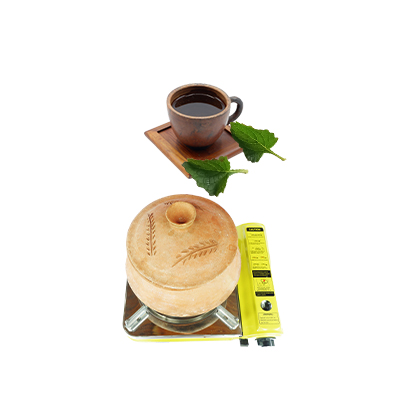
- Prepare an adequate amount of fresh Hausa potato leaves and wash until clean.
- Boil the leaves until it boils.
- Let it cool to warm/cold.
- Strain the decoction then drink.
Reference Sources
- Royal Botanic Gardens. Plants of the World Online: Coleus rotundifolius (Poir.) A.Chev. & Perrot. https://powo.science.kew.org/taxon/urn:lsid:ipni.org:names:446145-1. 24-1-2022.
- Useful Tropical Plants. 2022. Plectranthus rotundifolius. http://tropical.theferns.info/viewtropical.php?id=Plectranthus+rotundifolius. 24-1-2022.
- Flora Fauna Web. 2021. Plectranthus rotundifolius (Poir.) Spreng.. https://www.nparks.gov.sg/florafaunaweb/flora/5/7/5781. 24-1-2022.
- Alamendah. 2014. Kentang Jawa (Hitam) Sumber Pangan yang Terlupakan. https://alamendah.org/2014/10/30/kentang-jawa-hitam-sumber-pangan-yang-terlupakan/#:~:text=Daun%20Kentang%20Jawa%20(Plectranthus%20rotundifolius,dengan%20lebar%202%2D4%20cm.&text=Bunga%20berukuran%20kecil%2C%20berwarna%20ungu,bintang%20dan%20mahkota%20berbentuk%20bibir. 24-1-2022.
- Mutiara Nugraheni. 2010. POTENSI KENTANG HITAM PADA PENCEGAHAN PENYAKIT AKIBAT STRES OKSIDATIF. Jurusan Pendidikan Teknik Boga dan Busana. Fakultas Teknik Universitas Negeri Yogyakarta. Seminar Nasional "Character Buildinqfor Vocational Education" jur. PTBB, FT UNY. https://journal.uny.ac.id/index.php/ptbb/article/view/43175/16129. 24-1-2022.
- S Manikandan, Dr. GM Alagu Lakshmanan, C Chandran. 2016. Phytochemical screening and evaluation of tuber extract of Plectranthus rotundifolius Spreng. By GC-MS and FTIR spectrum analysis. International Journal of Herbal Medicine 2016; 4(2): 36-40. https://www.researchgate.net/publication/299494092_Phytochemical_screening_and_evaluation_of_tuber_extract_of_Plectranthusrotundifolius_Spreng_By_GC-MS_and_FTIR_spectrum_analysis. 24-1-2022.