Colocasia esculenta (L.) Schott
Summary
Taro (Colocasia esculenta) is a tuberous herb 50-150 cm tall of the Araceae family, native to Southeast Asia or southern Central Asia, now widely cultivated as far as South China, India, and Africa. Its tuber is a staple food source in many regions due to its rich carbohydrate content. Beyond being a food ingredient, taro is also traditionally used to address diarrhea, swelling, and insect bites.
Agroecology
Taro can live from lowlands up to an elevation of 2,700 m above sea level with a temperature of around 20-30 °C and high humidity. The desired rainfall is 2,000 mm/year, evenly distributed. Favors loose, weed-free soil.
Morphology
- Roots shallow, fibrous.
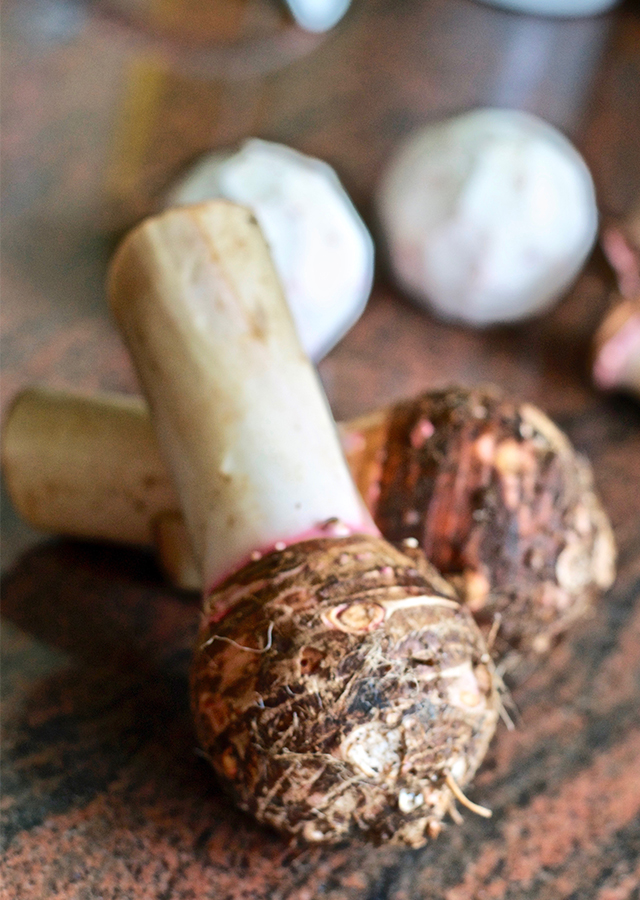
- Tuber about 10 cm long, weighing 140 g, cylindrical, white flesh, fiberless skin.
- Stem wrapped in leaf sheaths and tuber-shaped, located underground, blackish-brown, finely hairy.
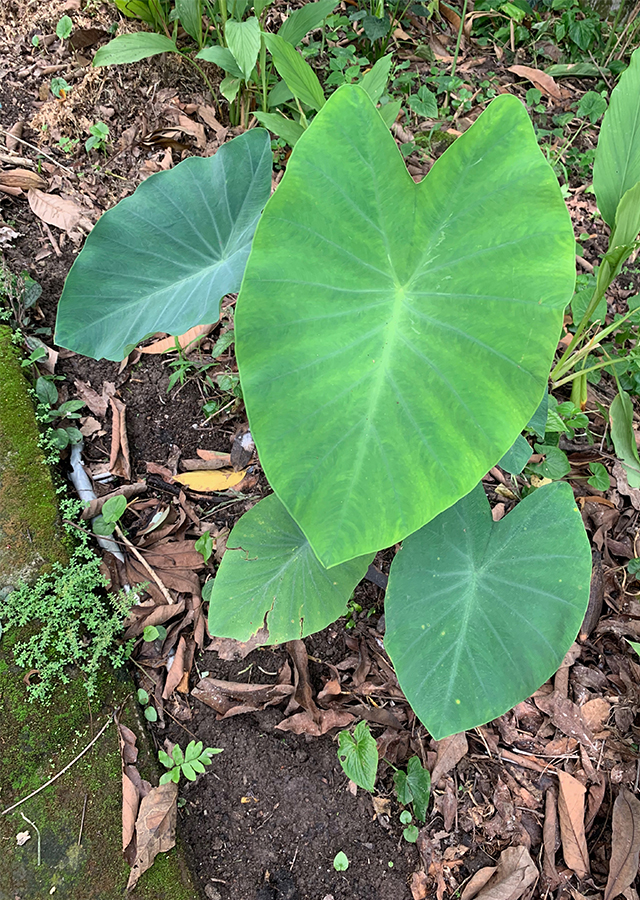
- Leaves consist of a long, green, heart-shaped petiole with a pointed tip and palmate venation; the leaf blade has a waxy layer.
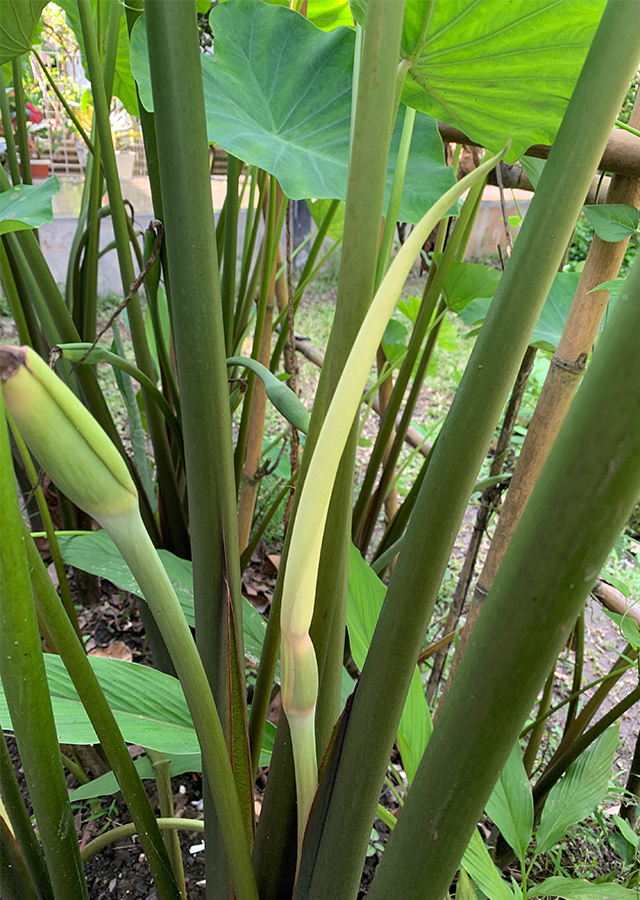
- Flowers consist of a spadix, spathe, and stalk.
Cultivation
- Vegetative propagation (shoots and tubers).
- Shoots are taken from taro plants 5-7 months old.
- Select large tubers, cut a short section leaving the shoot eye, and dust the cut surface with ash. Tubers are harvested at 8-10 months of age.
Chemical Content
Flavonoids, β-sitosterol, steroids, alkaloids, saponins, tannins, amino acids, anthocyanin pelargonidin, 3-glucoside, cyanidin 3-rhamnoside and cyanidin 3-glucoside.
Benefits
Treats diarrhea, dysentery, insect bites, swelling, vomiting blood, kidney inflammation, high blood pressure, diabetes; helps prevent heart disease; strengthens bones; supports skin and hair health.
Simplisia
Information not yet available.
Local Names
Taro (Nias), Talos (Lampung), Tales, Janawari (Java), Tale, Koladi, Kolai, Kolei, Korei, Kore (North Sulawesi), Taleh, Kaladi, Kuladi (Minangkabau).
Traditional Recipes
The following recipes reflect traditional knowledge passed down through generations, not a substitute for professional medical diagnosis or advice. Consult a healthcare provider before use.
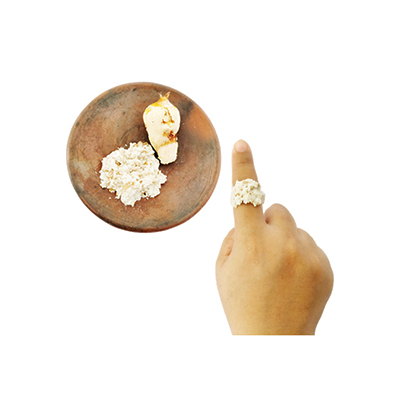
1. Swollen Fingers
- Wash 15 g of taro tuber, then pound until fine.
- Apply to the affected finger.
- Replace with a fresh application once it dries.
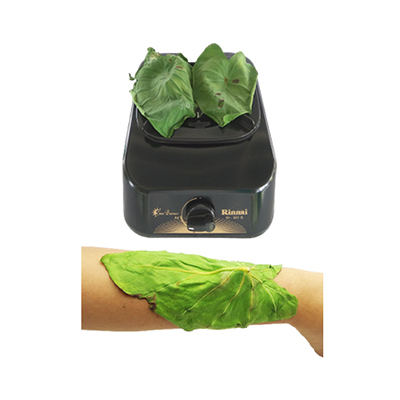
2. Insect Bites
- Pick fresh taro leaves.
- Warm over low heat until warm.
- Apply the leaf to the affected area.
Reference Sources
- Chakraborty P, Deb P, Chakraborty S, Chatterjee B, Abraham J. 2015. Cytotoxicity and antimicrobial activity of Colocasia esculenta. J. Chem. Pharm. Res. 7(12): 627-635.
- Ferdous MdRU, Arman MdSI, Tanvir MdMI, Sumi S, Siddique KMdMR, Billah MdM, Islam MdS. 2015. Biologically potential for pharmacologicals and phytochemicals of medicinal plants of Colocasia esculenta: a comprehensive review. American Journal of Clinical and Experimental Medicine 3(5-1): 7-11.
- Krishnapriya TV, Suganthi A. 2017. Biochemical and phytochemical analysis of colocasia esculenta (L.) Schott tubers. International Journal of Research in Pharmacy and Pharmaceutical Sciences. 2(3): 21-25.
- Pereira PR, Silva JT, Verícimo MA, Paschoalin VMF, Teixeira GAPB. 2015. Crude extract from taro () as a natural source of bioactive proteins able to stimulate haematopoietic cells in two murine models. Journal of Functional Foods 18:333–343.
- Prosea. 2016. https://uses.plantnet-project.org/en/Colocasia_esculenta_(PROSEA) 07-06-2019
- Setyowati M, Hanarida I, Sutoro. 2007. Karakteristik umbi plasma nutfa tanaman talas (Colocasia esculenta). Bulletin Plasma Nutfah. 13(2): 49-55.
- Widyaningrum Herlina. 2019. Tim Solusi Alternatif. 2019. Kitab Tanaman Obat Nusantara. Penerbit Media Pressindo, Jakarta.
- Philippine Medicinal Plants. Gabi. Colocasia esculenta Linn. TARO. Hong tu yu. http://www.stuartxchange.com/Gabi.html 09-07-2020