Combretum indicum (L.) DeFilipps
Summary
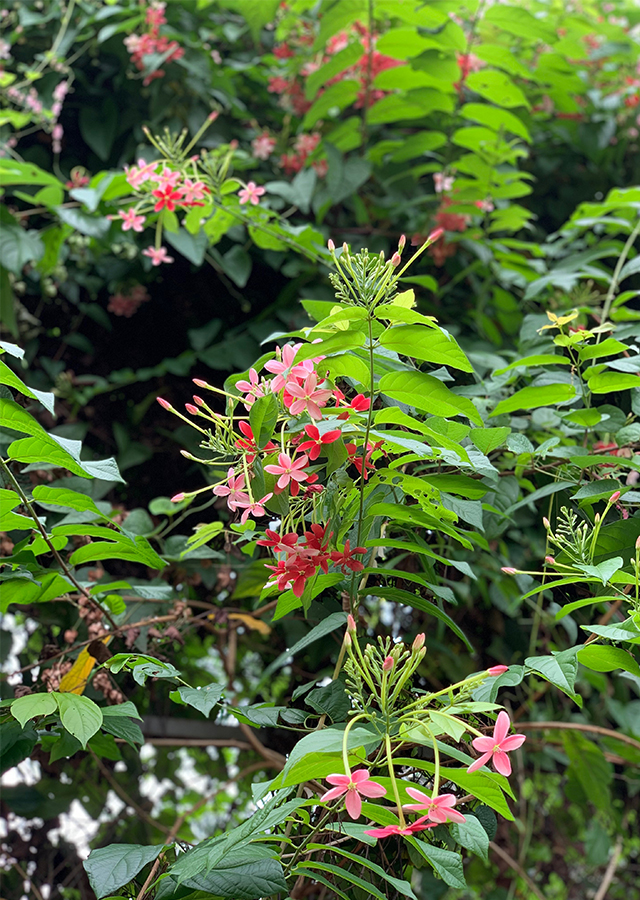
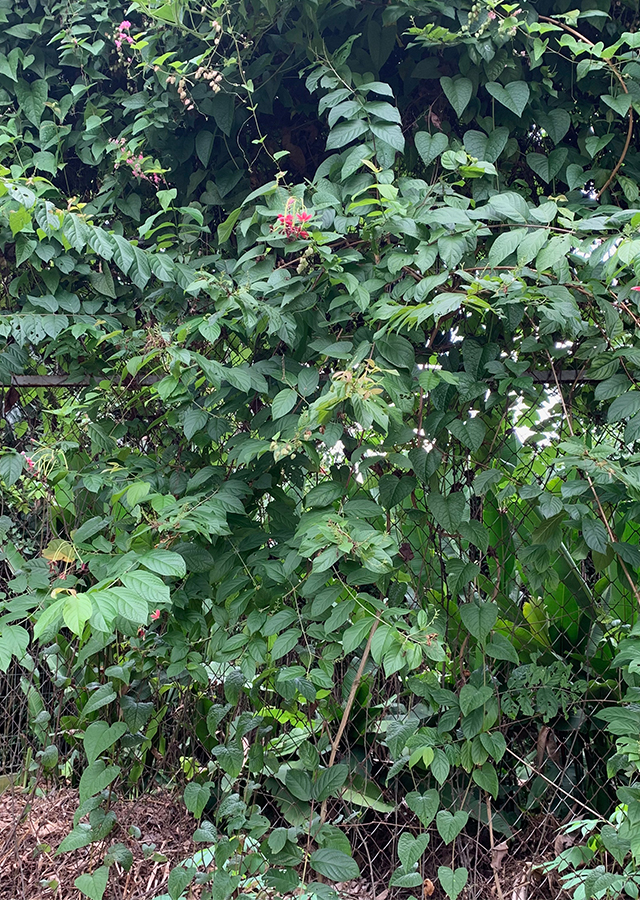
Ceguk (Combretum indicum) is a climbing plant up to 8 meters long of the Combretaceae family, native to Myanmar and also found in tropical Africa. Besides being popular as a hedge and ornamental plant, its young shoots are commonly eaten fresh or cooked in Indonesia, while in West Africa its stem is woven into baskets. Its seeds and roots are traditionally used to expel parasitic worms and relieve diarrhea and kidney inflammation.
Agroecology
Ceguk can grow in tropical regions, rainforests, rural areas, forests, fields, and shrubland, and can be found up to an elevation of 600 m above sea level. Requires full sun, tolerates various well-drained soil conditions, and can adapt to different pH levels.
Morphology
- Stem heavily branched, round/cylindrical, smooth surface that becomes scaly with age, hollow.
- Leaves simple, opposite, short-stalked with elongated ovate to oblong blades, pointed tip, pinnate venation, green.
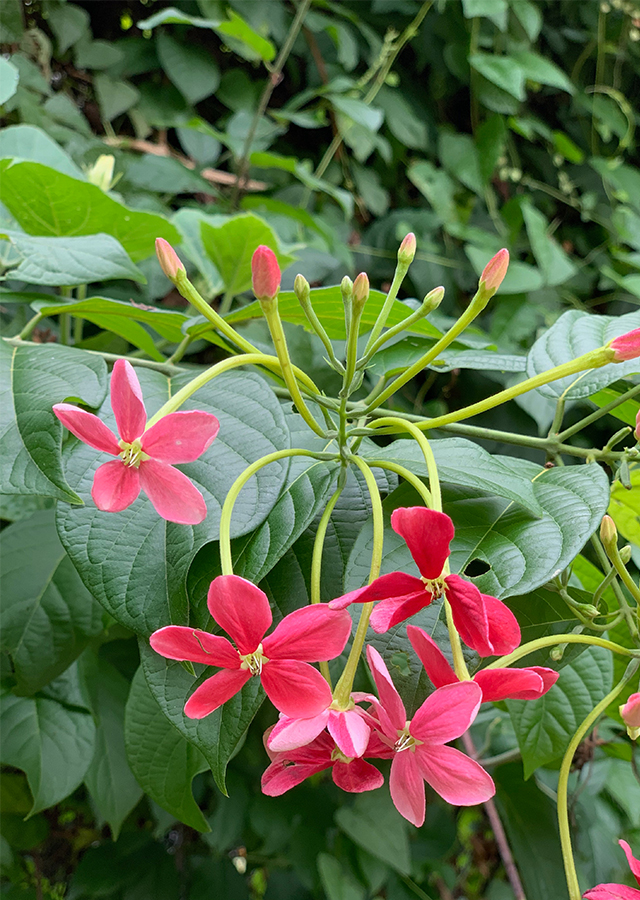
- Flowers arranged in spikes emerging from the stalk tip, with 5 petals that change from reddish-white to purplish-red, fragrant.
- Fruit five-angled, elongated with tapering tip and base. When ripe, the fruit turns brown and is ready for harvest.
Cultivation
Propagated generatively (by seed and root suckers) and vegetatively (by stem cuttings).
Chemical Content
Alkaloids, amino acids, saponins, glycosides, steroids, tannins, flavonoids, phenolic compounds, quisqualic acid, quisqualin A, rutin, trigonelline, L-proline, L-asparagine, oleic acid, palmitic acid, pelargonidin-3-glucoside.
Benefits
Root, seed, or fruit: anthelmintic (expels parasitic worms); reduces diarrhea; treats kidney inflammation (nephritis). Leaves: relieves pain caused by fever; treats bloating in dysentery; acts as an expectorant. Root: antirheumatic.
Simplisia
Information not yet available.
Local Names
Dani, Udani, Wudani (Malay), Bidani (Sunda), Kacekluk, Kaceklik, Cekluk, Wedani (Java), Rabet dani (Madura).
Traditional Recipes
The following recipes reflect traditional knowledge passed down through generations, not a substitute for professional medical diagnosis or advice. Consult a healthcare provider before use.
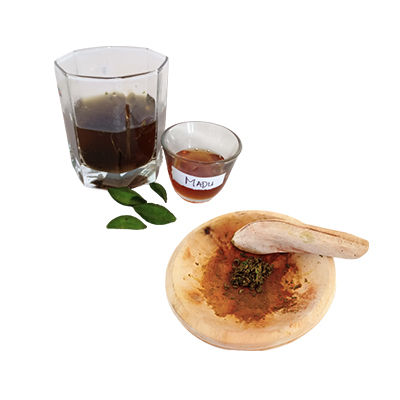
1. Intestinal Worms (Hookworm Infection)
- Prepare 50 ceguk fruits, 1 tbsp honey.
- Wash the ceguk fruits thoroughly, then grind until fine. Steep the ceguk fruit in ½ cup of hot water, add honey, and mix well.
- Drink all at once before bed.
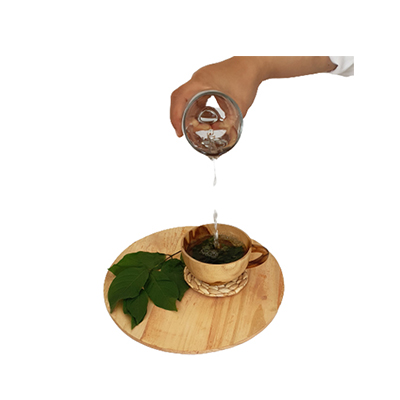
2. Relieving Bloating
- Prepare 3 semi-mature ceguk leaves, mash them.
- Add 1 cup of hot water.
- Let cool and drink the mixture right away.
Reference Sources
- Wardani DM. 2018.Ceguk, Eektif untuk Obat Cacingan. https://www.satuharapan.com/read-detail/read/ceguk-efektif-untuk-obat-cacingan . Satu Harapan Media 20-09-2020
- Kurnia ABB, 2012. Skripsi Efek Antihelmintik Ekstrak Akar Ceguk ( Quisqualis indica L.) pada Ascaris suum, Goeze In Vitro. Universitas Sebelas Maret, Surakarta.
- Prosea. Quisqualis indica. https://uses.plantnet-project.org/en/Quisqualis_indica_(PROSEA) 13-01-2021
- Dalimartha S. 2008. 1001 Resep herbal (Infeksi Cacing Tambang). Penebar Swadaya, Jakarta.
- Tanobat. Mengatasi Perut Kembung. http://www.tanobat.com/ceguk-wudani.html 09-07-2020