Cordyline fruticosa (L.) A.Chev.
Summary
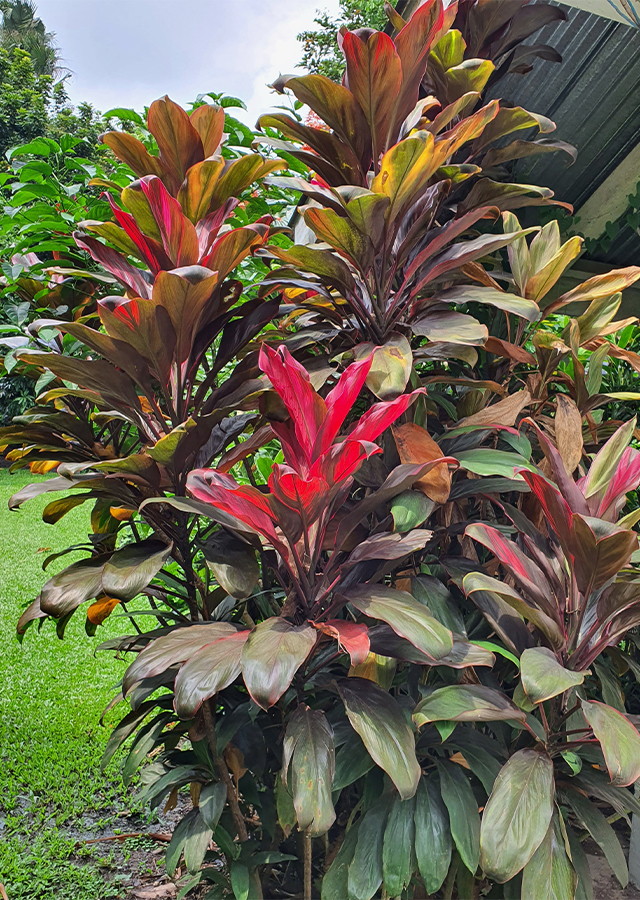
Andong (Cordyline fruticosa) is an upright shrub 2-4 meters tall of the Asparagaceae family, originating from East Asia and spreading to Polynesia, Hawaii, and New Zealand. Its purplish-red leaves make it a popular ornamental plant and garden hedge border. Traditionally, andong is also believed to be antidiarrheal and help relieve bloody cough and stomach pain.
Agroecology
Grows well in lowlands up to elevations of 1,900 m above sea level, in shaded places, on loose soil with pH 5.5-6.5 and requiring moderate sunlight.
Morphology
- Roots fibrous with a yellowish-white color.
- Stem round, hard, clearly visible leaf scars, branching, dirty white, growing in a monopodial direction.
- Leaves lance-shaped, tapering tip and base, wavy edges, pinnate venation arrangement, paper-like leaf texture, purple in color.
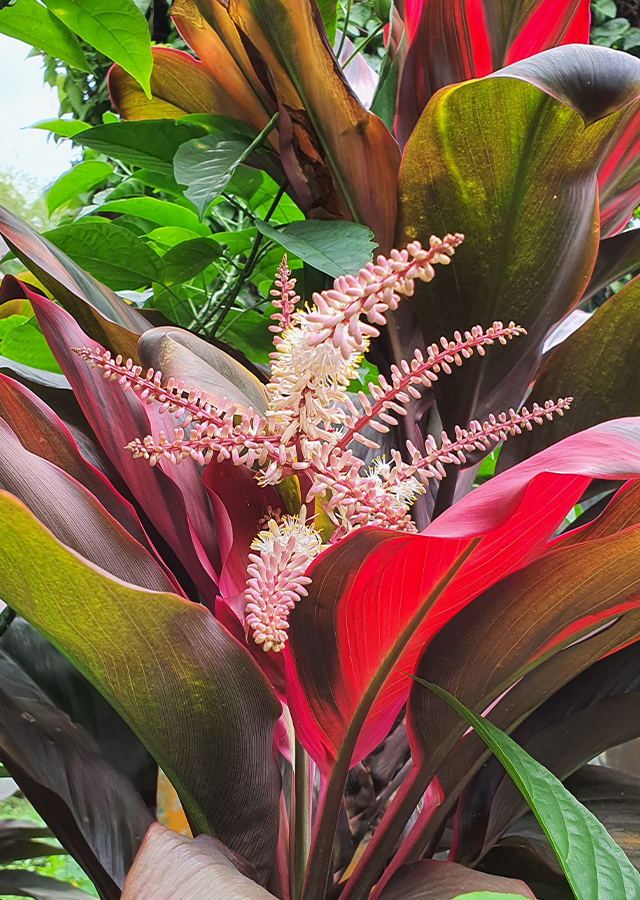
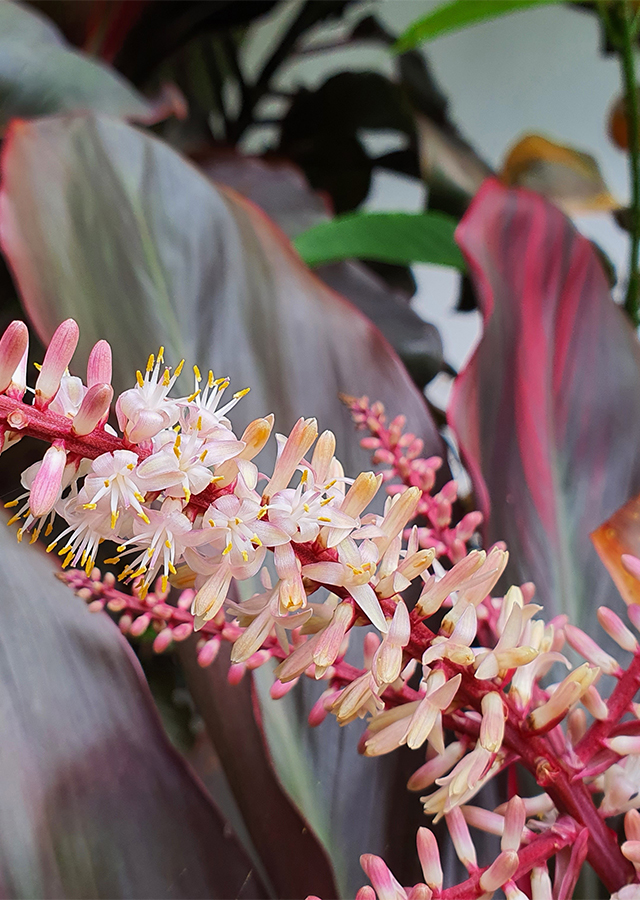
- Flowers compound panicle-shaped, purple in color, emerging from leaf axils, 30 cm in size.
- Fruit a berry, round shaped with a glossy red color.
- Seeds black in color.
Cultivation
Propagated by stem cuttings, or by separating shoots that grow at the base of the stem underground.
Chemical Content
Flavonoids, steroids, saponins, alkaloids, terpenoids, calcium oxalate, polyphenols, iron, tannins, linoleic acid, smilagenin, sterols, tyramine, cholestine glycosides, fructan, quercetin.
Benefits
Antidiarrheal, antioxidant, bloody cough, bloody hemorrhoids and headache, treats stomach and epigastric pain, addresses irregular menstruation, relieves asthma symptoms.
Simplisia
- Select fresh leaves. Wash the leaves with clean running water then drain.
- Dry using a dark cloth covering the leaves to avoid direct contact with sunlight.
- Dry-sort to remove unwanted foreign material. Store the dried material in a container/plastic bag, at room temperature or away from direct sunlight.
Local Names
Bak juang (Aceh), Linjuang (Batak), Tumjuang (Palembang), Endong (Java, Bali, Nusa Tenggara), Hanjuang (Sunda), Kayu urip (Madura), Weluga (Ambon).
Traditional Recipes
The following recipes reflect traditional knowledge passed down through generations, not a substitute for professional medical diagnosis or advice. Consult a healthcare provider before use.
1. Irregular Menstruation
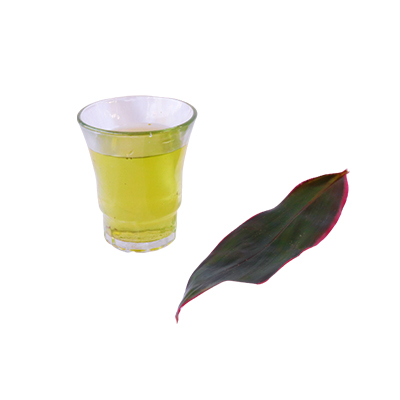
- Prepare 80 g andong leaves then wash thoroughly.
- Boil the material with 2 glasses of water until it boils and 1 glass of water remains,
- Cool the concoction then strain.
- Drink once a day.
Reference Sources
- Hermanto F, Dewi PS, Ratnawati J, Sutjiatmo AB. 2013. Uji Aktivitas Antidiare Fraksi Air, Fraksi etilasetat dan fraksi n-heksan daun andong (Cordyline fruticosa (L.) A. Cheval) Terhadap Mencit Galur Jantan Swiss Webster. Prosiding seminar nasional tumbuhan obat Indonesia.
- Kementrian Kesehatan Republik Indonesia. 2017. Formularium Ramuan Obat Tradisional Indonesia.
- Nurhayati M, Widiyantoro A, Ardiningsih P. 2017. Senyawa terpenoid dari fraksi diklorometana daun tanaman andong (Cordyline fruticosa) dan aktivitas antimalarianya terhadap Plasmodium falciparum. Jurnal Kimia Khastulistiwa 6(3): 81-85.
- Safir I, Nurza A. 2019. Identifikasi tanaman Hanjuang (Cordyline fruticosa) di Kebun Raya Bogor sebagai tanaman lanskap berdasarkan morfologi dan anatominya. Risenologi KPM UNJ. 4(1): 1-9.
- Utami NT, Widiyantoro A, Zaharah TA. 2017. Senyawa antifeedant dari daun andong (Cordyline fruticosa) terhadap Epilachna sparsa. JKK. 6(2): 14-21.
- Formularium Ramuan Obat Tradisional Indonesia. 2017. Haid Tidak Teratur. Keputusan Menteri Kesehatan Nomor HK.01.07/MENKES/187/2017.