Crossandra infundibuliformis (L.) Nees
Summary
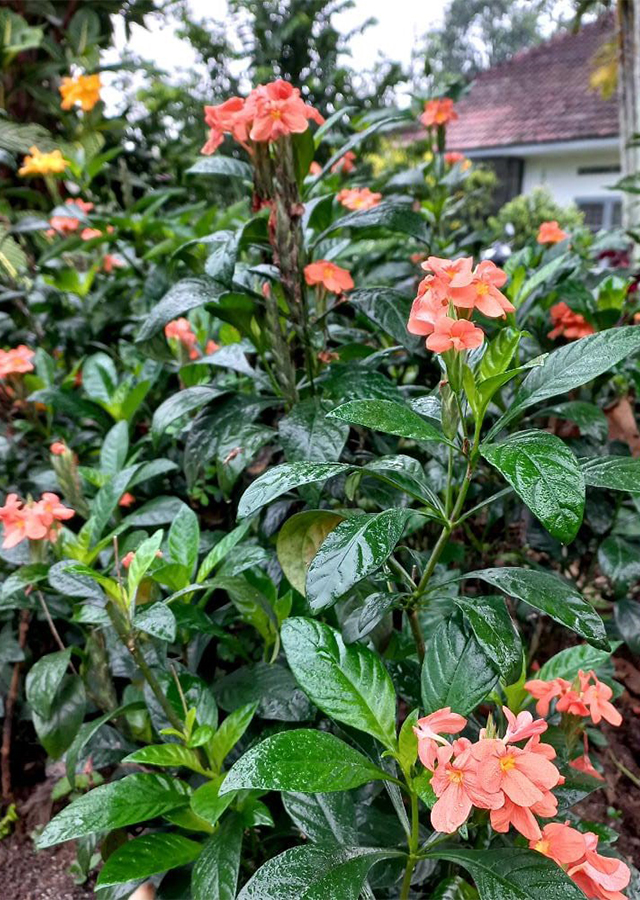
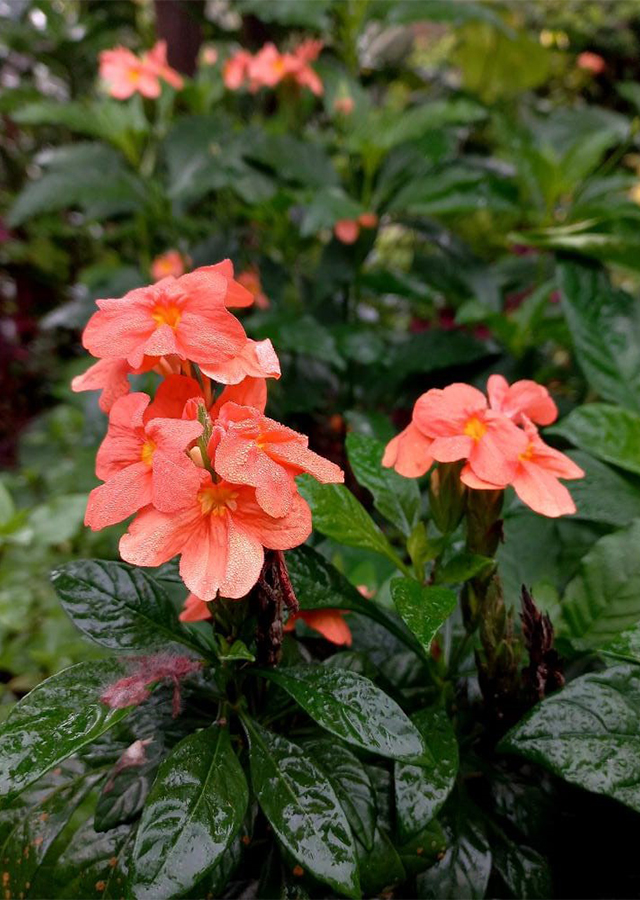
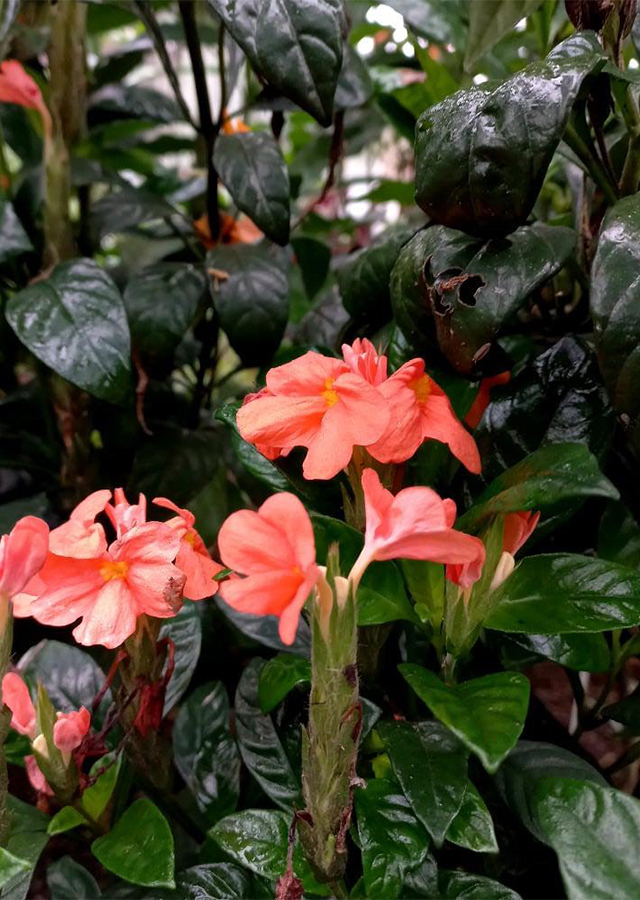
Orange crossandra (Crossandra infundibuliformis) is a shrub up to 2 meters tall of the Acanthaceae family, native to Bangladesh through Sri Lanka, introduced as far as Cuba and Vietnam. In India and Sri Lanka, its flowers are combined with jasmine for women's hair decoration, while the plant is also planted around temples. Orange crossandra is traditionally believed to speed up wound healing and be an aphrodisiac.
Agroecology
Crossandra is commonly found at the foot of hills at elevations up to 1,300 m above sea level. Grows well in full sunlight or partial shade, fertile soil with plenty of organic matter, fertile loamy soil with good drainage. This plant is sensitive to excess or waterlogged water. The temperature required for crossandra flowers ranges around 25°C.
Morphology
- Stem upright, young stem solid silvery.
- Leaves ovate to lance-shaped (8-13 cm long) petiole length up to 4 cm, pinnate veins, tapering tip and base, slightly drooping and appearing in whorls of 3-4, green in color.
- Flowers salverform shaped, each flower has a thin tube (2.5 cm long) with 5 lobes (2-4 cm wide) perpendicular to the tube. Corolla bright red to orange in color, stamens 4, inserted in the middle of the corolla tube, anthers bearded. Below the flower, green leaf-like bracts are arranged like a wheat head.
- Fruit ellipsoid to oblong shaped (1 cm long) and each contains 4 seeds.
- Seeds round, 3 x 3 mm in size.
Cultivation
Propagated using seed and cutting method taken from the stem or branch of a good parent flowering plant. In this case the best cutting can be done in the morning with a sharp knife.
Chemical Content
Flavonoid, glycoside, alkaloid, saponin, steroid, terpenoid, and tannin.
Benefits
Treats toothache, skin disease, syphilis, fever, headache, pain, wound healing and as an aphrodisiac. Has antioxidant, antibacterial, hepatoprotective, antifungal, anticandida, and larvicidal activity.
Local Names
Bunga api, Rosesandra.
Traditional Recipes
The following recipes reflect traditional knowledge passed down through generations, not a substitute for professional medical diagnosis or advice. Consult a healthcare provider before use.
1. Toothache
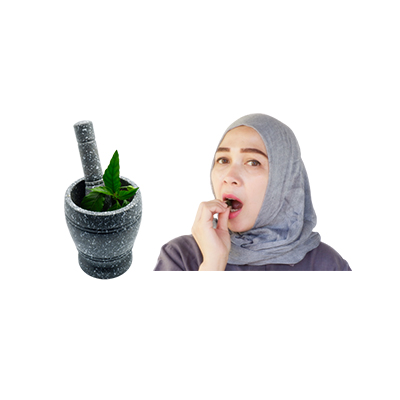
- Take orange crossandra leaves as needed then wash thoroughly.
- Grind into a paste.
- Apply the leaf paste to the aching tooth.
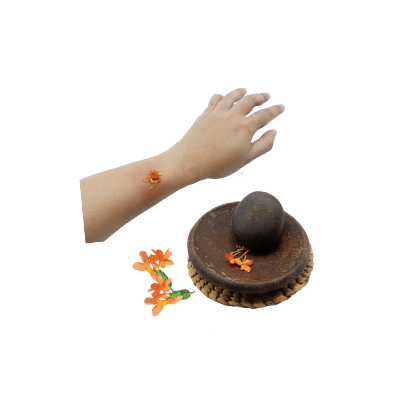
2. Wounds
- Wash orange crossandra flowers thoroughly.
- Grind the flowers until fine.
- Apply to the wounded skin.
Reference Sources
- Royal Botanic Garden. 2017. Plants of the World Online: Crossandra infundibuliformis (L.) Nees. http://www.plantsoftheworldonline.org/taxon/urn:lsid:ipni.org:names:47014-1. 8-09-2021.
- National Park. 2020. Crossandra infundibuliformis (L.) Nees. https://www.nparks.gov.sg/florafaunaweb/flora/1/8/1884. 8-09-2021.
- Biodiversity India. India Biodiversity Plants: Crossandra infundibuliformis. https://indiabiodiversity.org/species/show/229384. 8-09-2021.
- Medicinal Plants. 2015. Crossandra infundibuliformis, Kanakambaram, Crossandra, Firecracker Flower, КроÑÑандра_воронковиднаÑ. http://medplants.blogspot.com/2015/04/crossandra-infundibuliformis.html. 9-09-2021.
- S Eko. 2021. Cara Mudah Menanam Bunga Crossandra Agar Cepat Berbunga. https://www.kebun.co.id/menanam-bunga-crossandra/. 8-09-2021.
- S. Jency. 2013. Phytochemical Screening, Functional Group and Elemental Analysis of Crossandra infundibuliformis (L.) Nees. Flower Extract. Department of Bioinformatics, Karunya University. Indian Journal Of Natural Sciences Vol.4 / Issue 21/ December 2013. https://www.researchgate.net/publication/272679141_Phytochemical_Screening_Functional_Group_and_Elemental_Analysis_of_Crossandra_infundibuliformis_L_Nees_Flower_Extract. 8-09-2021.