Crotalaria pallida Aiton
Summary
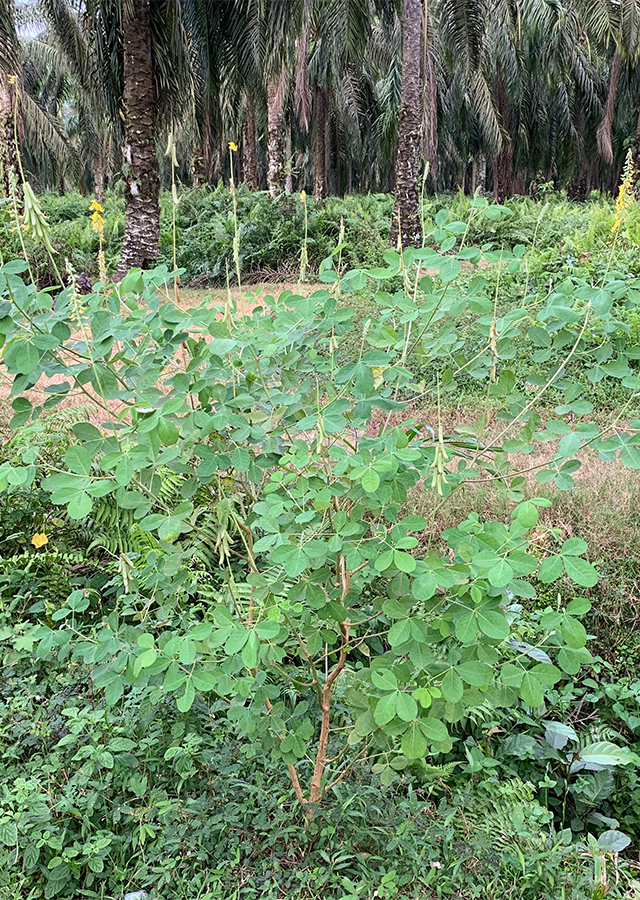
Orok-orok (Crotalaria pallida) is an annual upright shrub 1-3 meters tall of the Fabaceae family, distributed from Indonesia and Africa to Latin America. In North Sulawesi, this plant is traditionally used to help treat cancer, while in Cambodia its flowers are eaten as a vegetable and its seeds are roasted as a coffee substitute. Orok-orok is also believed to relieve bruises and joint pain.
Agroecology
Orok-orok adapts well to all soil types and can live on nutrient-poor sandy soil. Grows naturally along riverbanks, lakeshores, extending into forests, grasslands, and waste ground from sea level up to elevations of 1,000 m. This plant grows very well in well-drained soil with a pH between 5-7.5.
Morphology
- Roots taproot, yellowish-white.
- Stem sturdy hairy with longitudinal grooves.
- Leaves compound, leaf stalk 2-8.5 cm long, leaf blade 3-13 x 2–5 cm and elongated egg shaped.
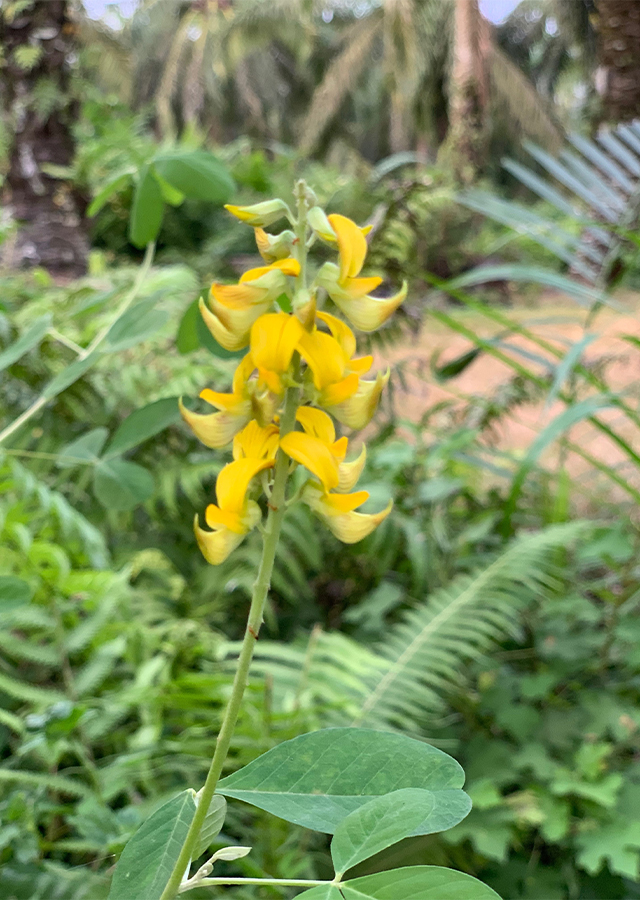
- Flowers compound, butterfly-shaped petals, yellow, often with reddish-brown veins and growing atop the plant along 15-40 cm, each with 20-30 flowers.
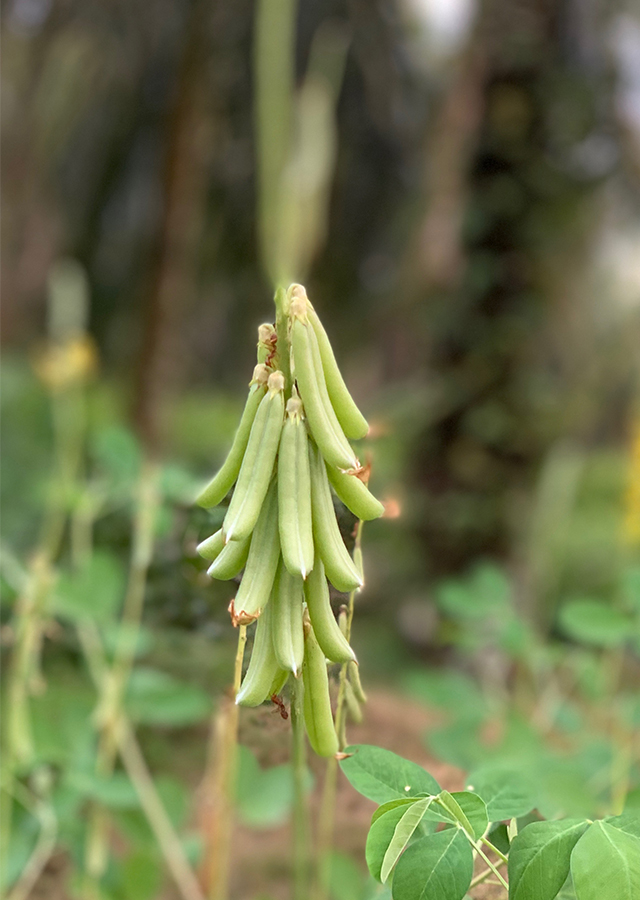
- Fruit a pod, sized 3-5 x 0.6-0.8 cm, containing 30-40 heart-shaped seeds, 3 x 2 mm, glossy, speckled ochre and dark greenish-gray or brown.
- Seeds kidney-shaped, flat, sized 0.5-1 mm and one pod contains dozens of black seeds.
Cultivation
- Generally propagated generatively using seed.
- Seeds are taken from mature, yellowed pods with seeds that rattle inside.
Chemical Content
Lectins, flavonoid apigenin, vitexin, alkaloids, cyclopentylidene, hydroxydihydrobovolide, octacosane, trans-phytyl palmitate, linoleic acid, methyl oleate, ethyl palmitate, palmitic acid.
Benefits
Addresses urinary tract problems, treats bruises, cancer, worm remedy, fever remedy, reduces joint pain and swelling.
Simplisia
- Prepare orok-orok leaves and sort out unwanted parts. Wash thoroughly with running water and drain.
- Arrange the leaves on a tray, air-dry under shade away from direct sunlight for several days until dry (leaves crumble easily when crushed).
- Grind and sift into a fine, dry powder.
- Store in a clean, airtight container at room temperature.
Local Names
Kekecrekan (Sunda), Telpok (Madura).
Traditional Recipes
The following recipes reflect traditional knowledge passed down through generations, not a substitute for professional medical diagnosis or advice. Consult a healthcare provider before use.
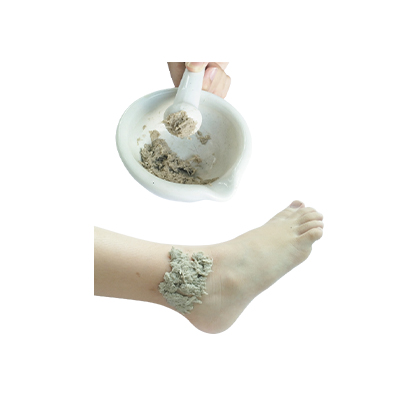
1. Reducing Joint Pain and Swelling
- Prepare an adequate amount of orok-orok root and wash thoroughly with running water.
- Mash the orok-orok root.
- Apply to the painful, swollen joint.
Reference Sources
- Widyaningrum Herlina, Tim Solusi Alternatif. 2019. Kitab Tanaman Obat Nusantara (Mengobati Luka). Penerbit Media Pressindo, Jakarta.
- Researchgate. A New Cyclopentylidene and Other Chemical Constituents from Malaysian Crotalaria pallida. https://www.researchgate.net/publication/321536324_A_New_Cyclopentylidene_and_Other_Chemical_Constituents_from_Malaysian_Crotalaria_pallida 20-04-2021
- Researchgate.The contents and pharmacology of Crotalaria juncea-A review. https://www.researchgate.net/publication/313742837_The_contents_and_pharmacology_of_Crotalaria_juncea-A_review 01-02-2021