Crotalaria quinquefolia L.
Summary
Crotalaria quinquefolia is an erect annual herb up to 2 meters tall from the Fabaceae family, a weed spread from India to Australia. Its leaves are often combined with Crotalaria retusa as a traditional fever reducer, while its seeds are used to treat snake and millipede bites. Its bark is also a good fiber source, and its steamed flowers can be eaten as a vegetable.
Agroecology
Crotalaria quinquefolia usually grows as a weed in fields, especially wet rice fields and humid places, also found in open forests, swamps, along roadsides, old fields, and dump sites, at elevations up to 900 m asl. This plant prefers a sunny position under sunlight, with dry to moist soil conditions, and well-drained.
Morphology
- Roots taproot.
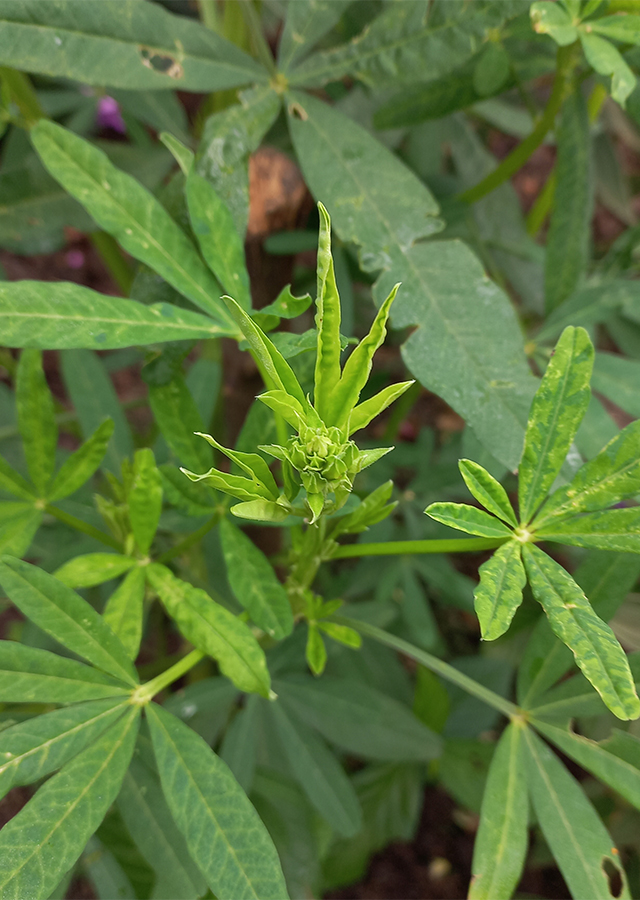
- Stem has angular grooved branches, greenish, thornless, hairy.
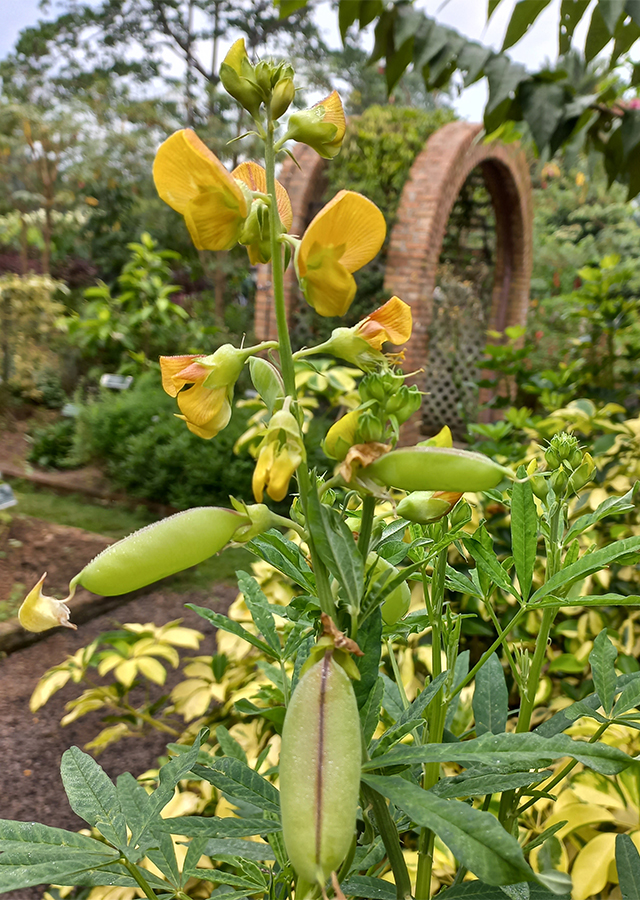
- Leaves alternate, palmately compound with five leaflets (5-foliolate), stipules crescent-shaped, blade linear-oblong, smooth margin, hairless on the upper surface, hairy on the lower surface, long petiole.
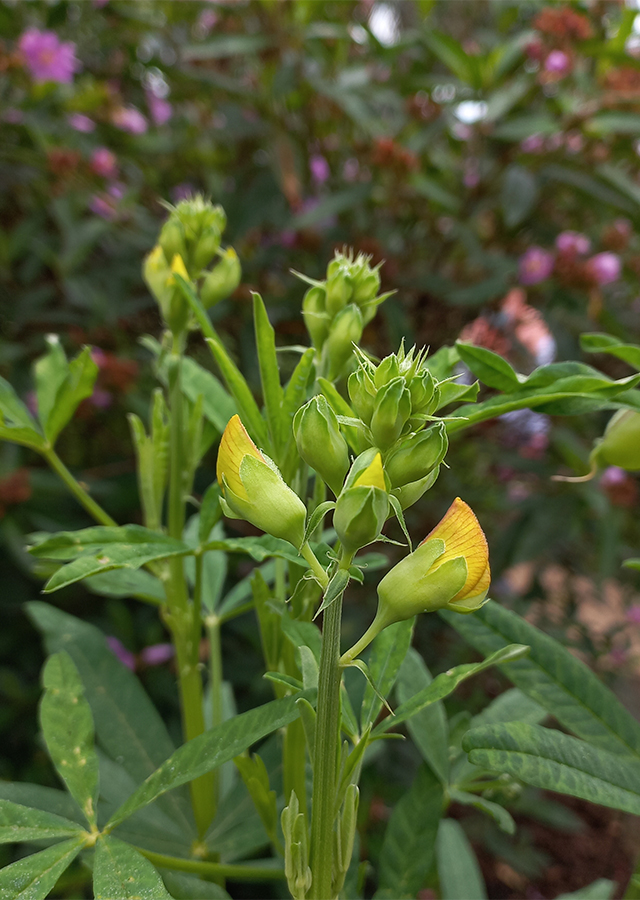
- Flowers have a yellow corolla, with pink-purple veins, larger than the calyx, with an almost round, beaked blade. Calyx hairless, half the length of the corolla. Stamens numbering ten, anthers at two different levels (alternating long and short filaments), filaments united in an open sheath. Inflorescence a terminal raceme.
- Fruit a cylindrical pod, large, about 7 cm long and 2 cm in diameter, hairless, brown, each fruit containing up to 30 seeds. The fruit swells, and when ripe the loose seeds rattle inside.
- Seeds kidney-shaped (reniform), about 4 mm × 3.5 mm, brownish.
Cultivation
- Propagation generatively (seeds).
- Soaking seeds for 12 hours in warm water can help reduce germination time.
Chemical Content
Pyrrolizidine alkaloid, monocrotaline.
Benefits
Treats snake and millipede bites, fever, scabies, impetigo, and lung diseases.
Local Names
No information found. Further research needed.
Traditional Recipes
The following recipes reflect traditional knowledge passed down through generations, not a substitute for professional medical diagnosis or advice. Consult a healthcare provider before use.
1. Snake bite
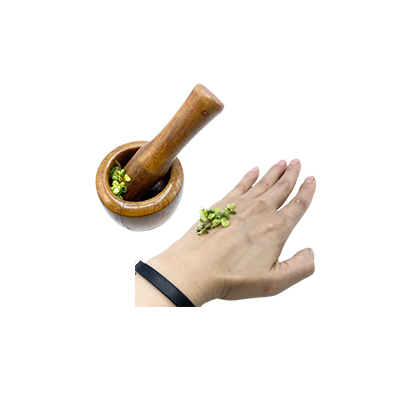
- Take Crotalaria quinquefolia seeds as needed, then wash until clean.
- Grind the seeds until smooth.
- Apply the ground material to the snake bite wound.
Reference Sources
- Royal Botanic Gardens. 2021. Plants of the World Online: Crotalaria quinquefolia L. http://www.plantsoftheworldonline.org/taxon/urn:lsid:ipni.org:names:488755-1. 08-10-2021.
- Useful Tropical Plants Database. 2021. Crotalaria quinquefolia. http://tropical.theferns.info/viewtropical.php?id=Crotalaria%20quinquefolia. 08-10-2021.
- Stuartxchange. 2018. Philippine Medicinal Plants: Suso-susoyan. http://www.stuartxchange.org/Suso-susoyan. 08-10-2021.
- PROSEA. 2016. Crotalaria quinquefolia (PROSEA). https://uses.plantnet-project.org/en/Crotalaria_quinquefolia_(PROSEA). 08-10-2021.
- Pacific Island Ecosystems at Risk. 2013. Crotalaria quinquefolia. http://www.hear.org/pier/species/crotalaria_quinquefolia.htm. 08-10-2021.
- Florabase. 2020. Crotalaria quinquefolia L. https://florabase.dpaw.wa.gov.au/browse/profile/16330. 08-10-2021.