Cryptotaenia japonica Hassk.
Summary
Cryptotaenia japonica or mitsuba is an herb native to East Asia that has been cultivated in Japan since the seventeenth century, though it is still often harvested from the wild today. Besides being a signature vegetable in Japanese, Korean, and Chinese cuisine believed to stimulate appetite, mitsuba also has a long tradition as an herbal remedy in these four countries, with modern research confirming its antioxidant and antibacterial content.
Agroecology
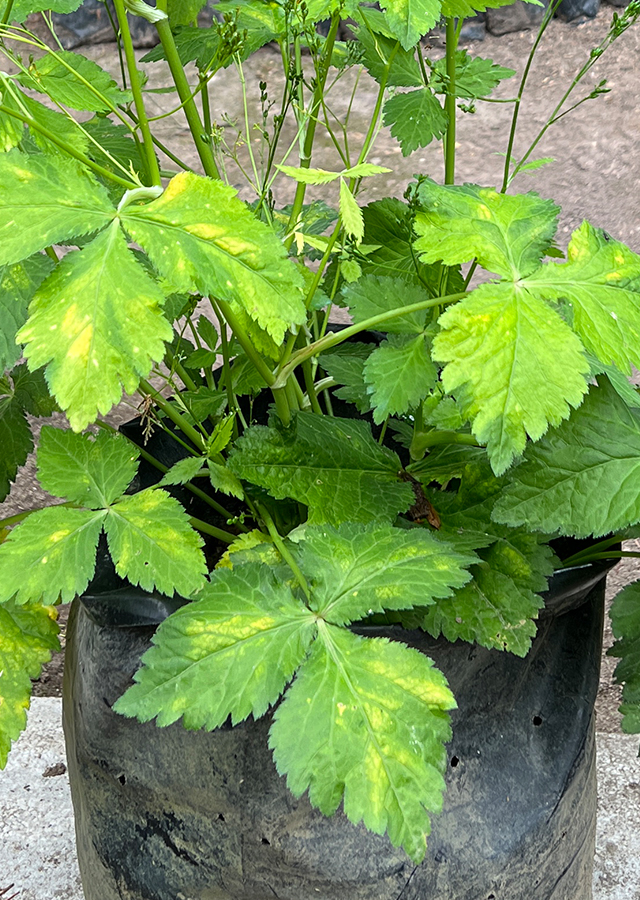
Mitsuba is usually found growing in forests on hills and mountains, with slopes of 30-45°, at elevations of about 200-2,400 m asl. Succeeds in growing in most soils, including rocky and loamy soils, and prefers nutrient-rich, moist compost soil. This species also prefers shaded, moist positions under trees. Its leaves tend to yellow when the plant is grown in full sun. In all regions of Britain, this species is not winter-hardy, although the plant can tolerate short periods at temperatures down to -10°C.
Morphology
- Roots fairly thick, strong and long, clustered at the base.
- Stem long, terete-striated, green.
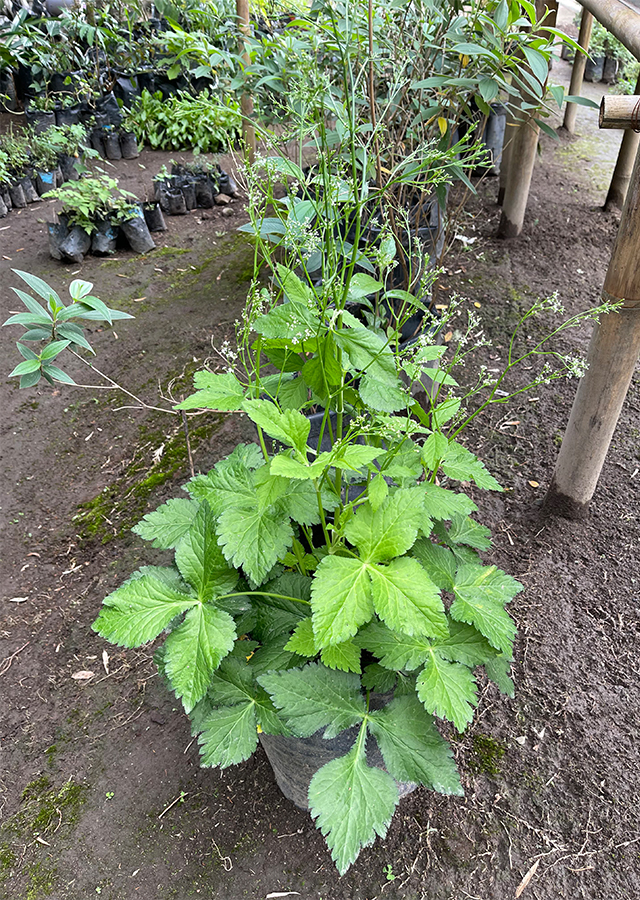
- Leaves three separate leaflets, blade rhombic-shaped, lateral leaflets obliquely elongate-ovate to ovate, base cuneate, tip acuminate, margin irregularly serrate, green, veins pinnate, with 4-6 secondary veins dichotomously branching at the tip. Bracts absent or 1, linear. Has a distinctive, strong aroma, at a glance similar to parsley leaves.
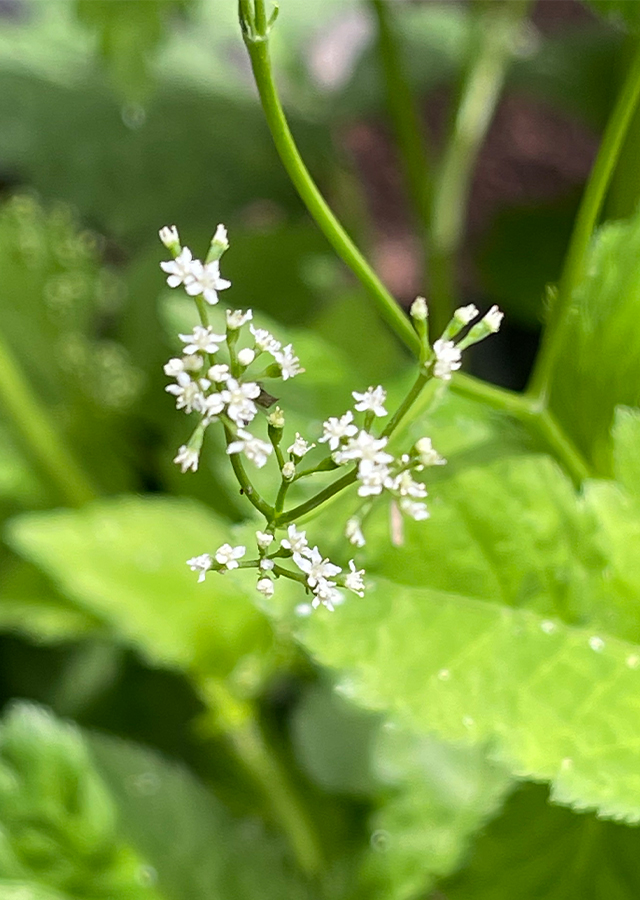
- Flowers white, small and clustered. Sepals 5, up to 1 mm long, triangular. Petals 5, up to 1.5 mm long, elliptic, white, flower fully open. Stamens 5, inserted, ovary 2-carpellate, cylindrical. Styles long and upright. Inflorescence terminal, a cymose (compound umbel). Rays in the inflorescence alternate.
- Fruit an oblong capsule with five longitudinal ribs, green.
- Seeds about 120-180 seeds per plant, dark brown.
Cultivation
- Plant propagation through seed and clump division. The ideal temperature for sowing is about 25°C.
- Pollination is sometimes assisted by insects.
Chemical Content
Phenolic compounds (luteolin, apigenin, and p-coumaric acid are the main compounds), falcarinol and falcarindiol compounds, liquiritin, α-hydroxy acid, salicylic acid, linoleic acid, retitalic acid, cryptotaenen, kiganen, kiganol, petroselinic acid, vanillic acid, chlorogenic acid, pentadecanoic acid, 3-O-feruloylquinic acid, kaempferol-7-O-β-D-glucuronide (K7G), acacetin-7-O-β-D-glucuronide, apigetrin, acacetin, diosmetin, naringenin, wogoniside, isomesityl oxide, mesityl oxide, methyl isobutyl ketone, genistein, tilianin, phytol, beta-sitosterol. Also contains essential oil dominated by several sesquiterpene constituents, including cuparene, alpha- and beta-selinene, germacrene D, trans-farnesene, beta-elemene, and eremophilene, and also contains monoterpenes (beta-myrcene, beta-pinene, α-pinene, camphene, p-pinene, sabinene, myrcene, and limonene).
Benefits
Helps lower cholesterol, brightens skin tone, prevents and addresses inflammation, helps inhibit cancer growth, counters free radicals, addresses bleeding, a tonic to strengthen the body and remove toxins, reduces swelling and helps clear phlegm, a remedy for kidney and urinary tract disease (stones and inflammation), helps address colds, fever, runny nose, cough, diarrhea, meningitis, rheumatism, menstrual pain, toothache due to colds, shingles, itchy skin, wounds, traumatic injuries, and is also used as a female aphrodisiac. Has antioxidant, anti-inflammatory, antibacterial, and antiobesity activity.
Simplisia
- Prepare mitsuba root, wash clean with running water.
- Dry under the sun or with an oven at 40°C until the moisture content reaches 10%.
- Grind using a blender until it becomes powder.
- Store in a clean, airtight container.
Local Names
Peterseli jepang, Peterseli liar.
Traditional Recipes
The following recipes reflect traditional knowledge passed down through generations, not a substitute for professional medical diagnosis or advice. Consult a healthcare provider before use.

1. Itching
- Take all parts of the mitsuba plant except the root and wash until clean.
- Grind until it becomes a paste.
- Apply the paste to itchy skin.
2. Wounds
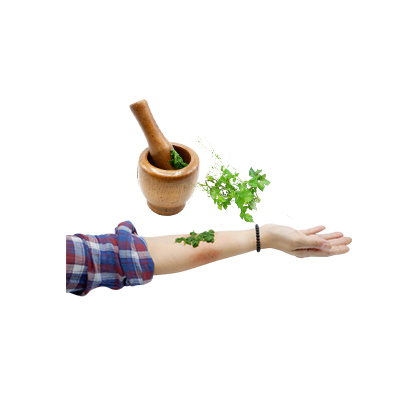
- Prepare all parts of the mitsuba plant except the root and wash until clean.
- Grind until it becomes a paste.
- Apply the paste to the wound.
Reference Sources
- Royal Botanic Gardens. Plants of the World Online. Cryptotaenia japonica Hassk. https://powo.science.kew.org/taxon/urn:lsid:ipni.org:names:840846-1. 16-04-2022.
- Temperate Plants Database, Ken Fern. 2021. Cryptotaenia japonica. http://temperate.theferns.info/plant/Cryptotaenia+japonica. 16-04-2022.
- Herbs from Distant Lands. 2020. Cryptotaenia japonica - Mitsuba, Japanese Parsley. http://herbsfromdistantlands.blogspot.com/2020/04/cryptotaenia-japonica-mitsuba-japanese.html?m=1. 16-04-2022.
- IDN Medis. 2022. Daun Mitsuba: Manfaat – Efek Samping dan Tips Konsumsi. https://idnmedis.com/daun-mitsuba#. 16-04-2022.
- Zuh-Kyung Seong, Sung-Yoon Lee, Amrit Poudel, Sei Ryang Oh, Hyeong-Kyu Lee. 2016. Constituents of Cryptotaenia japonica Inhibit Melanogenesis via CREB- and MAPK-Associated Signaling Pathways in Murine B16 Melanoma Cells. Molecules, 21(10): 1296. https://www.ncbi.nlm.nih.gov/pmc/articles/PMC6273111/. 16-04-2022.
- Andrés Fonseca-Cortés, Jairo A. Peña-Torres. 2021. FIRST RECORD OF THE GENUS CRYPTOTAENIA (APIACEAE, OENANTHEAE) IN COLOMBIA. DARWINIANA, nueva serie 9(1): 63-71. DOI: 10.14522/darwiniana.2021.91.942.