Cucumis maderaspatanus L.
Summary
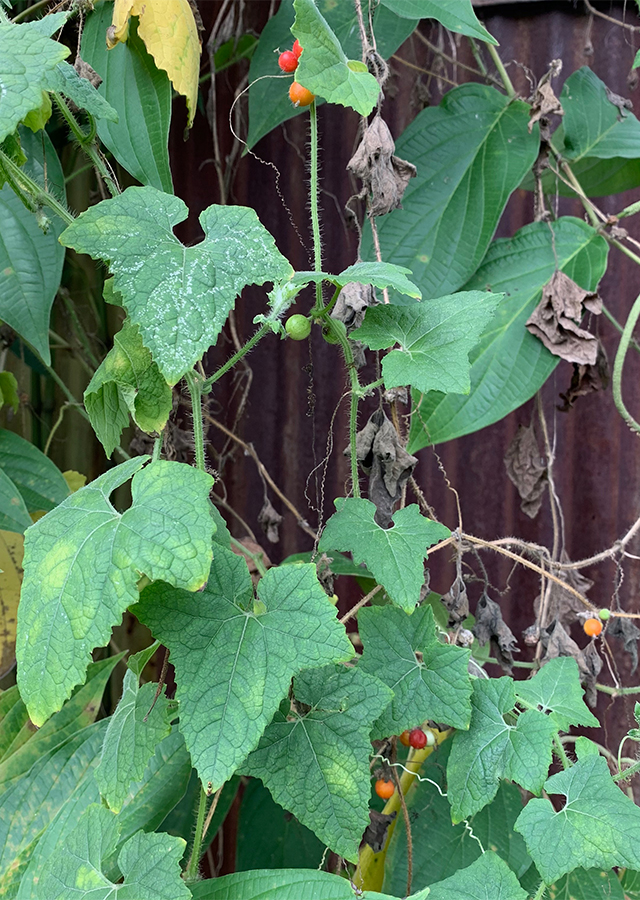
Indian pumpkins (Cucumis maderaspatanus) is an annual climbing plant up to 4 meters long of the Cucurbitaceae family, originating from Asia and distributed as a wild weed across Africa, Asia, and Australia. Although rarely cultivated, this plant is traditionally used as medicine by local communities. Indian pumpkins is believed to help relieve nosebleeds, vertigo, and burns.
Agroecology
This plant can grow from lowlands up to 1,800 m above sea level. Widely grows in hills, valleys, riverbanks, grasslands, and along coasts, and grows wild in semi-evergreen and deciduous forests located in tropical and subtropical regions.
Morphology
- Stem coarsely white-haired.
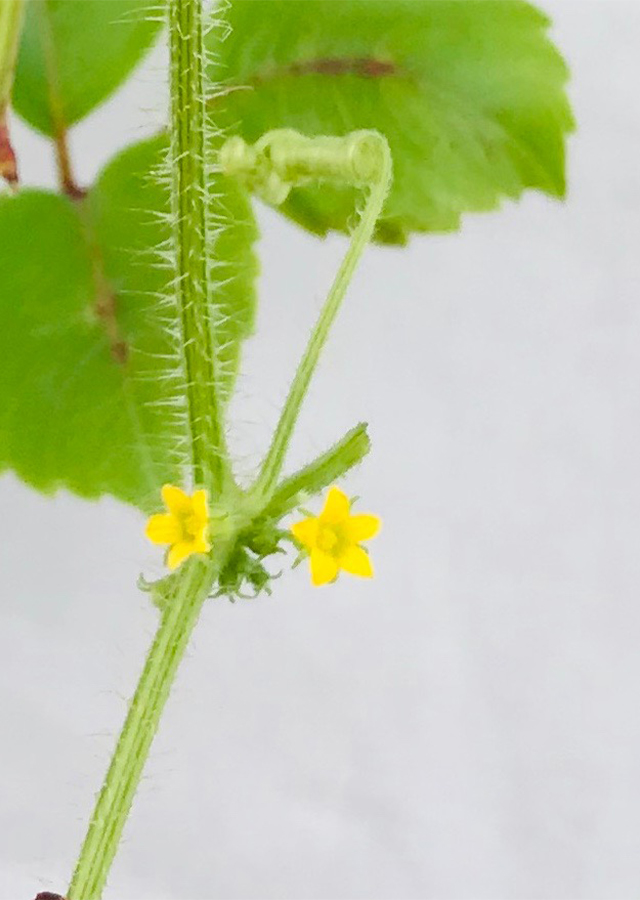
- Leaves coarsely white-haired, varying shape (egg-triangle), serrated edges. Flowers yellow in color, emerging at leaf axils.
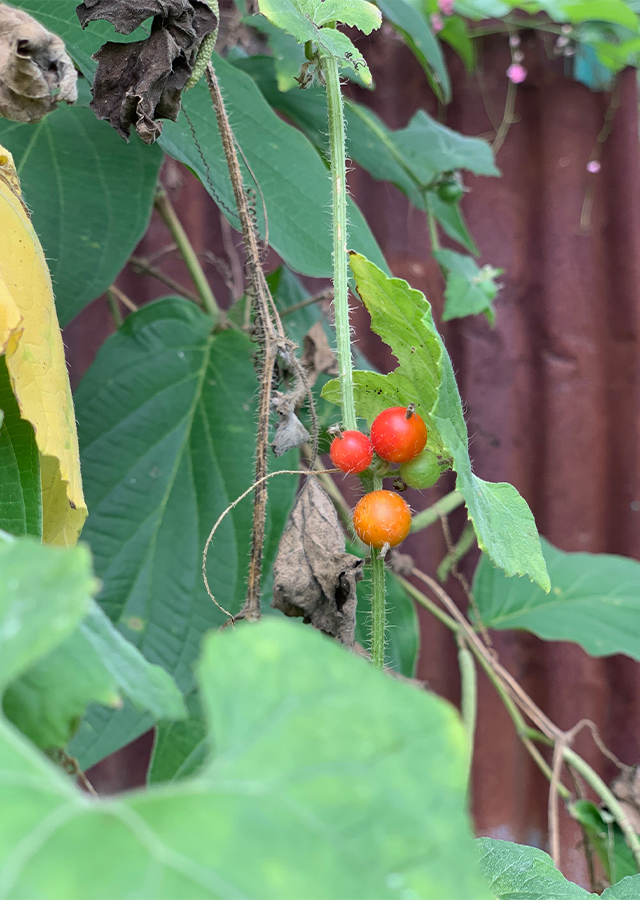
- Fruit grows in clusters at the axillary part of the plant, red, round, hairy, striped, 0.5-1.5 cm size.
- Seeds numbering 10-20, egg-shaped, brown in color.
Cultivation
Plant propagation using seed.
Chemical Content
Dichloroacetic acid, 4-methylpentyl ester, 2-butyn-1-ol, 4-methoxy, flavonoids, saponins, steroids, tannins and phenolic, terpenoids, cardiac glycerides, pantolactone, eugenol compounds, amino acids, linoleic, oleic, palmitic acid.
Benefits
Treats nosebleeds, relieves vertigo, burns, scabies, headache, has hypotensive, hypolipidemic, hepatoprotective, hypoglycemic, immunomodulator, antimicrobial, and antiulcer properties.
Simplisia
- Select fresh leaves, wash the leaves with clean running water then drain.
- Dry using a dark cloth covering the leaves to avoid direct contact with sunlight or use an oven (temperature 50-60 °C). Dry-sort to remove unwanted foreign material.
- Store the dried material in a container/plastic bag, at room temperature or away from direct sunlight.
Local Names
Timun india.
Traditional Recipes
The following recipes reflect traditional knowledge passed down through generations, not a substitute for professional medical diagnosis or advice. Consult a healthcare provider before use.
1. Nosebleeds
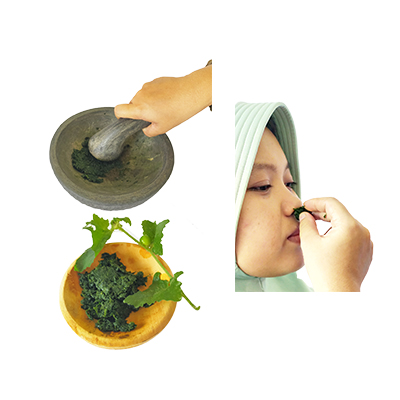
- Pound an adequate amount of Indian pumpkins leaves until it becomes a paste.
- Apply directly to the bleeding nose.
Reference Sources
- Fern, Ken. (2014). Useful Tropical Plants. Cucumis maderaspatanus. http://tropical.theferns.info/viewtropical.php?id=Cucumis+maderaspatanus 08-02-2021
- Health & Benefits Times. (No date). Pea Pumpkin. Mukia maderaspatana. https://www.healthbenefitstimes.com/pea-pumpkin/. 29-04-2021.
- Stuart Xchange. (2015). Philippines Medicinal Plants. Melon-gubat. http://www.stuartxchange.com/Melon-gubat.html. 08-02-2021.
- UKEssays. (2018). Mukia Maderaspatana Antioxidant Properties. Retrieved from https://www.ukessays.com/essays/biology/antioxidant-properties-from-different-parts-of-mukia-maderaspatana-biology-essay.php?vref=1 . 08-02-2021.
- Motaleb Mohammad Abdul. 2013. Commonly Used Medicinal Herbs and Shrubs by Traditional Herbal Practitioners. International Union for Conservation of Nature and Natural Resources.